Guide to Modern Office LED Linear Lighting: How to Choose, Layout, and Install?
By SmartGlow
September 5th, 2026
From office workstations to public areas, learn how LED linear lights improve the comfort and design of office spaces, and master different types, layouts, and selection methods. Explore efficient linear lighting solutions suitable for offices and commercial spaces, covering LED linear lighting types, installation methods, spatial layout, and selection factors.
In modern offices, traditional point lighting fixtures often only provide relatively fixed lighting layouts, while LED linear light can bring more uniform and clean light to the office area through continuous linear illumination, and is easier to integrate with modern architectural design.From suspended linear pendant lighting, to recessed linear LED lighting, to magnetic track lights and surface mounted linear lighting solutions, different types of linear lights can adapt to different office spaces, ceiling structures, and design requirements. Therefore, how to choose suitable linear lighting fixtures based on the actual situation of the office, as well as how to layout and install them reasonably, has become an important part of creating an efficient office lighting environment.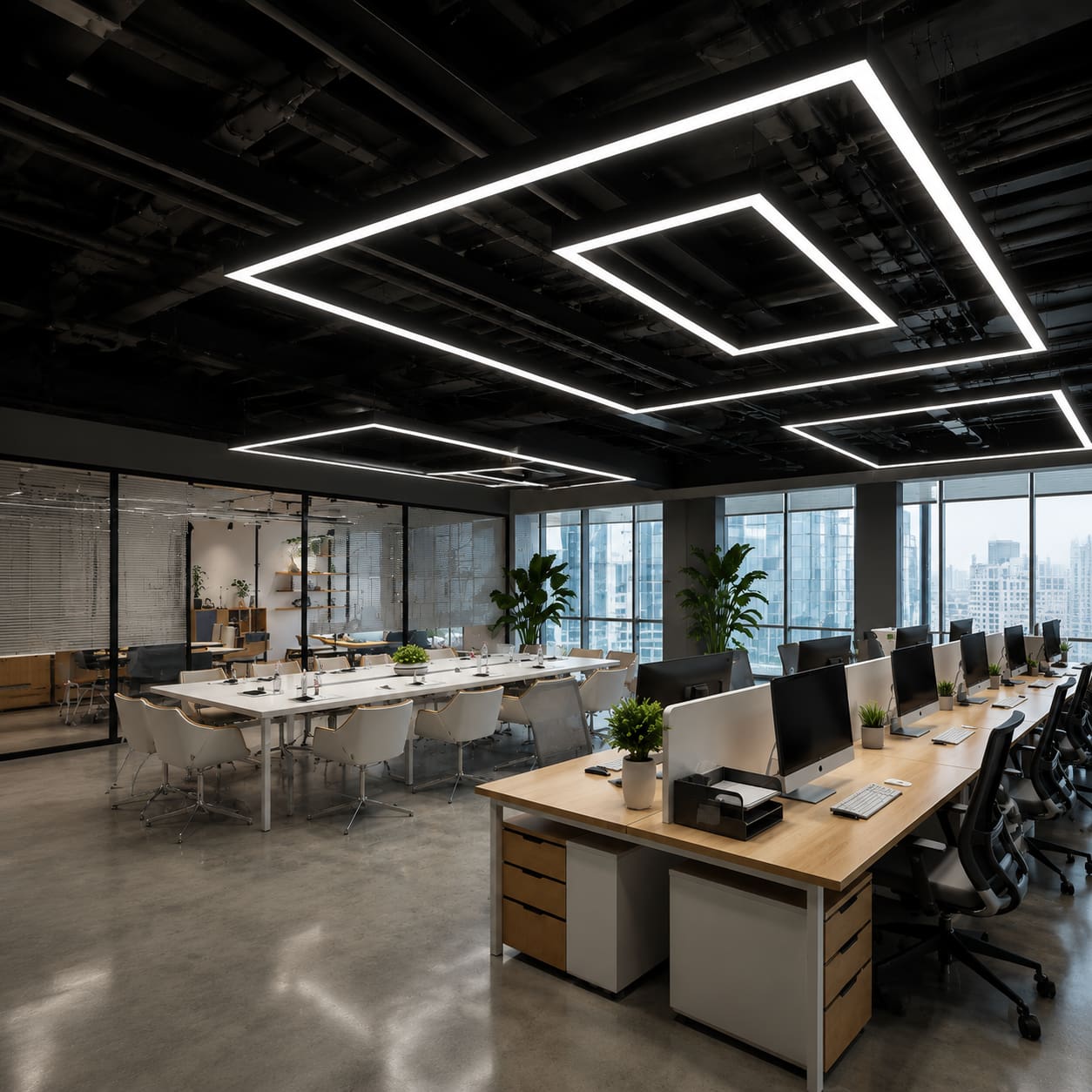 What is LED linear lighting?LED linear lighting is a lighting method that uses continuous or elongated light sources as the main structure, and distributes light evenly to indoor spaces through a longer light-emitting surface. Compared with traditional point lighting fixtures, LED linear light has a more continuous light emission range, which can reduce the obvious brightness and darkness gaps between fixtures, making it particularly suitable for areas that require continuous lighting such as desks, meeting areas, corridors, etc.From the perspective of product structure, common linear lighting fixtures can be classified into embedded, surface mounted, and suspended types according to their installation methods. For example, the recessed linear light can be hidden inside the ceiling, making the lighting fixtures more consistent with the building surface. The surface mounted linear light is directly installed on the ceiling surface, making it more suitable for office spaces where slotting is inconvenient. Linear suspension lighting is usually suspended under the ceiling through hanging wires or suspension rods, which allows for more flexible adjustment of the height and lighting range of the lamps.In addition, modern LED linear lighting is no longer limited to simple linear lamps. Through different structures and connection methods, continuous linear, geometric combinations, and even customized shapes can be formed. For modern office environments, the value of LED linear lights lies not only in the lighting itself, but also in their ability to combine functional lighting with spatial design.Why choose LED linear lights for modern office lighting?The lighting requirements of modern offices have shifted from simply pursuing brightness to comprehensive considerations of visual comfort, spatial planning, energy efficiency, and overall design. LED linear lights are easier to adapt to modern office environments due to their continuous illumination and diverse installation methods.
- Visual comfort: The continuous luminous surface can provide more uniform illumination, coupled with appropriate anti glare design, which can reduce glare and obvious light flicker, providing a more comfortable visual environment for employees who work for a long time.
- Spatial continuity: Linear lighting fixtures can be arranged continuously along workstations, conference tables, or corridors, enhancing spatial structure through lighting and helping to divide different functional areas.
- Energy efficiency and intelligent control: LED light sources have high energy utilization efficiency and can be combined with dimmable linear LED light and other dimming schemes to flexibly adjust brightness according to different office hours and usage needs.
- Design consistency: Whether using recessed linear LED lighting, surface mounted linear light, or linear pending lighting, it can be matched according to the office ceiling and interior style, allowing lighting to naturally integrate into the overall design.
- Layout flexibility: LED linear lights can not only be arranged in simple straight lines, but can also be suspended, embedded, surface mounted, or combined according to the structure of the office space, providing more flexible lighting solutions for different types of office areas.
- Maintenance convenience: Reasonably selecting modular or easy to maintain linear lighting fixtures can reduce the difficulty of later replacement and maintenance, making them more suitable for long-term office environments.
What are the commonly used office LED linear lights?The spatial structure and ceiling form of modern offices are different, so LED linear lighting has also formed various product types. When selecting, it can be matched based on lighting requirements, installation conditions, and space design.① Magnetic track lightMagnetic track lights are suitable for office spaces that require flexible adjustment of lighting positions. Lamps can be installed on magnetic tracks and freely moved and rearranged according to changes in workstations, furniture, and spatial functions. By combining different modules such as spotlights, grille lights, or linear lights, both basic and key lighting needs can be met simultaneously, making it particularly suitable for open offices, reception areas, and commercial office spaces with variable layouts.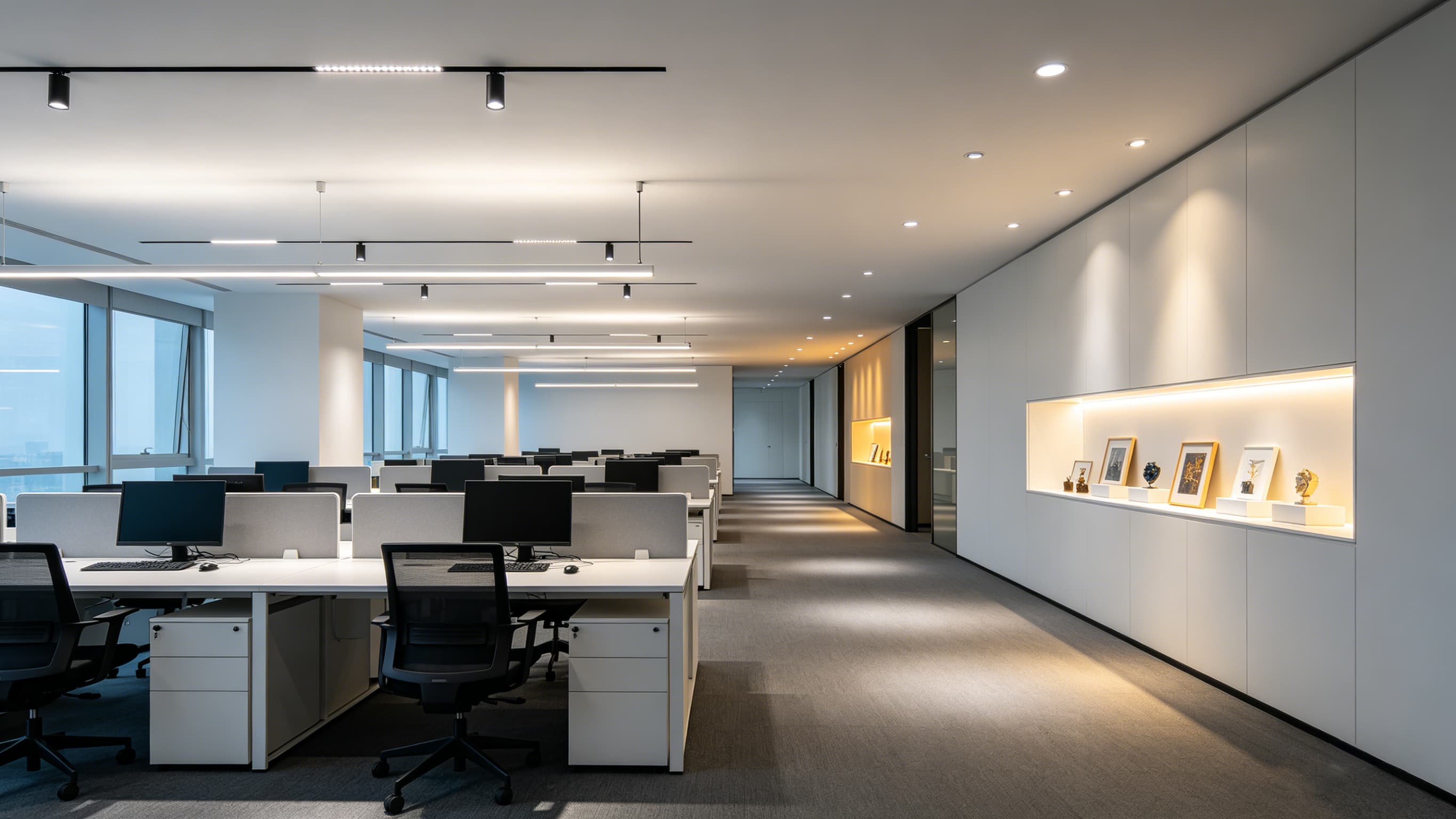 ② Recessed LED linear aluminum profileRecessed linear LED lighting is usually installed inside gypsum boards, stretched ceilings, or other suspended ceilings, with the lamp body and ceiling surface kept flat, suitable for office spaces that emphasize minimalism and integrated design. The continuous luminous effect is also suitable for large-area basic lighting.Embedded LED linear aluminum profiles are more suitable for modern offices that pursue simplicity and integrated effects. By using received linear LED lighting, the exposure of lighting fixtures can be reduced, keeping the emitting surface flat with the ceiling. Continuous linear light sources can create a more unified lighting effect and are also suitable for office main lighting and integrated building design.
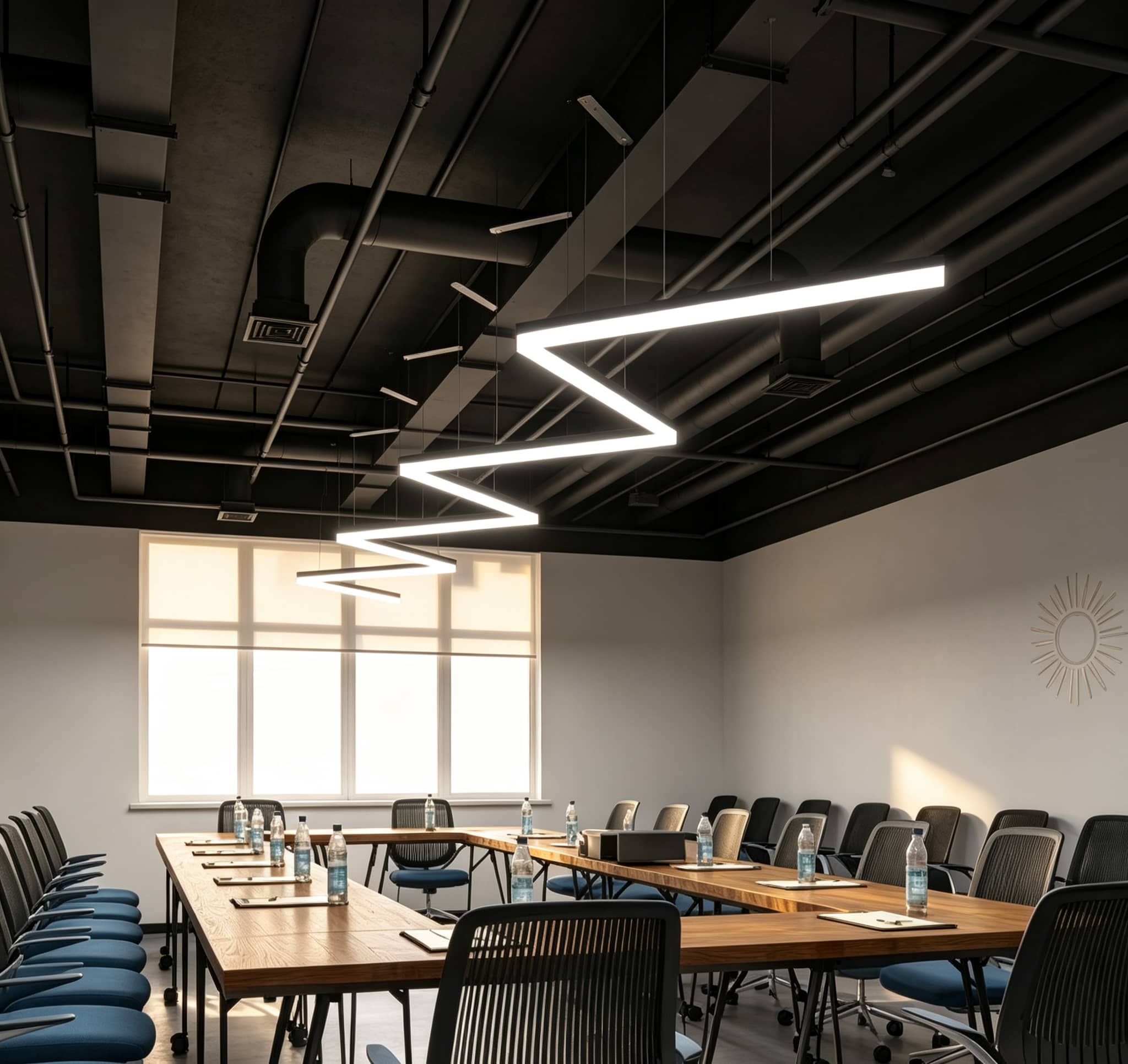
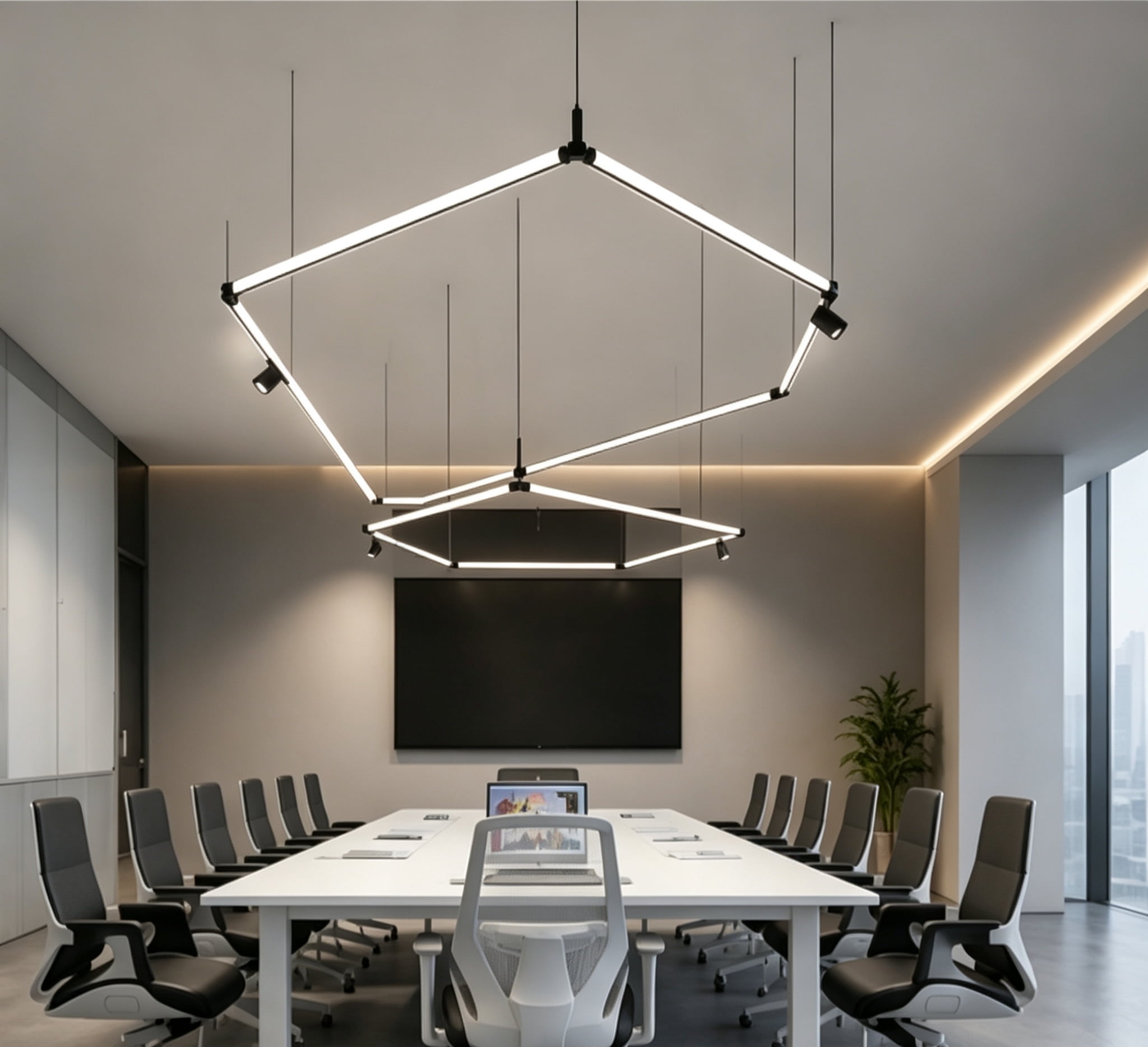
 ③ Suspended LED linear lightHanging LED linear lights are a common choice in open offices and conference rooms. Linear pendant lighting is installed under the ceiling through hanging wires or suspension rods, and the position of the lighting fixtures can be adjusted according to the height of the space to bring the light closer to the working surface. For offices with high ceilings, suspended design can not only improve the lighting range, but also enhance the sense of hierarchy in the space by utilizing the linear shape of the lighting fixtures themselves. Therefore, it is also a common solution in modern office lighting that balances functionality and design.
 ④ Recesssed linear downlightThe embedded linear downlight combines the characteristics of linear lighting fixtures and key lighting, and can be installed inside the ceiling, suitable for spaces that require both overall and local lighting. It can be used in meeting areas, reception areas, wall display areas, and other locations to supplement lighting in specific areas while maintaining the simplicity of the ceiling.
 ⑤ Surface mounted linear downlightSurface mounted linear downlights are more suitable for office renovation projects or ceilings that are inconvenient to slot. Surface mounted linear light can be directly installed on the ceiling surface without significantly changing the original structure, while retaining the simple appearance of linear lighting fixtures. For offices that have already completed renovation but wish to upgrade their lighting effects, this installation method is usually more flexible.
 ⑥ Customized circular linear lightingCustomized circular linear lighting is suitable for office projects that require a high sense of spatial design. By customizing circular, curved, or other geometric structures, custom linear lighting can break through traditional linear layouts and integrate lighting with interior design. This type of lighting fixture is particularly suitable for front desks, leisure areas, conference spaces, and high-end offices, enhancing brand and spatial characteristics through lighting styling.
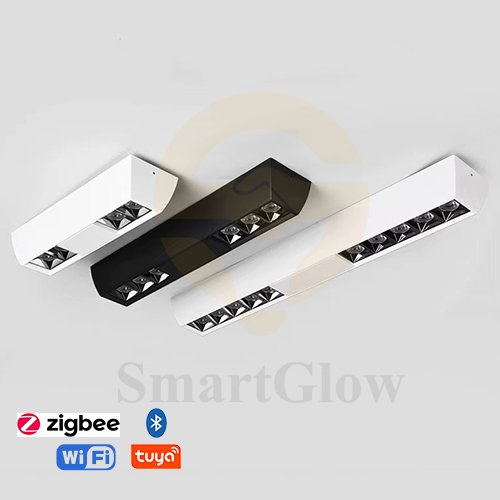
 ⑦ Modular cylindrical downlightModular cylindrical tube lights are more suitable for key lighting and local lighting needs. Lamps can be combined according to different areas and adjusted for illumination direction, used for office walls, display cabinets, decorative areas, or key functional areas. When used in conjunction with other linear LED fixtures, it can create a multi-layered lighting environment of "basic lighting+key lighting".
 What factors should be considered when choosing office LED linear lights?After determining the type and installation method of the lighting fixtures, it is necessary to choose suitable LED linear lights based on actual usage needs. Office space not only requires sufficient brightness, but also needs to consider factors such as visual comfort, space area, control methods, and post maintenance.
- Consider the length and spatial dimensions of the lighting fixtures.
Open plan offices typically require coverage of large work areas, so multiple sets of linear LED ceiling lights can be selected for continuous arrangement. For smaller spaces such as conference rooms and independent offices, the appropriate size of lighting fixtures can be selected based on the desktop length and room ratio to avoid excessive length or density of lighting fixtures affecting the space ratio.
- Next are color temperature and lighting atmosphere.
Office areas usually require clear and natural lighting environments, and suitable color temperatures can be selected based on the nature of the work; Meeting rooms, reception areas, and leisure areas can choose softer or more atmospheric light colors according to their spatial use. For offices that require flexible adaptation to different times and usage modes, dimmable linear LED lights that support color temperature and brightness adjustment can be considered.
- Color rendering is also worth paying attention to.
For design, presentation, meetings, and work areas that require accurate color recognition, high color rendering LED light sources can help present the colors of objects and materials more realistically. In addition to the office itself, areas such as the front desk and display walls can also choose lighting fixtures with higher color rendering performance according to actual needs.
- Anti glare and visual comfort cannot be ignored.
Office workers usually need to face computer screens for long periods of time, so lighting fixtures should not only provide sufficient illumination, but also try to control glare and uncomfortable light interference as much as possible. Different optical covers, diffusion structures, and installation heights can all affect the final visual experience, so when choosing linear lighting fixtures, the lighting effect of the working surface should be comprehensively considered.
- Dimming and intelligent control methods also need to be considered.
If there are lighting requirements for different time periods and functional areas in the office, LED linear lights that support dimming can be selected, and corresponding solutions can be chosen according to the project's control system. For intelligent office projects, dimming, scene control, and centralized management can make the lighting system more flexible.
- Choose based on installation and maintenance conditions.
New offices can be planned with embedded, suspended, or customized linear lighting during the design phase; Office renovation should prioritize surface installation plans with minimal construction impact. At the same time, attention should also be paid to whether the lighting fixtures are easy to replace and maintain, in order to reduce management costs during long-term use.
Overall, choosing office LED linear lights is not simply about comparing the appearance or power of the lamps, but requires consideration of space size, ceiling structure, color temperature, color rendering, anti glare, dimming function, installation method, and post maintenance. Only by combining these factors can we truly create a modern linear lighting system suitable for modern office environments.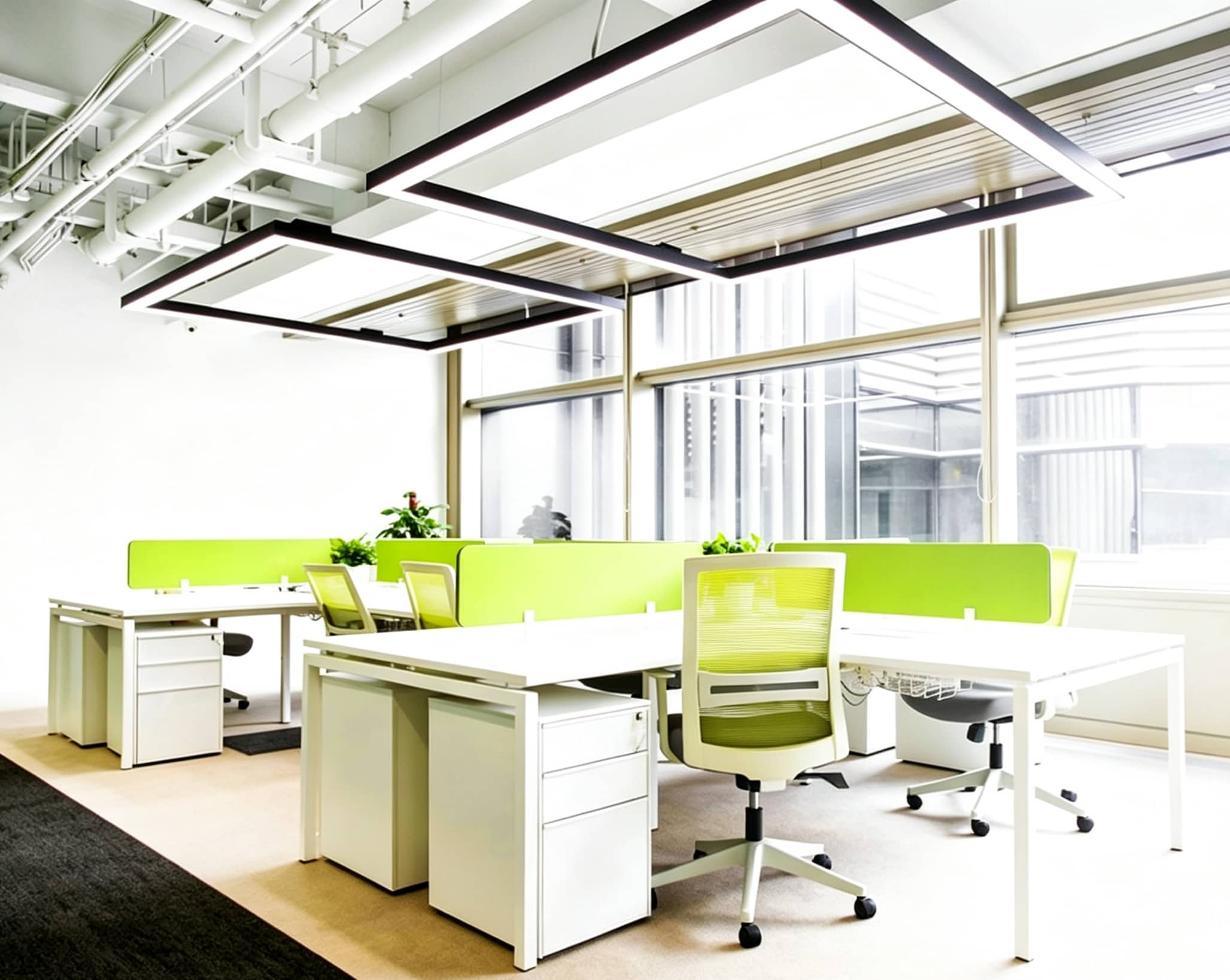 How to choose LED linear lights for different office ceilings?The ceiling structure of an office directly affects the installation method and final effect of LED linear lights. Therefore, when selecting lighting fixtures, one should not only consider the appearance, but also make judgments based on the ceiling structure, construction conditions, and spatial height. Reasonable selection of installation methods can better integrate lighting fixtures with ceilings and reduce the difficulty of later construction and maintenance.
1. Gypsum board ceilings are usually more suitable for recessed LED linear lighting. Installing recessed linear LED lighting or recessed linear light inside the ceiling can keep the luminous surface basically flat with the ceiling, reduce the exposure of lighting fixtures, and is particularly suitable for modern minimalist style offices. If the project requires a high level of architectural integration, trimless repeated linear LED lighting can also be chosen to further weaken the visual presence of the lamp frame.
2. Ordinary flat ceilings can be installed on the surface or suspended according to construction conditions. For offices that do not want to change the original ceiling structure, surface mounted linear light is a more direct choice, with a relatively simple installation process, and is also suitable for office renovation projects. If the height of the space is high, or if you want to make the lighting fixtures closer to the working surface, you can use linear suspension lighting to adjust the height of the lighting fixtures through hanging wires or suspension rods.
3. High rise offices and open spaces are more suitable for using suspended LED linear lights. Linear pending lighting not only reduces the distance between the lighting fixture and the work surface, but also enhances spatial hierarchy by utilizing the linear shape of the lighting fixture. For large offices, conference centers, and open plan office areas, suspended solutions can simultaneously balance lighting coverage and overall visual effects.
4. For offices that require integrated architectural design, architectural linear lighting can be a key consideration. This type of solution can be planned in conjunction with suspended ceilings, walls, and even furniture structures, making linear lights a part of building design rather than just independent lighting fixtures.If the office is in the renovation stage, embedded and customized solutions are usually easier to plan in advance; If it is an office space that has already been renovated, surface mounted linear light or other solutions with less construction changes can be given priority consideration. By selecting appropriate linear LED fixtures based on ceiling conditions, unnecessary construction adjustments can be reduced while ensuring lighting effects.How to arrange LED linear lights according to office space?The layout of LED linear lights should revolve around "spatial functions, workstation distribution, and lighting tasks", rather than simply arranging them evenly based on the ceiling area. A reasonable layout can create a corresponding relationship between lighting and the office area, while reducing unnecessary lighting waste.
1. Open office area: Prioritize continuous layoutOpen workstations are usually arranged in a regular pattern and can use parallel or continuous linear light layouts to keep the lighting fixtures aligned with the workstation direction. For large spaces, multiple sets of linear LED ceiling lights can be used to create stable and continuous working lighting.
2. Meeting Room: Determine the location of lighting fixtures based on the conference tableThe conference room can choose linear pending lighting or continuous linear layout based on the length and shape of the conference table. The position of the lighting fixtures should be aligned with the desktop as much as possible, allowing the light to concentrate and cover the main usage area.
3. Reception area and front desk: balancing functionality and designThe front desk is a visually representative area in the office, which can be equipped with customized linear shapes, suspended lighting fixtures, or integrated architectural lighting, allowing modern linear lighting to serve both basic lighting and spatial decoration.
4. Corridors and public areas: emphasizing continuityCorridors usually do not require complex accent lighting, and a continuous linear light layout can enhance spatial flow, making the entire area visually more unified. According to the ceiling conditions, embedded or surface mounted linear light can be selected.
5. Independent office: basic lighting combined with key lightingAn independent office can use linear lights to provide overall illumination, supplemented by adjustable angle lighting fixtures for desks, filing cabinets, or display areas. This can not only meet daily office needs, but also create a more layered lighting environment.
In actual projects, it is also necessary to determine the number and installation location of lighting fixtures based on the office area, floor height, number of workstations, and natural lighting conditions. Compared to traditional lighting fixtures that are fixed in a single position, modular and adjustable linear lighting fixtures are easier to adapt to layout changes in office spaces in the later stages. SummaryModern office lighting is no longer just about meeting basic brightness requirements, but also needs to simultaneously consider visual comfort, energy efficiency, spatial layout, and interior design. LED linear lights, with their continuous illumination, diverse installation methods, and flexible layout, can adapt to different lighting needs from open office areas to conference rooms, reception areas, and exhibition spaces.If you are planning LED lighting for offices, conference rooms, or commercial spaces, you can choose based on the space area, ceiling type, installation method, color temperature, color rendering, and dimming requirements. Choosing the appropriate LED linear light based on specific project conditions is necessary to achieve practical lighting while making the entire office space more comfortable, unified, and designed.Are you looking for a suitable LED linear lighting solution for your project? We can provide office floor plans, space dimensions, ceiling structures, and lighting requirements. Based on this, we can further match suitable product types, installation methods, and lighting configurations to provide more targeted solutions for the project.Frequently Asked Questions1. Is LED linear light suitable for all offices?There are various installation forms for LED linear lamps, and suitable products can be selected according to the office area, ceiling structure, and functional area. Embedded, surface mounted, and suspended solutions are suitable for different construction conditions.
2. Should we choose embedded or suspended LED linear lights for the office?It mainly depends on the spatial structure and design requirements. Recessed linear LED lighting is more suitable for offices that pursue a simple and integrated ceiling effect; Linear pending lighting is more suitable for high-rise spaces, conference rooms, and open office areas, and the lighting position can be adjusted by hanging the height.
3. Can LED linear lights be used for office renovation?Okay. For projects that do not wish to significantly modify the existing ceiling, surface mounted linear light can be considered to reduce slotting and ceiling renovation work. For newly renovated offices, embedded or suspended solutions can be planned in advance.
4. Can LED linear lights be dimmed?Some products support dimming function, depending on the configuration of the lighting fixtures and control system. Dimmable linear LED lights with dimming function can adjust brightness according to office hours and the usage needs of different areas.
5. Can office LED linear lights be customized?Partial linear lighting products can be customized in terms of length, shape, installation method, and control scheme according to project requirements. For spaces with special design requirements such as the front desk and conference area, custom linear lighting can also be considered.
6. Which office areas are suitable for LED linear lights?In addition to open workstations, it is also suitable for meeting rooms, front desks, corridors, independent offices, reception areas, and employee leisure areas. Different types of linear lighting fixtures can be used in different areas to form a unified and layered lighting scheme.
Previous
What Is Shadow Diffuser Ventilation? Features, Selection & Installation Guide
Read More
Next
Recessed LED Aluminum Profiles vs. LED Strips: Why the Profile Matters
Read More


