How To Choose Recessed Lighting? Exploring The advantages Of Recessed Lighting
By SmartGlow
April 13th, 2026
All types of LED recessed lights, from mini, 4/6 inch to outdoor specific, provide detailed explanations of core components and decoration selection, spacing planning, answer common questions, avoid installation errors, and adapt to residential, commercial, and outdoor scenarios. They are energy-saving, durable, and aesthetically pleasing, making it easy to transform spaces with minimalist recessed lighting, balancing practicality and aesthetics.
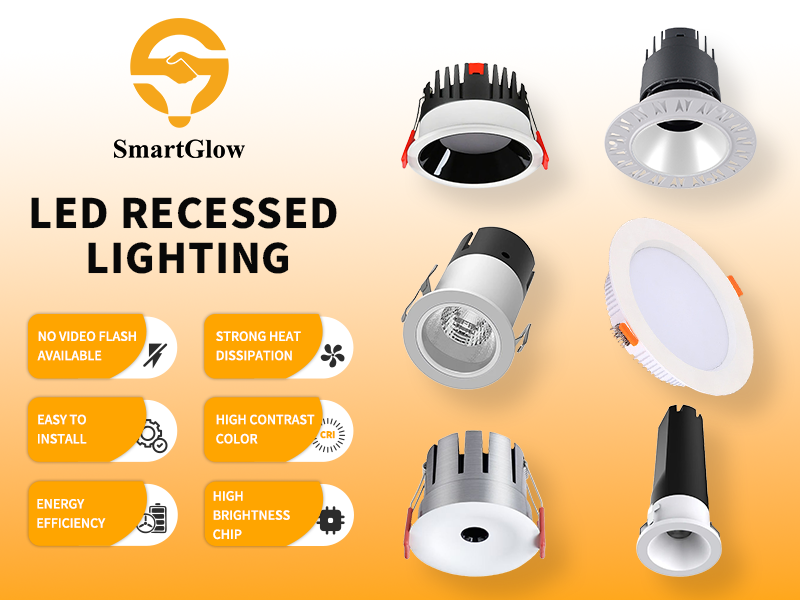
Recessed lighting combines fashion and practicality, and with its hidden installation design (which can be recessed in ceilings, walls, or even floors), it has become a popular choice for modern lighting with a low-key and simple posture. Due to the fact that the main body and wiring of its lighting fixtures are completely hidden, it can maintain a clean and transparent space while achieving energy-saving lighting, easily lighting up various scenes, and balancing aesthetics and practicality. Next, I will introduce the types of recessed lighting to help you quickly get started and choose the most suitable recessed lighting for your space.Types of recessed lightingThe most common form of recessed lights is recessed downlight, but there are a variety of styles available. According to the needs of the decoration project, suitable lighting fixtures can be selected to integrate into the ceiling and adapt to different spaces and lighting requirements.In daily applications, recessed lighting mainly includes the following types, covering multiple scenarios:
- Recessed spotlight: precise orientation, suitable for highlighting focal areas such as hanging paintings and ornaments, achieving key lighting;
- Wall washing lamp: The light is soft and uniform, which can create a wall washing effect and enhance the sense of spatial hierarchy;
- Multiple recessed light system: Multiple recessed lights combined to enhance overall lighting brightness and adapt to large areas of space;
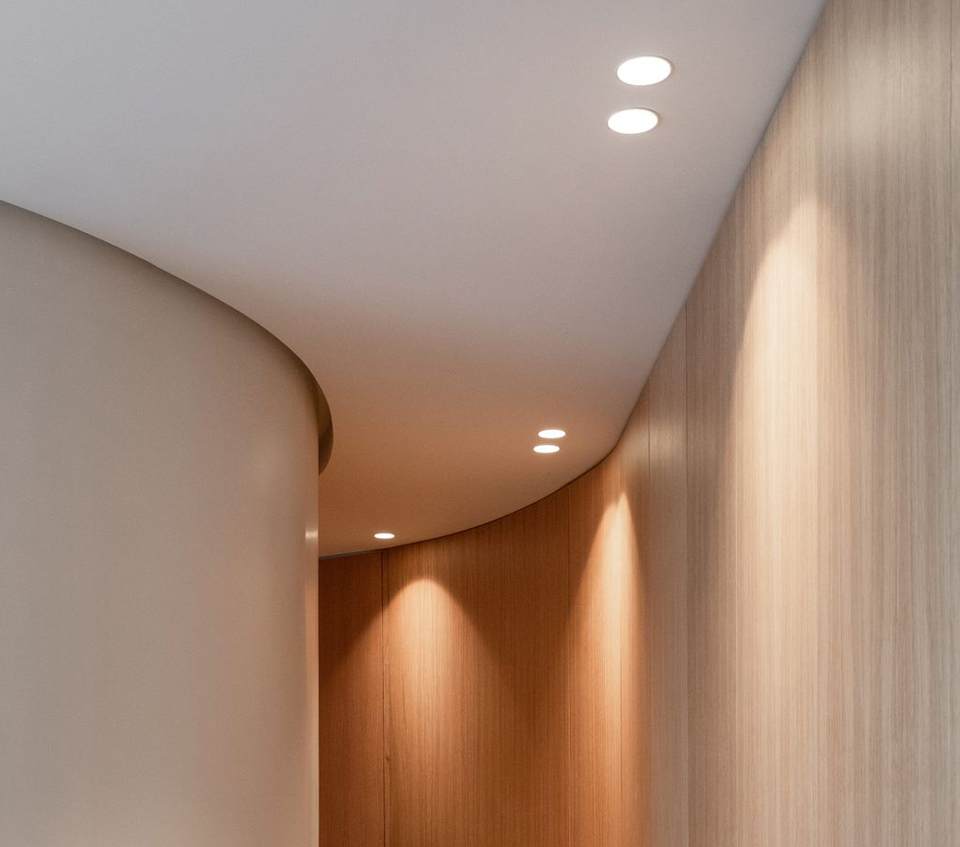
- Corridor lights: compact and adaptable, especially suitable for mini recessed styles, providing uniform lighting for corridors and hallways;
- Recessed track Lighting system: flexible and adjustable, can adjust the angle and position of lamps according to needs, suitable for various commercial and household scenarios.
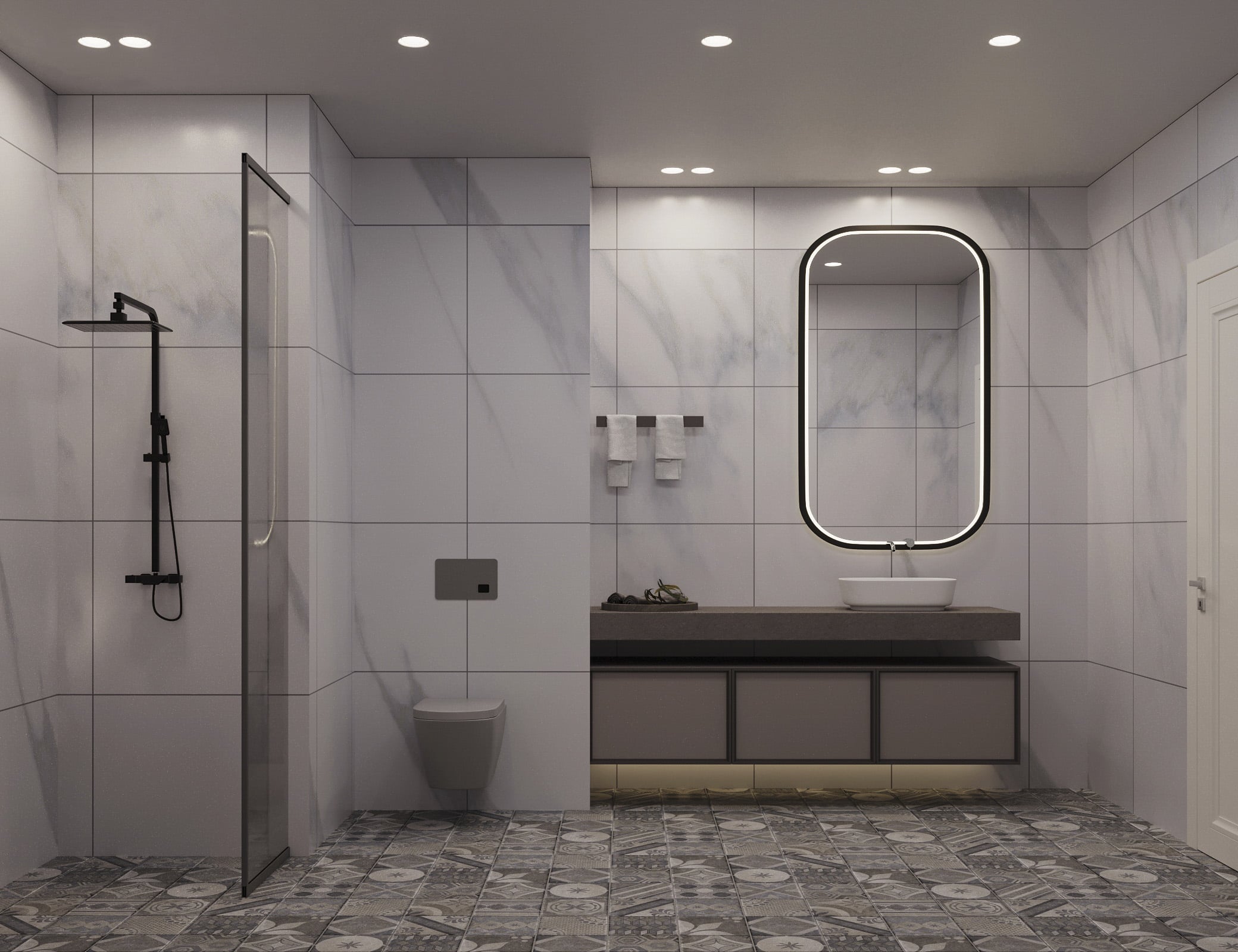 The main components of recessed lightingThe upgrade from traditional halogen lamps to recessed LED lighting is an important advancement in lighting technology, and the structure of LED models is also more complex and efficient, mainly composed of four major components:Lamp Housing: As a "fixed base" for lighting fixtures, it not only needs to adapt to different ceiling structures (such as drop ceiling, vaulted ceiling), but also needs to do a good job in heat dissipation and protection, providing a stable installation environment for internal components.Driver: As the "regulator" of LED lighting fixtures, it is responsible for accurately adjusting voltage and current to ensure stable light emission of LED light sources. At the same time, it has energy-saving and voltage stabilizing functions, which is the key to extending the lifespan of lighting fixtures.Cone&Trim: The former is responsible for assisting in light gathering and heat dissipation, while the latter is the core of visual presentation. Different styles such as baffles, reflectors, and universal joints can be selected according to needs to adapt to diverse scenes such as bathrooms, kitchens, and living rooms.LED Optics: This is the "core brain" that controls the propagation of light. Through design such as lenses and reflective cups, it achieves beam angle adjustment and anti glare optimization, allowing light to evenly illuminate the space while avoiding glare and improving lighting comfort.The core advantages of recessed lightingCan enhance the perception of ceiling height, avoid large lighting fixtures lowering the ceiling height, and make small spaces appear more open and transparent;Effectively reducing visual clutter, hiding lamp bodies and circuits, making the top/wall surface more tidy;Equipped with precise task lighting capabilities and adjustable angle styles, it can focus on areas such as kitchen countertops, hanging paintings, workbenches, etc;Featuring versatile modern aesthetics, whether it's residential, office, or commercial spaces, they can seamlessly blend into various architectural styles, achieving a unity of aesthetics and practicality.
Recessed lighting decoration type
Decorative strips for recessed lighting
It is the outer ring of the lamp that you can see when you look up, which not only determines the visual texture of the lamp, but also adapts to different spatial styles. Thanks to the modern, efficient, and compact features of LED recessed lighting, it can present excellent results with simple basic decorative strips. Most of the recessed LED downlights on the market come in three decorative styles: circular, square, and raised flower, which are simple, atmospheric, and versatile, easily integrating into various home decoration and workwear styles.
LED Optics
It is also the core component of recessed lamps - it is equivalent to the position of the bulb in traditional incandescent lamps, but its working principle is completely different. The light scattering range of traditional light bulbs can reach 360 degrees, while the light scattering range of light-emitting diodes (LEDs) is only 180 degrees. Therefore, specialized optical components are needed to reflect and guide the light, ensuring uniform lighting effects and no waste.
Aperture size of recessed lightsThe choice of aperture size mainly depends on the installation position and usage requirements of the lamp. The typical recessed lamp aperture range on the market is between 1 and 6 inches. With the continuous advancement of LED technology, even very compact recessed lamps can now generate sufficient light output. Therefore, smaller volume lamps are becoming increasingly popular - they not only do not occupy too much visual space, but also maintain a smooth sense of space design, especially suitable for mini recessed lamps, display cabinet lighting and other scenarios.
Recessed lighting installation planning and spacing
The core of installation planning for recessed downlight is "on-demand layout and precise distance control". Reasonable spacing not only ensures uniform lighting, but also avoids glare, dark spots, and other issues, adapting to the needs of different spaces. From the two dimensions of lamp requirement calculation and common layout errors, we will help you easily handle installation planning.
Light demand calculation
The layout of recessed LED lighting fixtures mainly depends on room size, ceiling height, and usage purpose. The lumen requirements of different spaces vary, and the required quantity and spacing can be accurately calculated by combining the specifications of the fixtures. The general standards for residential spaces in Canada are as follows:
1. Lumen reference for each space (environmental/task lighting)
Living room: 10-20 lumens per square foot, suitable for basic environmental lighting, creating a soft and comfortable atmosphere;
Kitchen (task area): 50-75 lumens per square foot, ensuring sufficient lighting for countertop operations and avoiding shadows during operations;
Bedroom: 10-20 lumens per square foot, with soft and non glaring light, suitable for resting, reading and other scenes;
Bathroom: 70-80 lumens per square foot, balancing overall lighting and mirror operation requirements, with safety as a priority.
2. Lamp specifications and spacing matching (suitable for 8-foot high ceilings)
Standard 4-inch recessed LED downlight: output lumens of 600-800, recommended spacing of 4-6 feet, suitable for large-area environmental lighting such as living rooms and bedrooms;
6-inch recessed lighting fixtures: output lumens of 1000+, recommended spacing of 6-8 feet, suitable for high brightness spaces such as kitchens and bathrooms;
Special scene adjustment: If used for task lighting areas such as kitchen countertops, reading areas, or ceiling heights exceeding 9 feet, the spacing should be appropriately reduced to ensure even light coverage.
Common layout errors
After installing recessed lights, many people may encounter problems such as obvious shadows, dark spots, and glare, mostly due to improper layout. The following three high-frequency errors must be avoided to balance safety and practicality:
1. Kitchen layout error
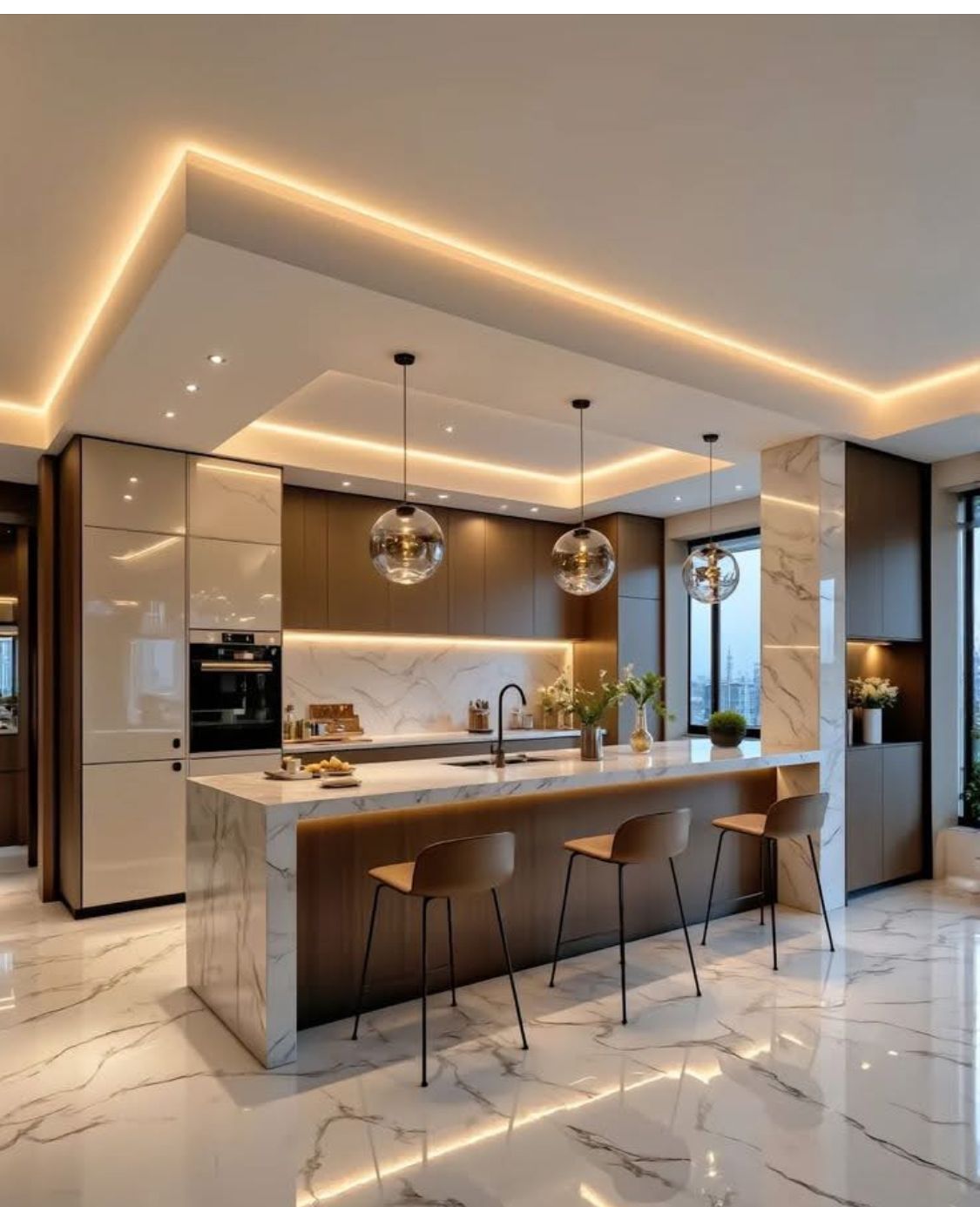
Do not install recessed downlights directly above the standing position on the countertop - this layout will create strong shadows on the surface of the workbench, affecting cooking, cutting, and other operations. The correct approach is to install a downlight 12-18 inches away from the edge of the countertop, allowing the light to be accurately projected onto the work area and avoiding shadow interference.
2. Incorrect spacing between corridors
For narrow corridors, it is recommended that the spacing between recessed lighting fixtures should not exceed 1.5 times the ceiling height. For example, in an 8-foot high corridor, installing a maximum of one light fixture every 12 feet can effectively avoid dark spots in the corridor, ensure uniform and coherent lighting, and improve walking safety.
3. Precautions for bathroom layout
Avoid single overhead lighting: Using only top recessed lights can result in unsightly shadows when operating mirrors. It is recommended to pair bathroom specific recessed lighting fixtures with mirror headlights to balance overall lighting and local fill lighting
Safety regulations require: Moisture certified recessed lighting fixtures must be installed above the bathtub and shower area to ensure moisture and water resistance, and eliminate electrical safety hazards.
Is it easy to install recessed LED lights?Many people are concerned about whether the installation difficulty is high when choosing recessed LED lights? Can you do it yourself?Recessed LED lights are mainly composed of three parts: housing, decorative strip, and LED light source. The shell is a cylindrical metal shell hidden in the ceiling, responsible for storing circuits and light sources; Decorative strips are the exposed edges that determine the final aesthetic appeal.But when it comes to actual installation, it's not just about simply inserting the lights in, it's also necessary to accurately drill holes in the ceiling, arrange circuits, treat insulation layers, and adjust the decorative strips to ensure a level, beautiful, and energy-saving effect. Therefore, it is not recommended for inexperienced homeowners to DIY and install recessed lights themselves. There are strict requirements for drilling accuracy, circuit wiring, insulation, and safety regulations. Improper operation not only affects the effectiveness but also poses safety hazards. Unless you have professional electrician or decoration construction experience, it is safer to entrust the construction to professionals.From the perspective of construction difficulty, new construction projects will be easier to install than old house renovations. Synchronized planning during the initial stage of decoration can allow lighting fixtures to integrate more naturally into the ceiling structure and insulation layer, resulting in a cleaner and more tidy effect in the later stage. The same applies to outdoor recessed lighting fixtures. Pre recessed installation during the construction phase is simpler, safer, and more aesthetically pleasing than direct installation later on.
How to install led recessed lighting in ceiling?
how to install led recessed lighting in existing ceiling?Install recessed LED downlight on the already installed ceiling. The steps are clear, but attention should be paid to safety and regulations. The entire process can be operated according to the following steps:First, turn off the power and use a detector to avoid wires, keels, and water pipes inside the ceiling. Plan the position and spacing of the lighting fixtures according to the size and height of the room. Next, use a hole opener to accurately drill holes in the ceiling according to the size of the lighting fixtures, clean the edges of the holes and the internal insulation layer, and select IC certified lighting fixtures that can be directly installed close to the insulation layer.Subsequently, lead out the power cord from the ceiling and connect it to the lighting fixture drive power supply in accordance with the specifications. Then, fix the lamp body shell into the hole and install the LED light source and decorative strip to ensure it is flush with the ceiling without any gaps. Finally, power on and test the brightness, dimming, and uniformity of the light. Check for no flickering or looseness to complete the test.If you have no experience as an electrician or construction worker, or have ceilings made of concrete or with complex shapes, it is recommended to have them installed by professionals to ensure both effectiveness and safety.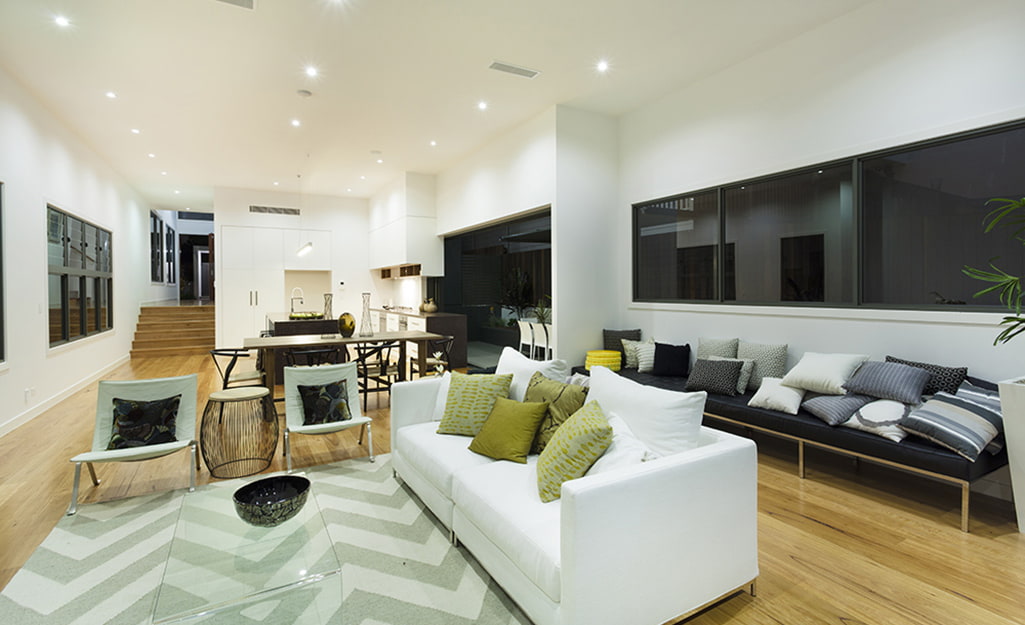 how to install led recessed lighting in new ceiling?Installing recessed LED downlight during the new ceiling construction phase is simpler and cleaner than later installation, making it suitable for simultaneous construction before the ceiling panel is sealed.First, plan the position and spacing of the lighting fixtures based on the room's function and floor height. After determining the layout, fix the lighting fixture shell between the ceiling joists, reserve the power cord in advance, and connect it to the junction box. If there is insulation layer on the ceiling, use IC certified shell directly to ensure safe installation close to the insulation layer.Next, lay out the wiring, connect the lamp drive power supply, and perform insulation and fixing treatment. After the ceiling panel is completed, install the LED light source and decorative strip, adjust them to be flush with the top surface, and finally power on to test the brightness, dimming, and light uniformity.The wiring and pre embedding of the shell are completed throughout the entire process before the ceiling is closed, which is more aesthetically pleasing in the later stage and does not require additional openings to damage the top surface, making it the most worry free installation method for new construction projects.
 Common problems with recessed lighting
What is the difference between 4-inch and 6-inch recessed lights?The 4-inch recessed light has a brightness of about 400-800 lumens and is compact in size, suitable for lighting in corridors, secondary bedrooms, and other environments, with less damage to ceiling openings. 6-inch recessed lights can reach 800-1500 lumens, with higher brightness, and are commonly used for main lighting in living rooms, kitchens, and commercial spaces. They can be paired with wider beam angles to meet large-scale lighting needs.
Can LED recessed lights really last for 50000 hours?High quality LED recessed lighting can have a rated lifespan of up to 50000 hours under good heat dissipation, and can be used for about 45 years if used for 3 hours per day. The actual lifespan is affected by the installation environment temperature, and using it close to the insulation layer may slightly shorten it, but it is still much higher than traditional halogen lamps, making it more energy-efficient and worry free in the long run.
Where is the mini recessed tube light suitable for use?Mini recessed lights typically have a diameter of 2-3 inches, are compact and do not take up space. They are suitable for key lighting in small spaces such as display cabinets, wardrobes, corridors, under cabinets, steps, etc. They can provide uniform fill light while maintaining a minimalist effect with a clean and even top surface.
What should be noted when installing recessed lighting in the bathroom?The bathroom belongs to a humid environment, and recessed lighting fixtures with moisture certification must be used above the shower area and bathtub, paired with a sealed lens structure for waterproof and moisture-proof safety. Standard recessed lights can be used in ordinary areas, and it is recommended to pair them with mirror lights to avoid facial shadows.
Can recessed lighting be installed on concrete ceilings?It is not recommended to install recessed lights directly. Opening holes on the top surface of concrete is difficult, prone to damage, and not conducive to wiring and heat dissipation. Insufficient ceiling height or complex shaped ceilings are more suitable for choosing pendant lights or exposed tube lights as alternatives, which are both safe and do not damage the original structure.
Can recessed lighting be integrated into smart systems?Most recessed LED lights support dimming, color temperature adjustment, and are compatible with intelligent lighting systems, enabling mobile phone control, voice control, and scene mode. Some styles also support automatic warming with dimming, making it easy to create different spatial atmospheres.
Transform your space with recessed LED lighting
Are you ready to upgrade your lighting? SmartGlow Lighting's comprehensive recessed downlight series provides solutions for various applications, from 4-inch embedded lights for residential kitchens to outdoor recessed ceiling lights for covered terraces, dedicated bathroom embedded lights, commercial grade systems, and decorative options, including square embedded lights and black recessed lights, providing high-end LED lighting solutions for homes and businesses worldwide.
Previous
Recessed LED Light Selection Guide
Read More
Next
How To Choose, Install, And Maintain Perimeter Lighting?
Read More


