Office Lighting Design Solution Guide (2026)
By SmartGlow
October 21st, 2026
Are you designing office lighting? Office LED lighting solutions have become one of the mainstream solutions today. This guide introduces you to office lighting design techniques, comparing magnetic track lights, linear LED fixtures, and LED downlights to find suitable lighting solutions for each workspace.
Types of office lighting fixtures
Magnetic track light
Suspended Linear LED Lighting
Modular and Spliceable Linear LED Lighting
LED Downlights
How to choose suitable office lighting?
Ensure sufficient lighting in the work area
Choose a lighting atmosphere suitable for the work environment
Enhance visual comfort
Make the distribution of light more reasonable
Plan artificial lighting based on window location
Focus on long-term use value
Suggestions for matching lighting fixtures in different office spaces
Create a Better Workplace with the Right Office Lighting
Frequently Asked Questions About Office Lighting
Office lighting is an important factor in creating a comfortable, efficient, and modern work environment. Reasonable office lighting design can not only provide sufficient light, but also enhance visual comfort, reduce visual fatigue caused by long-term work, and improve the overall atmosphere of the office space.Modern office lighting is increasingly emphasizing the combination of functionality and design sense. In this office lighting design guide, we will introduce common types of office lighting fixtures, key factors to consider when selecting appropriate lighting equipment, and lighting design recommendations for different office areas.
Types of office lighting fixtures1. Magnetic track lightMagnetic track lights are a lighting solution that combines flexibility and modern design, suitable for open offices, conference rooms, reception areas, and brand display areas.According to functional and design requirements, the following magnetic track lighting products can be selected for office spaces:
- Ultra Slim Magnetic Track Lighting: Featuring a simple and slim track design, it is suitable for modern office spaces and minimalist interior designs. Its compact appearance helps reduce visual heaviness and seamlessly blends with modern ceiling design.
- Dimmable Magnetic Track Lighting: Supports adjusting light brightness according to usage scenarios, suitable for spaces that require switching between different activities such as daily office work, conference discussions, and presentations. The specific dimming method depends on the configuration of the lighting fixtures and control system.
- Smart Magnetic Track Lighting: It can support intelligent dimming, color temperature adjustment, or other control functions according to system configuration, helping users flexibly manage lighting in different areas and improving the convenience and controllability of office lighting.
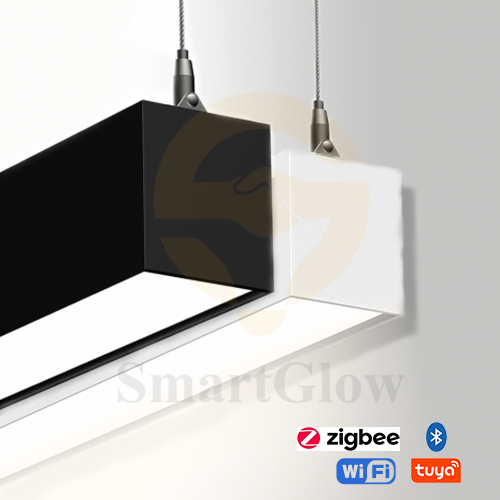
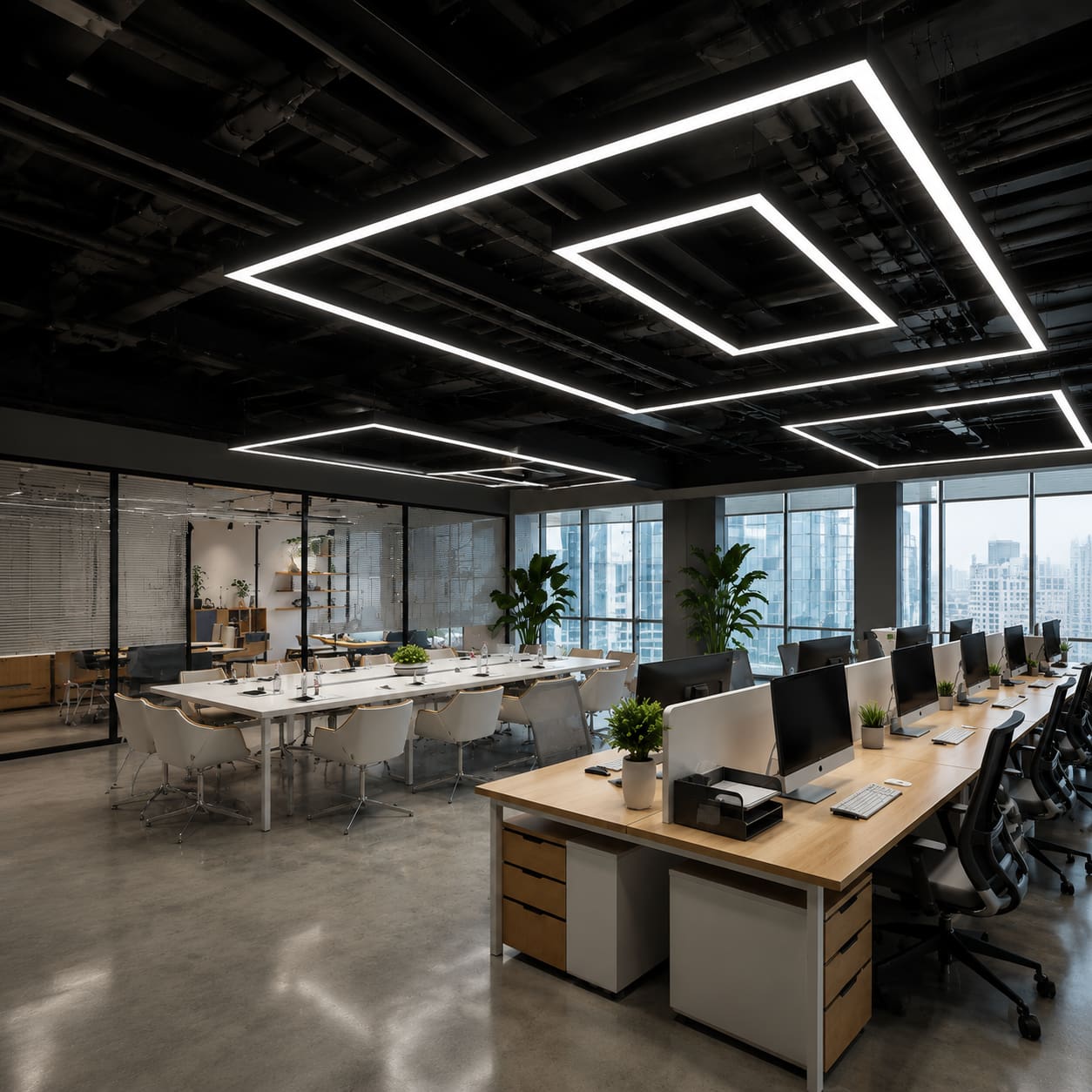
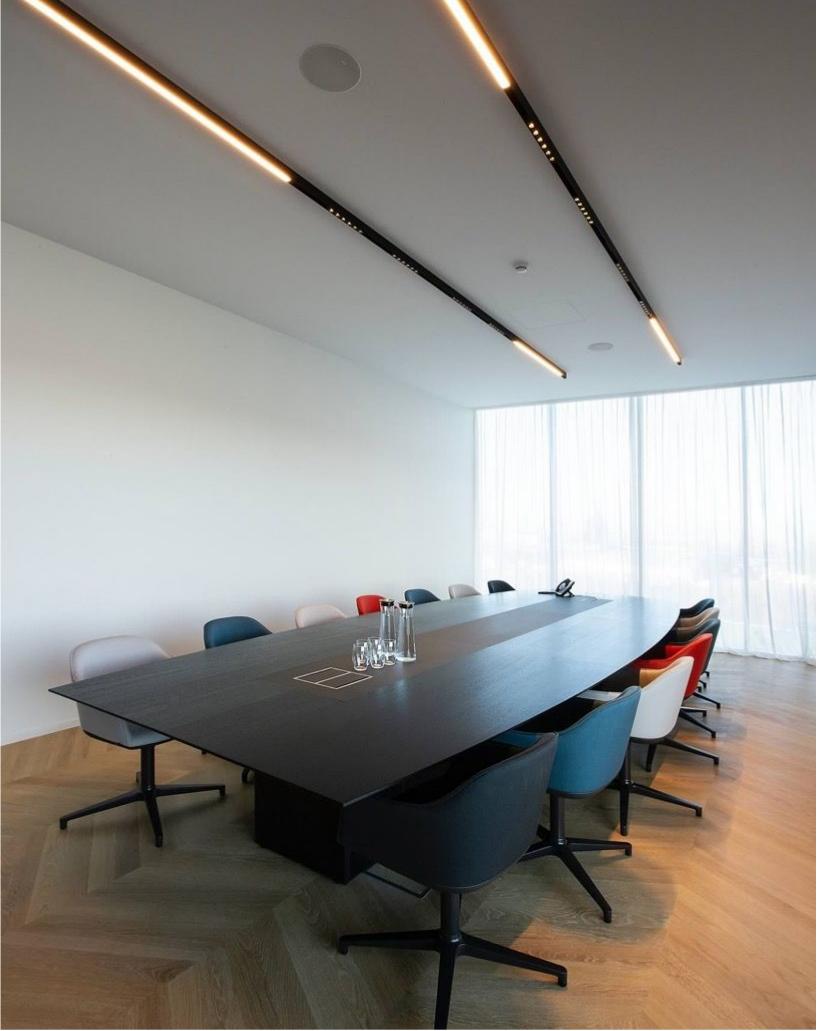 2. Suspended Linear LED LightingSuspended linear LED lighting is a common lighting choice in modern office spaces, especially suitable for open plan office areas, conference rooms, training rooms, and collaborative spaces. Luminaires are usually installed under the ceiling through hanging wires, and the installation position and suspension height can be adjusted according to the spatial layout to provide effective lighting for the desktop and work area.Compared with traditional single point light sources, linear LED fixtures can distribute light along a longer direction, which helps to create a continuous and neat visual effect.
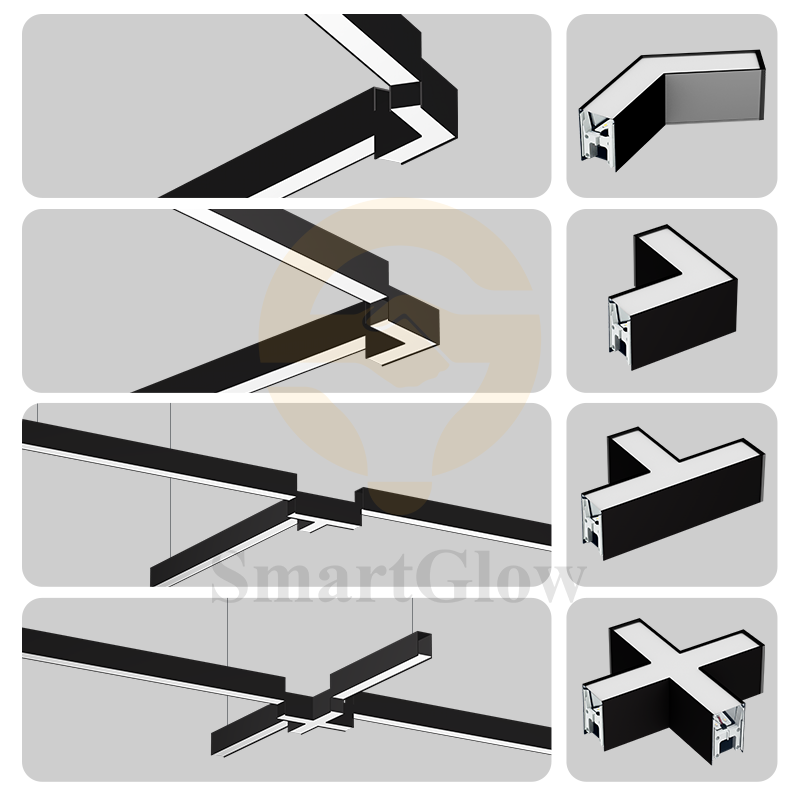
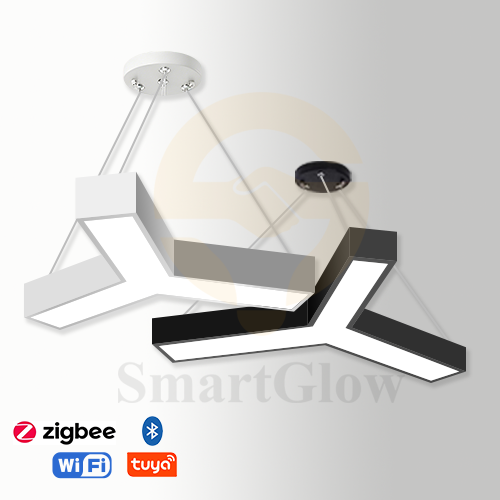 3. Modular and Spliceable Linear LED LightingModular and spliceable linear LED lighting is suitable for modern office spaces that pursue personalized design and flexible layout. This type of product can combine multiple linear lamps into different geometric shapes through different connectors, adapters, or dedicated connection modules.Based on the product structure and support for connecting accessories, lighting fixtures can be designed in straight, rectangular, circular, or hexagonal shapes, as well as other customized geometric layouts to add visual features to open offices, conference areas, creative studios, and reception spaces. For example, rectangular combinations can be used to emphasize the arrangement of workstations, rectangular combinations are suitable for echoing the layout of conference tables, and circular or hexagonal designs can become the visual focus of reception areas and collaborative spaces.
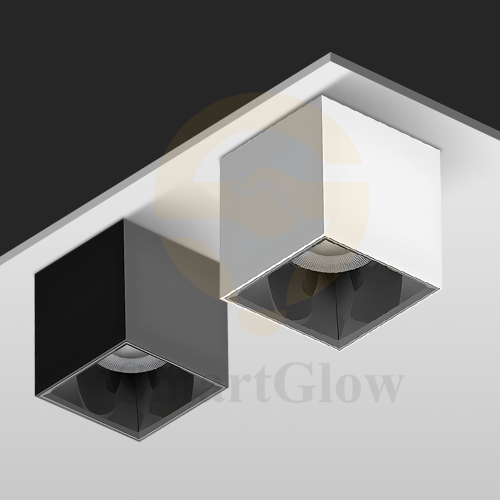
 4. LED DownlightsLED downlights are suitable for providing basic environmental lighting for offices, and can also be used in corridors, reception areas, independent offices, and auxiliary functional spaces. Its appearance is simple and can be combined with different interior design styles. According to the ceiling structure and installation conditions, LED downlights are mainly divided into embedded and surface mounted types.
Recessed LED DownlightsRecessed LED downlights are installed in ceiling openings or reserved installation positions, and the main body of the lamp is usually hidden in the ceiling structure, which can create a clean and simple spatial effect.This type of lighting fixture is suitable for offices with suspended ceilings or corresponding installation conditions, and can be used in corridors, independent offices, reception areas, and other spaces that require a clean ceiling appearance. When planning the layout, consideration should be given to the spacing between lighting fixtures, beam angle, ceiling height, and target illuminance to avoid issues such as local excessive brightness, uneven lighting, or obvious desktop shadows.Surface Mounted LED DownlightsSurface mounted LED downlights are directly installed on the ceiling surface, without the need for corresponding lamp installation holes on the ceiling like embedded tube lights. Therefore, for offices without suspended ceilings, where the ceiling structure is not suitable for opening holes, or where there is a desire to reduce construction and renovation, surface mounted downlights are a practical choice.This type of lighting fixture is suitable for renovating old offices, commercial office spaces, corridors, and some auxiliary areas. The installation method is relatively direct, but the appearance of the lighting fixtures will be more obvious, so the selection should be based on the ceiling height, spatial style, and overall layout.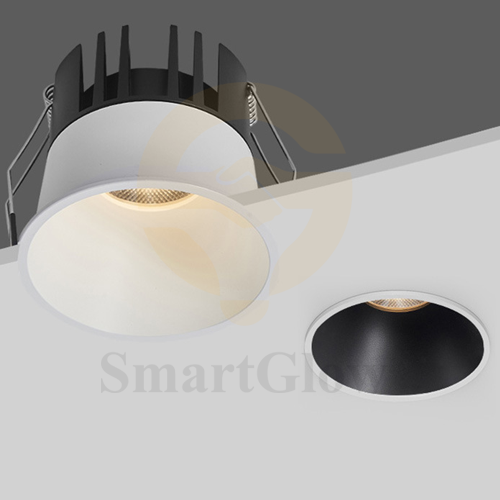
 How to choose suitable office lighting?The following key factors can help you choose a more suitable office lighting solution.1. Ensure sufficient lighting in the work areaThe illumination requirements vary in different office areas. For example, regular office workstations typically require sufficient desktop lighting, meeting rooms need to accommodate activities such as discussions, reading, and presentations, while corridors and rest areas can use relatively low illumination. For open office areas, suspended linear LED floodlights or linear LED grille lights can be considered to provide illumination for continuously arranged workstations; Magnetic track lights are suitable for areas that require flexible adjustment of light direction.A reasonable office lighting solution should confirm the actual illuminance on the work plane through lighting calculations or on-site measurements, and try to avoid problems such as insufficient lighting, local excessive brightness, or uneven distribution of light and dark as much as possible.2. Choose a lighting atmosphere suitable for the work environmentColor temperature, measured in Kelvin (K), can affect the visual experience and overall atmosphere of an office space.
- 3000K warm white light: The light is warm and soft, suitable for reception areas, rest areas, and some leisure and communication spaces, helping to create a relaxed and friendly environment.
- 3500K-4000K neutral white light: Balancing comfort and clarity, suitable for open office areas, conference rooms, independent offices, and daily work areas. It is a common choice for office lighting.
- 5000K cool white light: The visual experience is relatively refreshing, suitable for some work scenes that require clear recognition of details, but not all offices require a higher color temperature. The specific selection should be based on spatial design, work tasks, and actual preferences.
For most regular office spaces, 3500K-4000K is usually a range worth prioritizing. However, color temperature alone cannot determine lighting quality, and attention also needs to be paid to illuminance, color rendering, and glare control.(Click here to read more about the difference between 3000K and 4000K LED lights)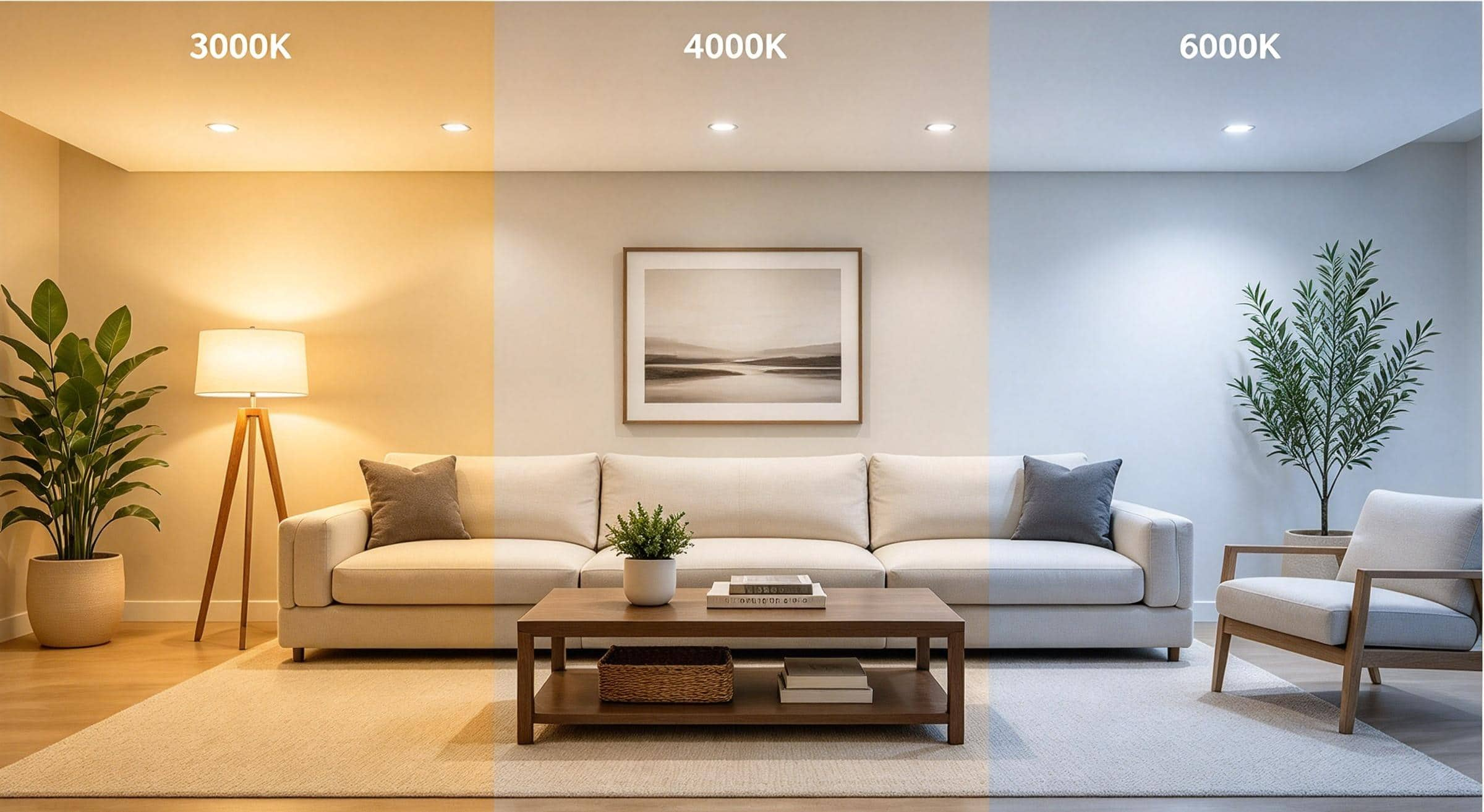 3. Enhance visual comfortWhen choosing office lighting fixtures, you can focus on the following aspects:
- Glare control performance: Check whether the lighting fixtures provide unified glare values (UGR) and other related data, and evaluate them based on actual spatial layout. The lower the UGR, the lower the glare risk, but the actual effect also depends on the position of the lighting fixture, the viewing direction, and the indoor environment.
- Optical structure: Hidden light source, grid structure, and optimized lens or reflector design can help control specific angles of light and reduce direct glare.
- Installation position of lighting fixtures: The positioning of lighting fixtures should be planned based on the arrangement of workstations, the direction of displays, and the main line of sight of personnel to reduce direct light sources and screen reflections.
- Lighting uniformity: Avoid significant differences in brightness and darkness on the workbench, while ensuring a reasonable brightness transition between ambient lighting and task area lighting.
4. Make the distribution of light more reasonableThe beam angle can affect the coverage and concentration of light, and is an important factor to consider when choosing office lighting fixtures.
- Wide beam lighting: suitable for areas that require large-scale illumination, such as open office areas, corridors, and some public spaces.
- Narrow beam lighting: suitable for key lighting, such as highlighting reception desks, brand display walls, or specific display objects.
- Linear light distribution: suitable for long workstations, conference tables, and continuous work areas, helping to distribute light along specific directions.
- Adjustable directional lighting: suitable for spaces that require flexible adjustment of key lighting positions, such as display areas or multifunctional office areas using adjustable angle magnetic spotlights.
 5. Plan artificial lighting based on window locationNatural light is an important component of office lighting design. Reasonably utilizing the sunlight brought by windows can improve the brightness of the space and reduce the use of artificial lighting under appropriate conditions.Workstations near windows may receive more sunlight, while internal areas of the office may rely on artificial lighting for a long time. When designing, the window area and the interior area of the office can be evaluated separately, and the layout of lighting fixtures and lighting control methods can be adjusted according to the actual lighting situation. For example, using partition control or dimming systems allows different areas to independently adjust brightness according to changes in sunlight.6. Focus on long-term use valueOffice lighting usually requires long-term operation, so energy efficiency directly affects the daily operating costs of enterprises. When choosing LED lighting fixtures, in addition to comparing the initial purchase price, it is also necessary to evaluate the luminous efficiency, rated power, service life, maintenance requirements, and operating costs of the control system. Under the same lighting requirements, lamps with higher luminous efficiency can usually provide the required luminous flux with less electrical energy.
Suggestions for matching lighting fixtures in different office spaces
The following table summarizes the lighting reference values and suitable types of lighting fixtures for common office areas, helping you plan office lighting solutions more efficiently.
|
Office area
|
Recommended illuminance(lx)
|
Recommended color temperature
|
Recommended type of lighting fixtures
|
|
Open office area
|
300–500
|
3500K–4000K
|
Suspended linear LED floodlights, linear LED grille lights, magnetic track lights
|
|
Independent office
|
300–500
|
3500K–4000K
|
Suspended linear LED floodlights, magnetic track lights, recessed LED downlights
|
|
Meeting Room
|
300–500
|
3000K–4000K
|
Adjustable Linear LED Light, Magnetic Track Light
|
|
Reception area and front desk
|
200–500
|
3000K–4000K
|
Magnetic spolights, suspended linear LED floodlights, LED downlights
|
|
Training Room
|
300–500
|
3500K–4000K
|
Suspended linear LED flood / grille lights, adjustable Linear LED Light
|
|
Creative Studio
|
300–500
|
3500K–5000K
|
Magnetic track lights, Modular linear LED light
|
|
Corridors and passages
|
100–200
|
3000K–4000K
|
Recessed LED downlights, surface mounted LED downlights, suspended linear LED lights
|
|
Rest area
|
150–300
|
2700K–3500K
|
LED downlights, suspended linear LED lights, magnetic track lights
|
|
Brand display area
|
Determined according to display needs
|
3000K–4000K
|
Magnetic spolights, suspended linear LED lights
|
Note: The above illuminance and color temperature are preliminary design references and are not fixed standards applicable to all projects. The actual value should be determined based on local lighting regulations, space use, work plan, lighting fixture distribution, and lighting calculation results. The office desktop is often used as a reference work plane with a distance of about 0.75 meters from the ground.
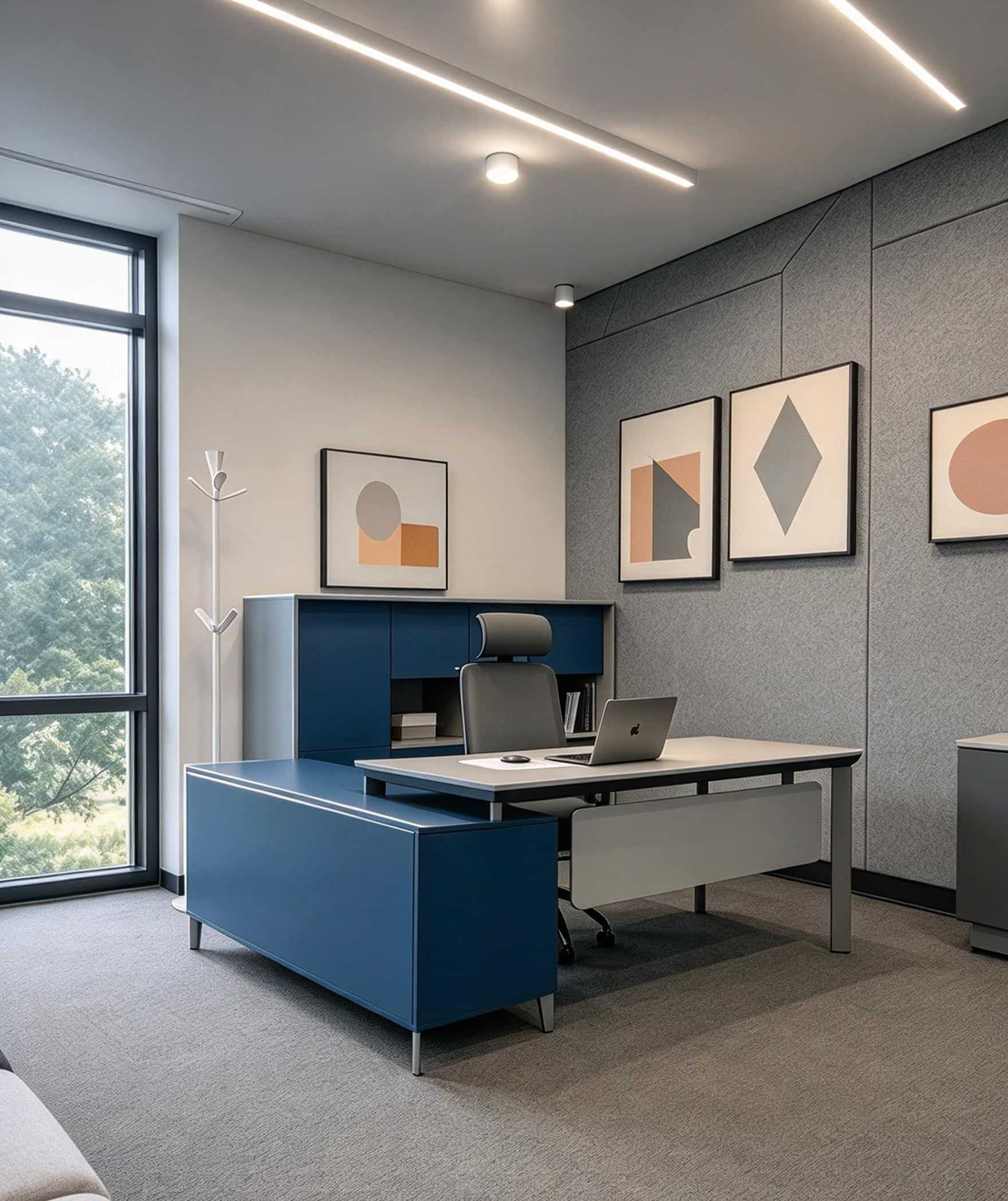 Create a Better Workplace with the Right Office LightingEnterprises can develop more targeted office lighting solutions for open office areas, conference rooms, reception areas, and other functional spaces.SmartGlow Lighting offers a variety of LED lighting products, including magnetic track lighting systems, suspended linear LED fixtures, and LED downlights, which can be used in different types of commercial and office spaces. Whether you are planning a new office or upgrading an existing lighting system, you can choose the appropriate product combination based on the project's spatial layout, lighting requirements, and control requirements.
Are you looking for a suitable office lighting solution for your project?Welcome to contact SmartGlow Lighting for inquiries on product specifications, lamp selection, lighting configuration, and project customization needs. Our team can assist you in exploring suitable LED lighting products to create lighting solutions for office spaces that balance functionality, comfort, and modern design.Frequently Asked Questions About Office Lighting1. What is the best color temperature for office lighting?Neutral white light at 3500K-4000K is a common choice. The reception and rest areas can consider warm white light around 3000K, while work areas that require clear presentation of details can choose higher color temperatures according to actual needs.2. What type of lighting is best for an open-plan office?Open plan office areas are usually suitable for using suspended linear LED floodlights or linear LED grid lights to provide more uniform lighting for continuously arranged workstations. If the spatial layout is frequently adjusted, magnetic track lights can also be used to flexibly meet the lighting needs of different areas.3. Can office LED lights support dimming and smart controls?Sure, the specific functions depend on the configuration of the lighting fixtures, drivers, and control systems. Some office LED lighting fixtures support dimming methods such as 0-10V and DALI, and some intelligent lighting systems can also support control schemes such as Wi Fi, Bluetooth, or Zigbee. Before procurement, the compatibility between the lighting fixtures and control equipment should be confirmed.4. How do I choose a reliable office lighting supplier?When choosing an office lighting supplier, it is recommended to focus on evaluating the following aspects:
- Product quality: Can complete product specifications, optical parameters, and applicable certification materials be provided.
- Customization capability: Can different lighting configurations, sizes, or installation plans be provided according to project requirements.
- Control compatibility: whether it supports the dimming mode and intelligent control system required by the project.
- Project service: Can you provide selection suggestions, technical support, delivery arrangements, and after-sales service.
Previous
LED Color Temperature Selection Guide: 3000K vs 4000K LED Lighting
Read More


