Shadow Gap Skirting: A Modern Alternative to Traditional Skirting Boards
By SmartGlow
September 19th, 2026
Shadow skirting board is an aluminum alloy skirting board system used in modern interior design, which reduces the visual presence of traditional skirting boards by creating a shadow gap between the wall and floor. Depending on the function, you can choose Shadow Skirting without LED lights or LED Shadow Skirting.
Quick Summary
Shadow Skirting Board is an aluminum alloy skirting board system used in modern interior design. By creating a shadow gap/shadow line between the wall and floor, it reduces the visual presence of traditional skirting boards and makes the wall to floor transition more concise and continuous. According to different functions, Shadow Skirting without LED lights or LED Shadow Skirting with integrated LED lights can be selected.
Main Advantages
It has a simple modern appearance that can weaken the presence of traditional baseboards, while also taking into account wall and floor closures and architectural details design.
Non LED Shadow Skirting is mainly used to create shadow gaps and minimalist wall transitions; LED Shadow Skirting can integrate LED light strips to achieve hidden indirect lighting.
- The effect of LED Shadow Skirting
It can create indirect lighting, floating wall effect, night lighting, and decorative lighting effects, making the skirting board a part of the spatial lighting.
- Suitable for walls and spaces
Can be used for wall structures such as Plasterboard/Drywall, and is suitable for residential, hotel, office, retail, exhibition halls, and other modern commercial spaces.
- Difference from traditional skirting board
Traditional skirting usually forms clear wall base lines, while shadow gap skirting uses hidden and seam design to make the transition between the wall and the ground more concise.
- Consider when making a purchase
Focus on whether LED, wall structure, shadow gap size, floor materials, installation methods, and post maintenance of LED light strips are needed.
Shadow gap skirting profile can be customized according to project requirements in terms of size, structure, LED configuration, surface treatment, and installation methods, and supports OEM/ODM projects.
With the increasing attention to minimalist, modern, and integrated architectural design, more and more designers are beginning to weaken the presence of traditional baseboards, creating a more concise and continuous visual relationship between walls and floors. Shadow Skirting Board is a solution that has emerged in this design trend. By using specially designed aluminum profiles, a clear shadow gap or shadow line is formed between the wall and floor, which can not only complete the wall and floor closing, but also make the wall look lighter. Some profiles can also be integrated with LED light strips, combining baseboards with hidden lighting to create a soft indirect light effect.This article will introduce what Shadow Skirting Board is, its advantages, different types, and how to choose the appropriate shadow gap skirting profile based on project requirements.
1. What Is a Shadow Skirting Board?Shadow Skirting Board is a skirting board system that creates visual gaps at the junction of walls and floors through a special aluminum profile structure.Unlike traditional skirting that directly covers the junction of walls and floors, shadow skirting emphasizes the design effect of "leaving gaps". After installation, a continuous and narrow shadow line will form at the bottom of the wall, creating a clearer layer between the wall and the ground. This effect is also known as shadow line skirting, shadow gap skirting, shadow skirting, or skirting with shadow gap.For modern interior design, its value lies not only in hiding baseboards, but also in making spaces look lighter and more organized through simpler wall to ground relationships. If LED light strips are added, the profile can also become a hidden lighting channel, creating soft indirect lighting at the foot of the wall.
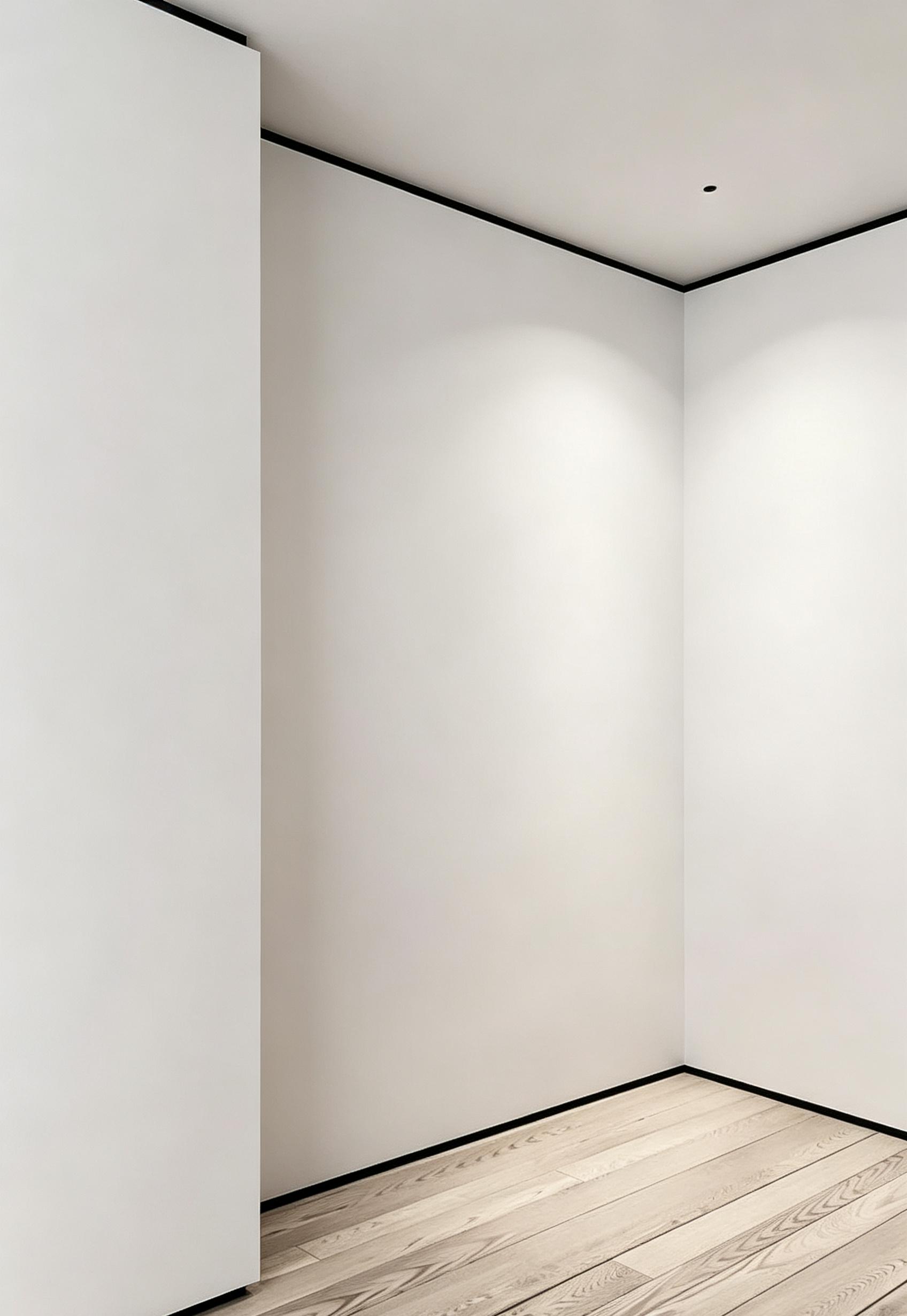 2. Why Is Shadow Gap Skirting Becoming Popular?A More Minimalist AppearanceTraditional skirting usually forms a clear horizontal decorative line at the bottom of the wall, while Shadow Skirting hides the profile part to maintain a more complete visual effect of the wall. For minimalist, modern, and architectural style interior spaces, this approach can reduce unnecessary visual elements and make the relationship between walls, floors, and furniture more coordinated.
A Cleaner Wall-to-Floor TransitionOrdinary baseboards are mostly closed by "covering", while shadow gap skirting completes the transition between walls and floors by "leaving gaps". This structure can form a clear skirting shadow line, making the transition between the wall and the ground more neat and adding architectural details to the interior space.
Architectural Detail Instead of a Simple DecorationShadow skirting is not simply about changing the appearance of a skirting board. From a design perspective, it actually turns the bottom of the wall into a building detail. Especially in hotels, commercial spaces, high-end residences, and modern office spaces, shadow gaps can help designers establish a unified line language.
Optional LED IntegrationFor projects that require further enhancement of spatial atmosphere, profiles with LED installation slots can be chosen. This LED shadow skirting combines skirting with lighting, creating soft indirect illumination at the base of the wall by hiding LED strips. Compared to adding a separate set of lighting fixtures, LED integrated skinning allows the light to blend more naturally into the building structure.
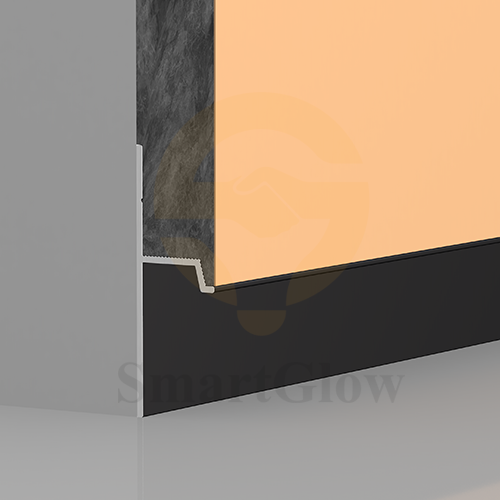
3. Types of Shadow Skirting Board ProfilesAccording to different functions, Shadow Skirting Boards can be roughly divided into two main types: basic models without LED lights and lighting models with LED lights.Shadow Skirting Board Without LED LightingThe shadow gap skirting board without LED emphasizes a minimalist wall to ground interface effect. It forms a shadow gap through the structure of the aluminum profile itself, making the skirting board visually weaker while continuing to serve as a wall protection and closure function. This type is suitable for:Modern residential interiors
For projects using Gypsum Wall, drywall, or Plasterboard structures, Plasterboard shadow gap skinning can also be considered to create a more natural connection between the profiles and the wall structure. If the project does not require lighting and only wants a simple architectural effect, this version is usually sufficient to meet the requirements.
Shadow Skirting Board with LED LightingIf you want to combine the skirting board with lighting, you can choose a shadow gap skirting profile with LED slots. The LED strip is hidden inside the profile or near the foot of the wall, forming indirect lighting through structural and diffusion design.This approach can create:
- Soft indirect lighting
- Floating wall effect
- Decorative lighting
- Low-level guidance lighting
- Night-time ambient lighting
For example, in bedrooms or hotel rooms, low lighting can provide soft nighttime illumination; In commercial spaces, wall foot lighting can be used to enhance building contours. Therefore, shadow line skirting boards can not only achieve closure, but also become a part of spatial lighting.
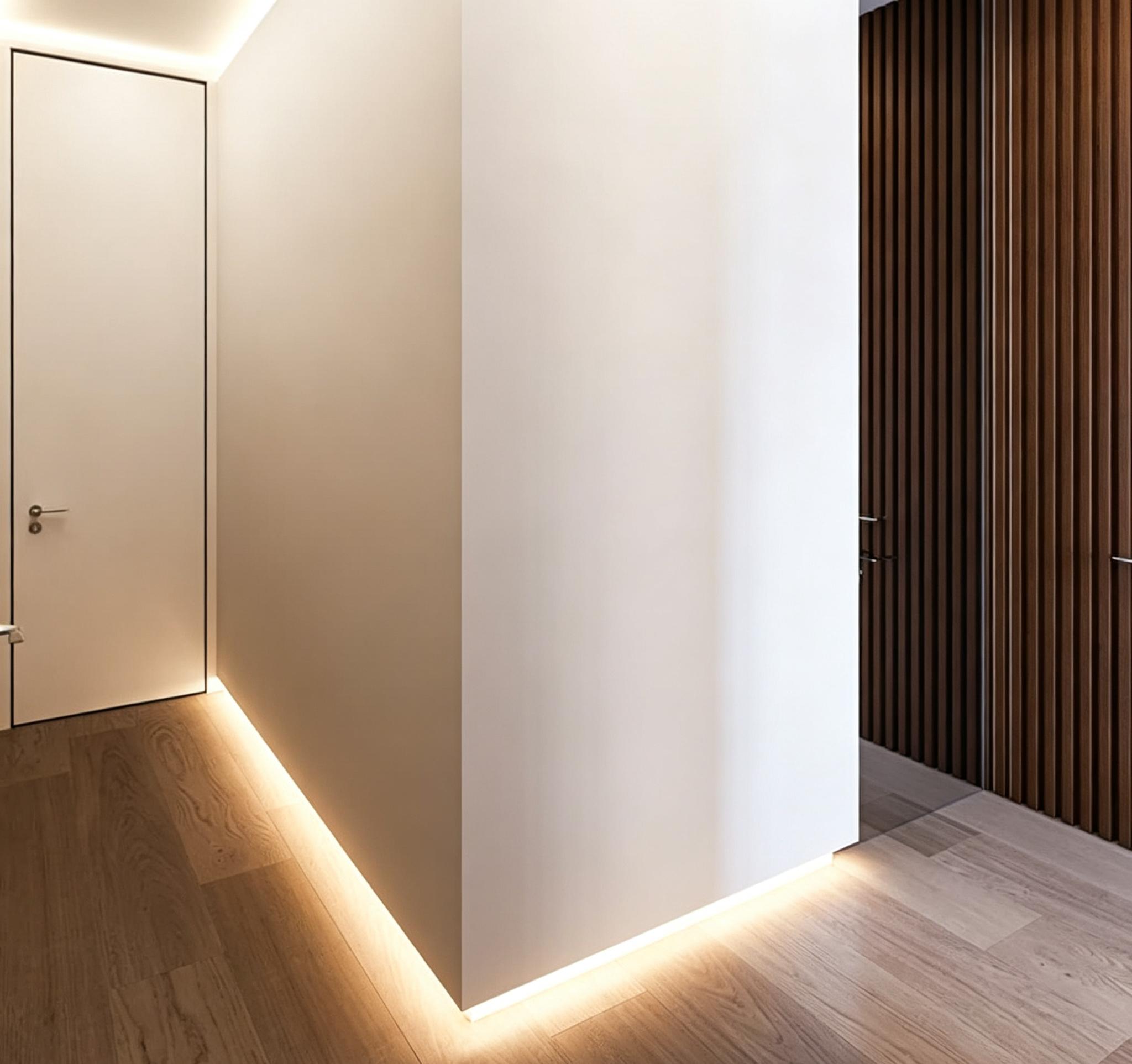
4. How Does Shadow Skirting Create a Shadow Gap?The visual effect of Shadow Skirting mainly comes from the profile structure. It can be simply understood as: Wall+Aluminum Profile+FloorAluminum profiles are installed at the bottom of the wall, forming a small visual gap between the wall and the ground through a specific structure. When light shines on this area, a shadow gap or shadow groove will naturally form at the bottom of the wall. Therefore, the so-called shadow effect does not rely solely on color or decoration, but comes from the actual spatial structure. If LED light strips are added to the profile, the light will further emphasize this gap, making the shadow gap detail skirting have both architectural details and lighting effects.
5. Shadow Skirting Board vs. Traditional Skirting BoardFor consumers who are currently undergoing interior decoration, a very practical question is: why not choose shadow gap skirting instead of regular skirting?
| Comparison Items |
Traditional Skirting |
Shadow Skirting Board |
| Visual Effects |
The kick line is more obvious |
More hidden and concise |
| Wall to Ground Handover |
Form obvious decorative lines |
Create a shadow gap |
| Modern Minimalist Style |
General |
More suitable |
| Architectural Detail Sense |
Weaker |
More obvious |
| LED Integration |
Usually requires additional design |
Integrated LED light strip |
| Spatial Vision |
Biased towards tradition |
More lightweight and modern |
| OEM & ODM |
Depending on the material |
Customizable profile structure |
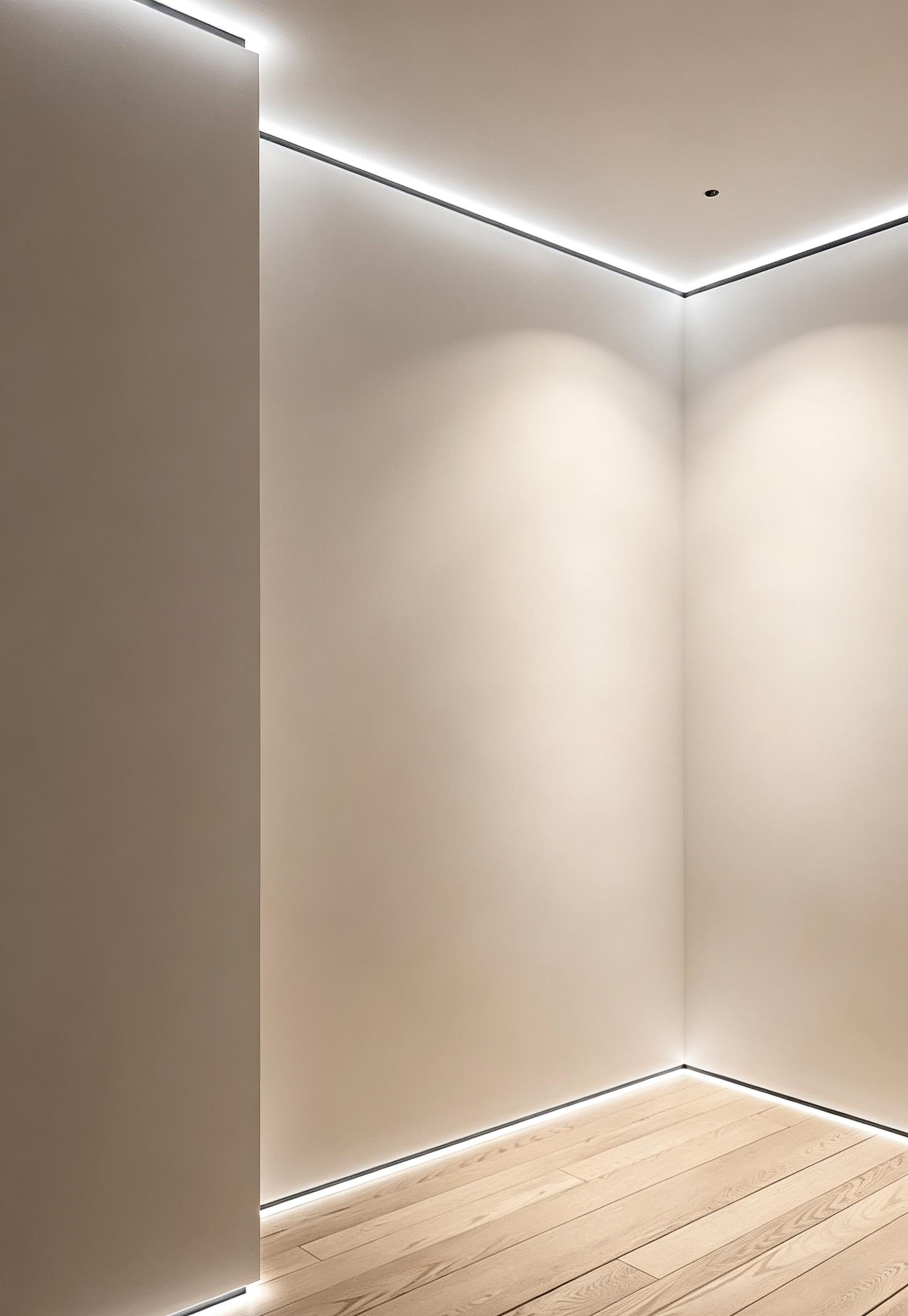
6. Where Can Shadow Skirting Be Used?Residential InteriorsIn residential areas, Shadow Skirting can be applied to living rooms, bedrooms, corridors, and other modern indoor spaces. The version without LED can be used to create clean and simple wall to floor transitions; The version with LED can create soft decorative lighting at the foot of the wall. For modern residential spaces, especially minimalist style spaces, shadowline skirting boards can make the walls look more complete.
HotelsHotel rooms, corridors, lobbies, and public spaces often emphasize architectural details. Shadow gap skirting can weaken the presence of traditional baseboards, while LED versions can increase low-level ambient lighting. This approach is particularly suitable for hotel projects that aim to create a simple and sophisticated spatial effect.
OfficesModern offices often adopt simple wall and floor designs. Shadow Skirting can reduce the visual segmentation caused by traditional baseboards, making the office space more unified. If LED lighting is added to conference rooms, leisure areas, or public areas, it can create a more layered spatial effect.
Retail and Commercial SpacesCommercial spaces need to focus on both design effectiveness and long-term use. Shadow Skirting can not only complete wall and floor closing, but also form a unified design language with wall lighting, ceiling lighting, and other architectural lighting. LED versions are particularly suitable for enhancing building contours in exhibition halls, boutique stores, and high-end commercial spaces.
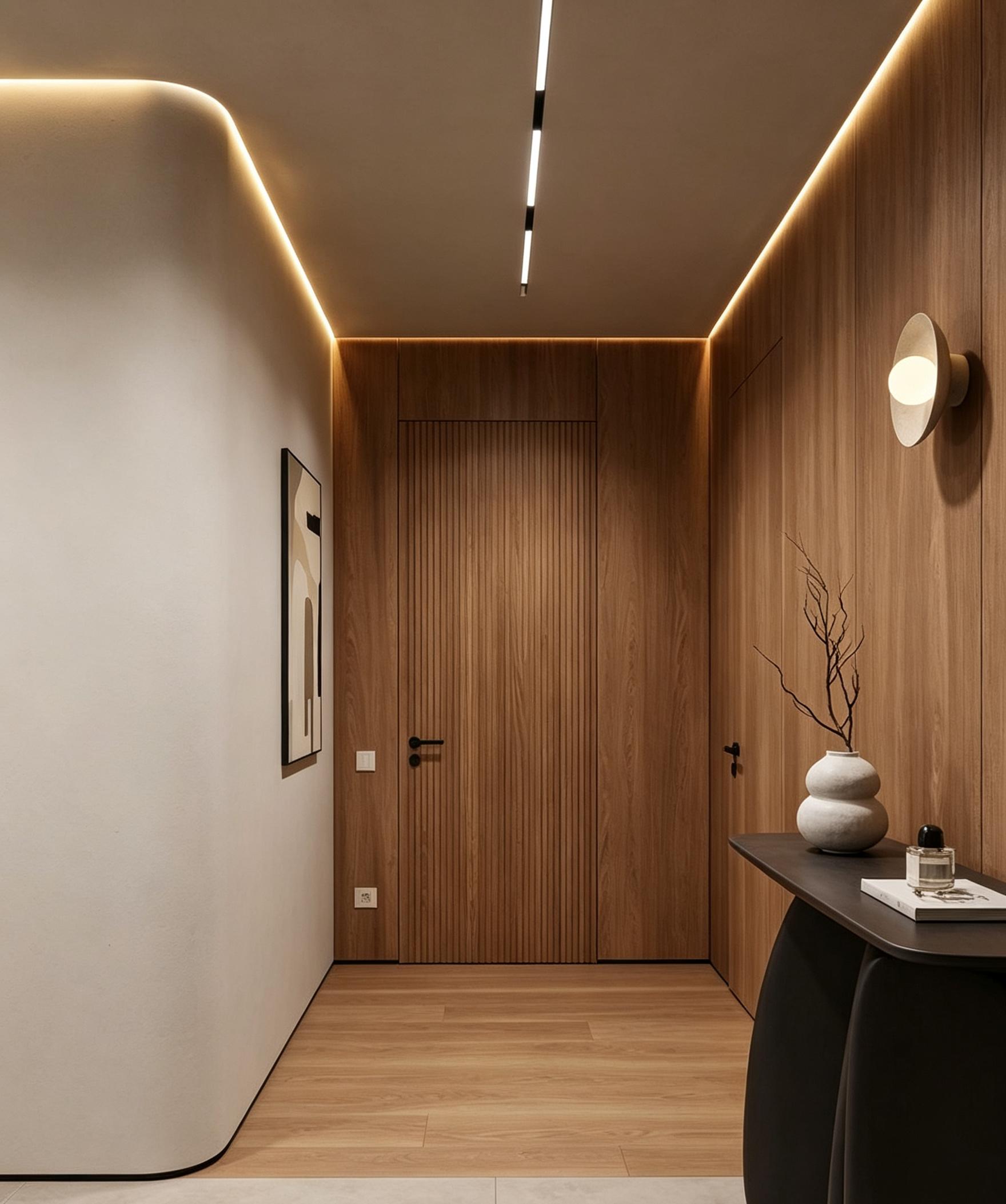 7. LED Shadow Skirting: More Than a Skirting DetailShadow Skirting with LED is not simply adding a light strip next to the baseboard. Reasonable design of skirting with shadow gap can make lighting a direct part of architectural details.Indirect LightingLED light strips can cast light towards walls or floors, creating soft indirect lighting through reflection.
Floating Wall EffectWhen continuous light appears at the bottom of the wall, it can create a visual effect similar to wall suspension.
Night LightingLow level lighting can be used as nighttime auxiliary lighting in residential, hotel, and bedroom environments.
Decorative LightingIn commercial spaces and high-end residences, LED shadow skirting can also be used to emphasize walls and spatial contours.However, the final lighting effect will also be affected by LED strips, installation depth, diffusion method, and wall materials, so the profiles and lighting system should be planned as a whole.
8. What Should You Consider When Choosing Shadow Skirting?
Firstly, determine whether the project requires lighting. If you mainly pursue minimalist wall and floor closing effects, you can choose non LED shadow skirting; If ambient lighting is also required, LED shadow skirting with light slots can be chosen.
- What Wall Structure Will Be Used?
The wall structure will directly affect the installation method of the profiles. If using Plasterboard, Drywall, or other wall systems, it is necessary to confirm whether the profiles match the wall structure.
- How Large Should the Shadow Gap Be?
A larger shadow gap is not necessarily better. It is necessary to determine the appropriate gap size based on the wall ratio, floor material, and overall design, in order to coordinate the shadow effect with the spatial scale.
- What Floor Finish Will Be Used?
Different flooring materials, such as wooden flooring, stone, and ceramic tiles, can affect the final wall to floor transition effect, so profile design needs to be considered together with the floor finish.
- How Will the LED Strip Be Maintained?
For the version with LED, it is also necessary to consider the replacement of the light strip and post maintenance. If the LED strip is installed inside the profile, it should be ensured that it can be easily inspected and replaced during maintenance.
- Is Customization Required?
If the project has special wall structures, different shadow gap sizes, or special lighting requirements, you can choose to support customized shadow gap skinning profiles.
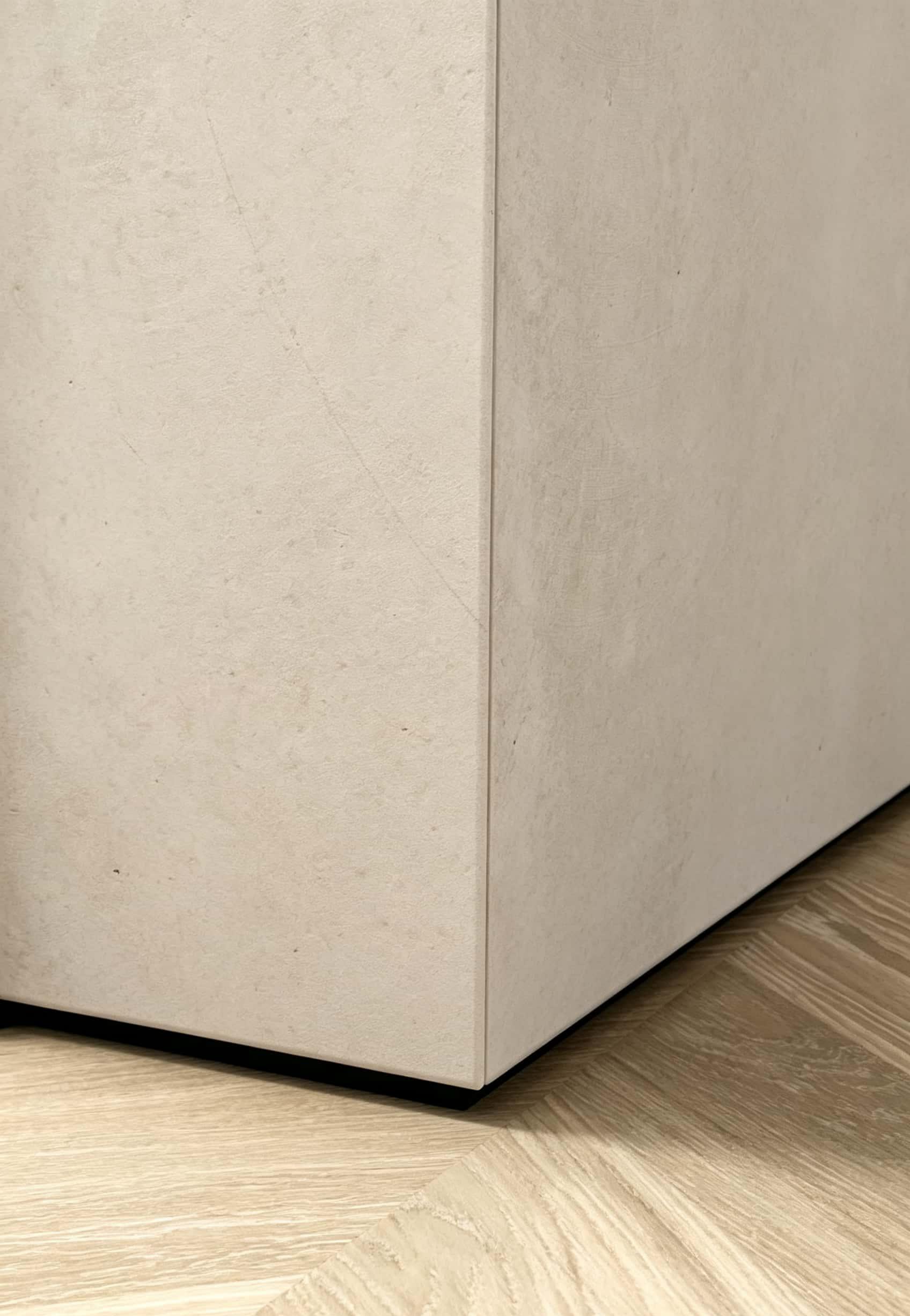
ConclusionShadow Skirting Board is not just an alternative form of traditional baseboards, but also a design approach that combines wall, floor, and architectural details. From residential and hotel spaces to offices and commercial spaces, Shadow Skirting can choose based on different wall, floor, and design requirements. By using appropriate profile structures, shadow gap sizes, and LED configurations, a more concise, modern, and architectural spatial effect can be created.
At SmartGlow Lighting, we provide aluminium shadow skirting profiles for modern residential, hospitality, office, and commercial projects, with both LED and non-LED options available. Profile dimensions, shadow gap structure, finishes, and lighting configurations can be customized according to project requirements, with OEM and ODM support available.
Looking for a shadow gap skirting profile for your next project? Contact SmartGlow Lighting to discuss your wall structure, lighting requirements, dimensions, and customized solution.
Previous
GU10 LED Light Guide: Types, Benefits and Buying Tips
Read More
Next
Wall Reading Lamp: A Guide to Choosing the Right Bedside Lighting Solution
Read More


