Transform Your Kitchen with the Right LED Lighting
By SmartGlow
October 15th, 2026
Kitchen LED lighting has become an increasingly popular choice for people to transform their kitchen lighting. This article takes you to explore the concept, types, and practical techniques of LED lighting in modern kitchens. Learn how to use appropriate LED lighting to create a fully functional and stylish kitchen. Explore lighting options, design techniques, and practical suggestions to create brighter and more comfortable spaces.
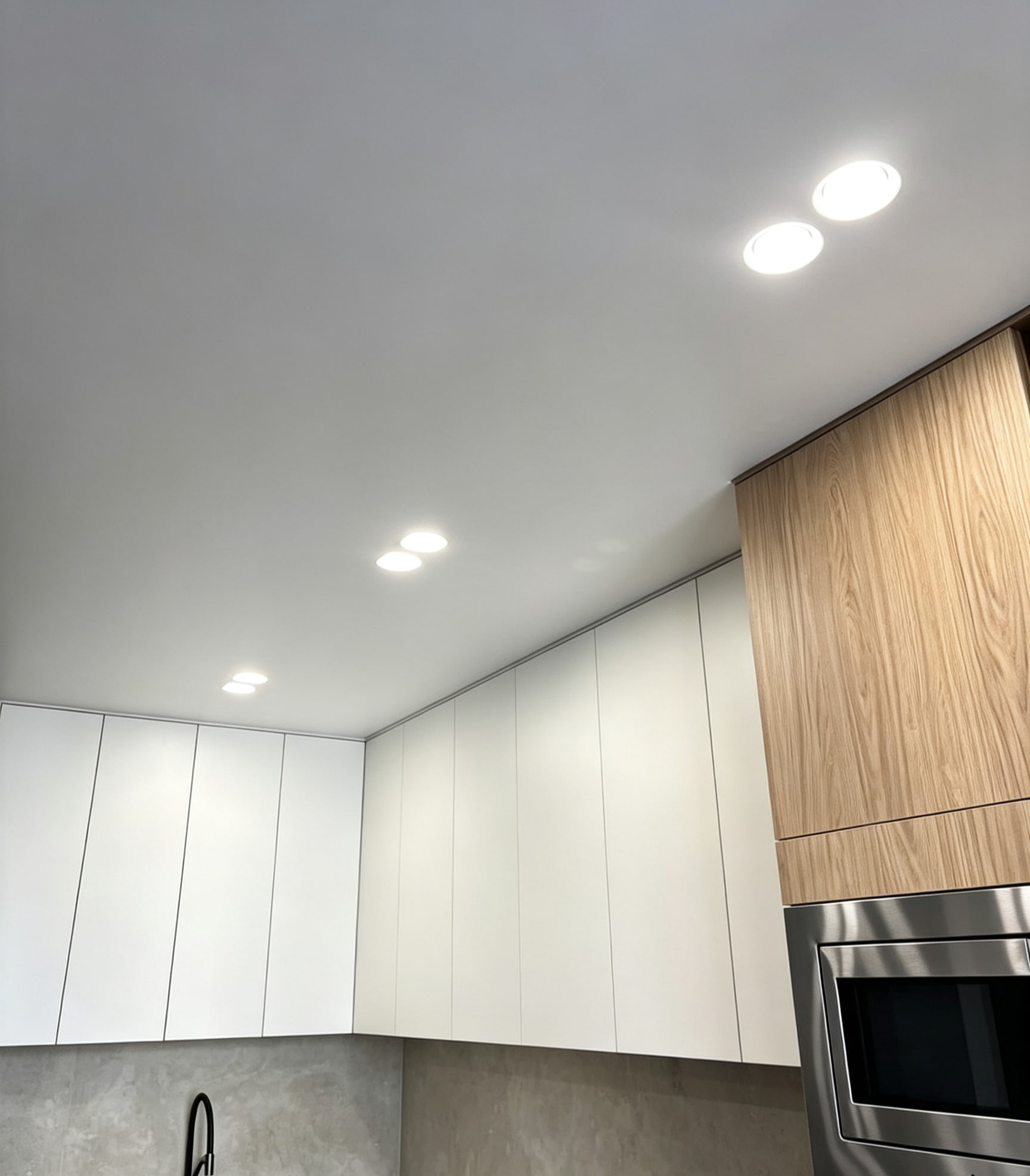
The kitchen is not only a cooking space, but also an important place for family dining and daily communication. Whether it's entertainment, helping children with homework, or just quietly dining alone, many daily activities revolve around the kitchen. Reasonable Kitchen LED Lighting can enhance the visibility of the workbench, improve the cooking experience, and create a comfortable and modern spatial atmosphere through different lighting layouts.This article will introduce the importance and solutions of kitchen LED lighting, and provide practical suggestions for creating comfortable kitchen lighting for you.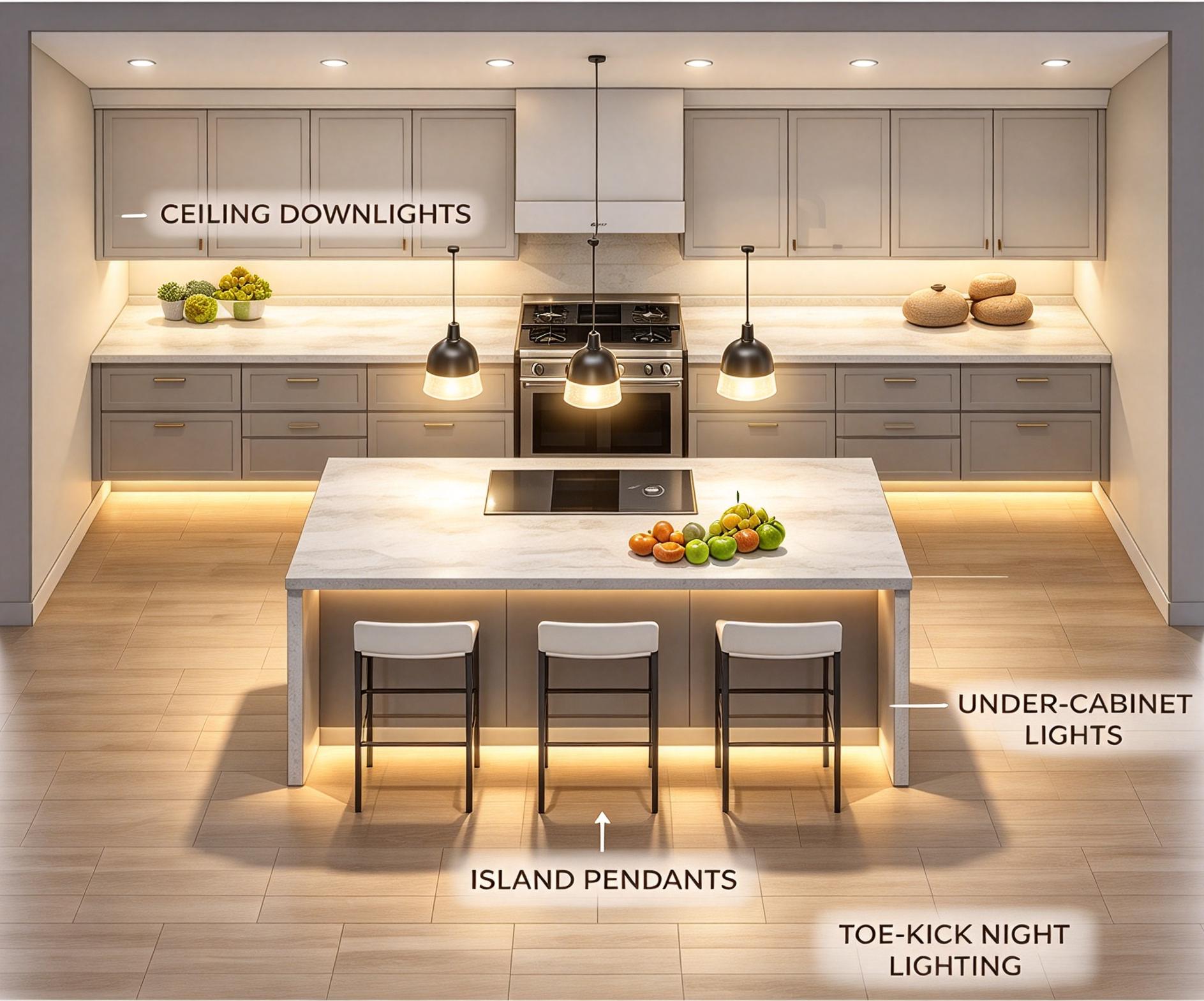 Why is kitchen LED lighting so important?A single top lighting often cannot cover all areas of the kitchen, and shadows can easily appear under cabinets and countertops, affecting daily use. Therefore, adopting a layered lighting design that combines basic lighting, operational lighting, and decorative lighting can better meet the needs of different scenarios.Whether it's a new kitchen design or an existing space renovation, planning Modern Kitchen Lighting properly and selecting appropriate lighting fixtures and installation accessories can help balance practicality, energy efficiency, and overall aesthetics.The main types of kitchen LED lightingDifferent kitchen areas have different lighting requirements. Reasonably combining basic lighting, operational lighting, and decorative lighting can not only improve the convenience of daily use, but also enhance the sense of hierarchy in the space. Here are several common Kitchen LED Lighting Solutions.1. Basic Lighting (Environmental Lighting)Basic lighting provides overall brightness for the entire kitchen and is the foundation of kitchen lighting design. Common options include ceiling lights, recessed downlights, and other LED ceiling fixtures. When planning, the kitchen area, ceiling height, and layout should be taken into account to ensure reasonable light distribution and reduce obvious dark areas.
 2. Task LightingOperating lighting is mainly used to illuminate areas such as the preparation table, cooking area, and sink that require clear visibility. Among them, Under Cabinet LED Lighting is a common solution. Installing LED light strips at the bottom of the hanging cabinet can directly illuminate the countertop, reduce shadows caused by the body or cabinet, and make daily operations such as cutting vegetables and preparing meals more convenient.It can also be paired with a suitable LED Aluminum Profile to make the installation of the light strip more neat and provide a foundation for the installation of the light strip. According to the specific product design, aluminum profiles can also assist in heat dissipation, and when paired with diffusion covers, they help soften the light.
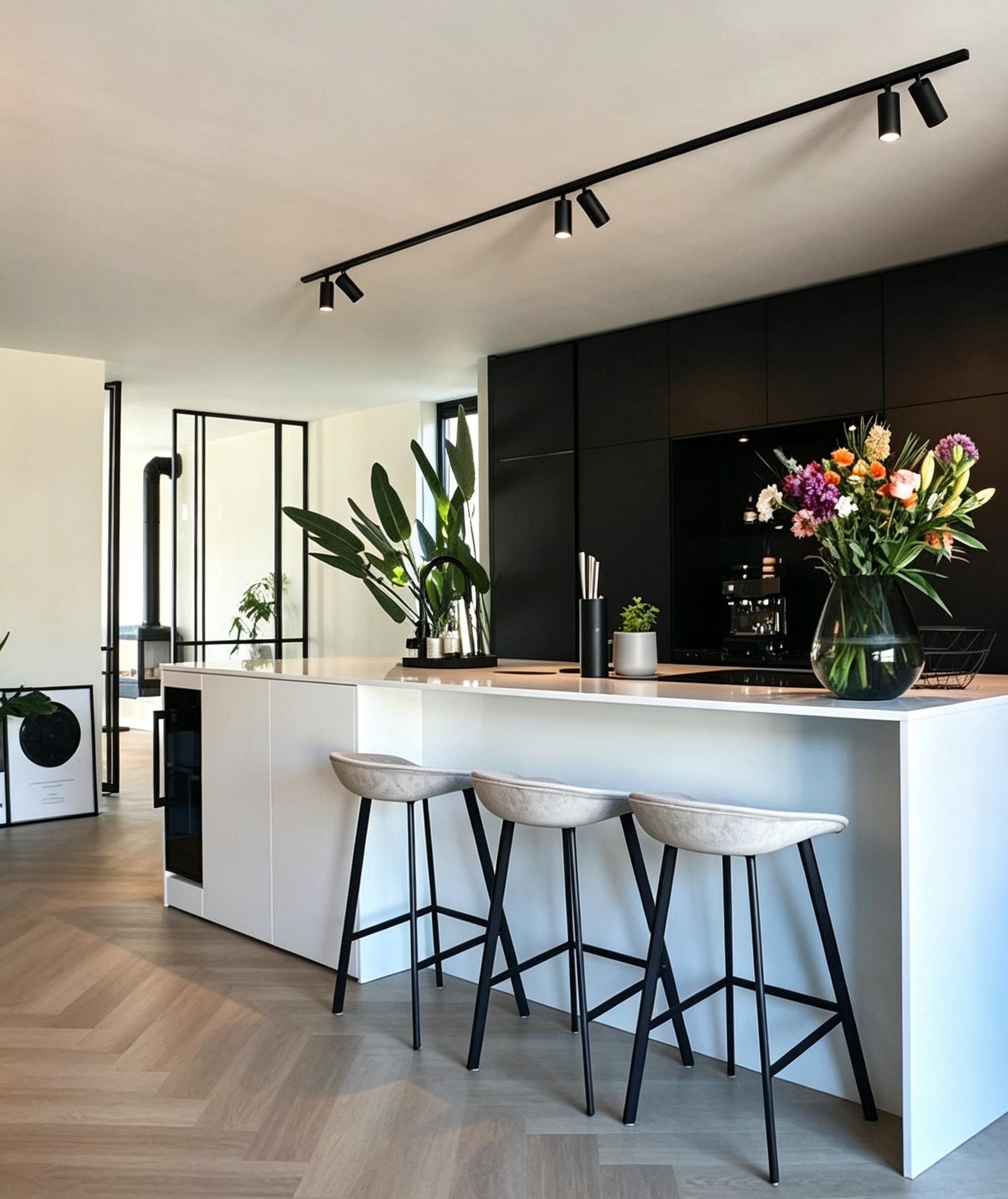
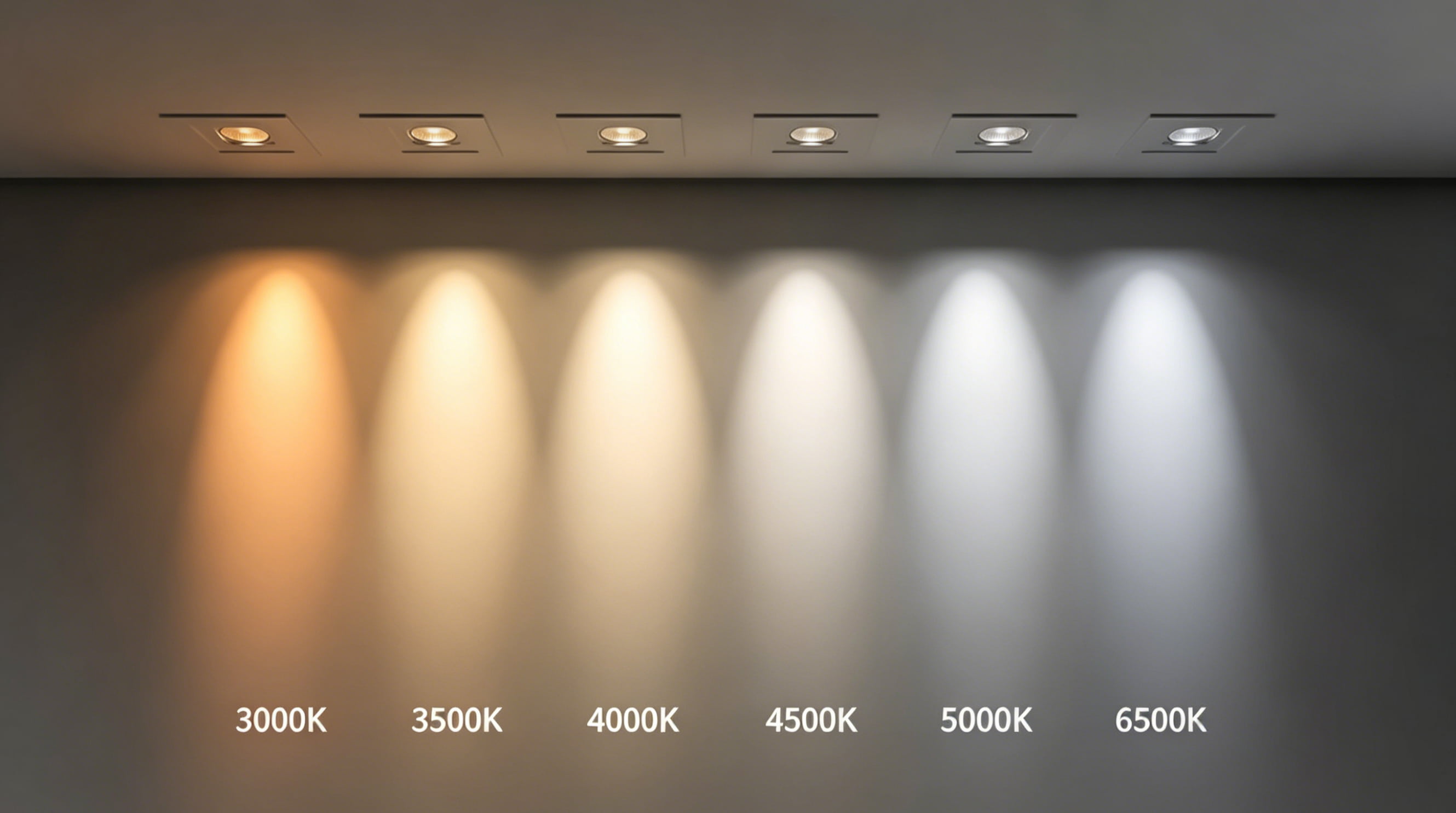
3. Decorative Lighting (Accent Lighting)If the kitchen is equipped with an island or bar counter, you can consider using chandeliers or linear chandeliers to provide lighting for dining, communication, and other activities, while also becoming the visual focus of the space. Compared to individual decorative lighting fixtures, linear lighting fixtures are particularly suitable for longer island platforms or countertops.When choosing Kitchen Island Lighting, consideration should be given to the size of the island, installation height of lighting fixtures, light distribution, and coordination with surrounding lighting to avoid excessive lighting, glare, or insufficient illumination.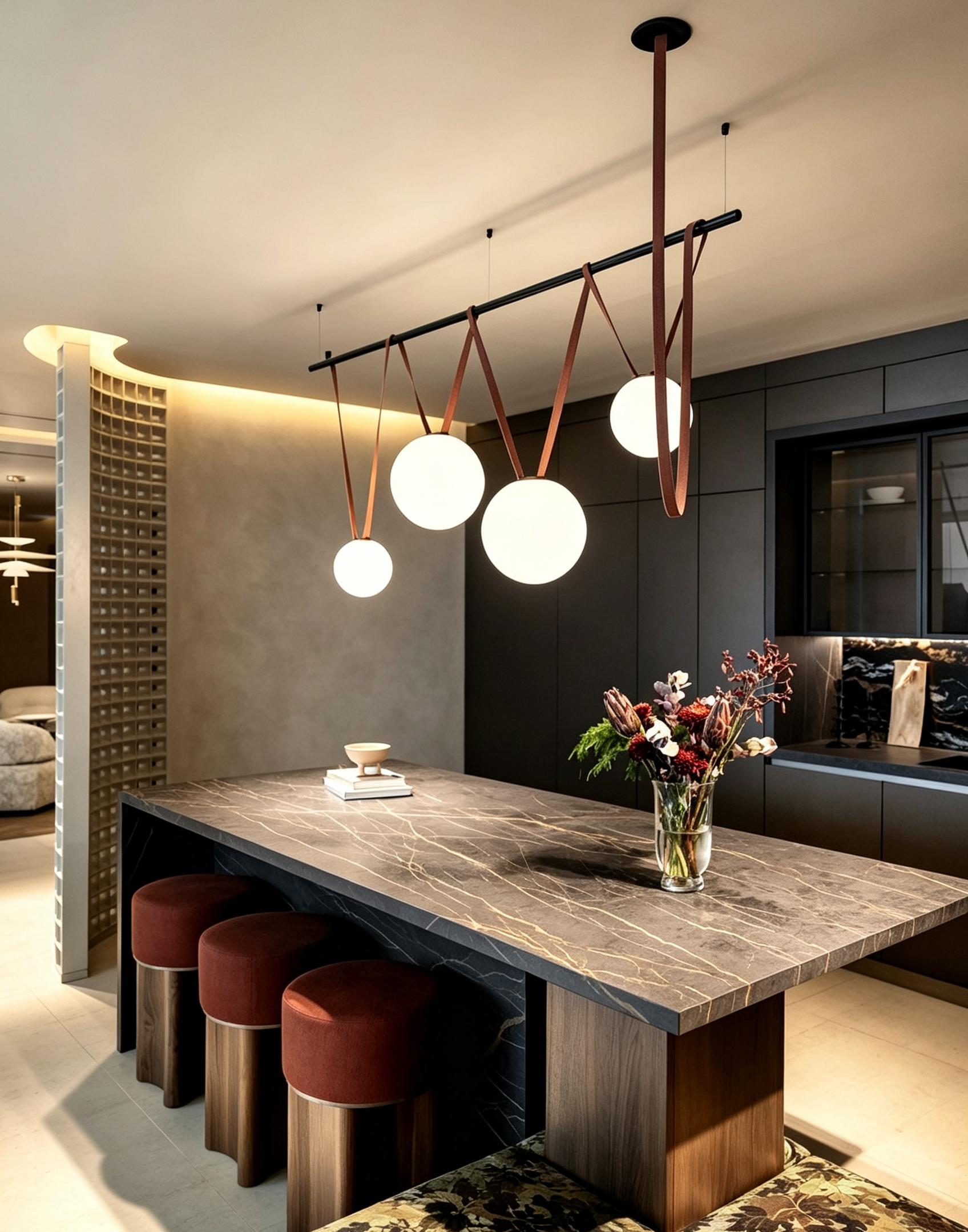 Factors to Consider When Choosing Kitchen LED Lighting1. Color TemperatureThe color temperature determines the feeling of warmth and coldness presented by the light. Different color temperatures can affect the visual atmosphere of the kitchen, as well as people's perception of the color of the space and ingredients.
- Warm white light (approximately 2700K – 3000K): The light is warm and suitable for creating a warm and relaxing atmosphere, especially for dining areas or cabinet lighting that emphasizes decorative effects.
- Neutral white light (approximately 3500K-4000K): The light is natural and soft, suitable for most home kitchens, and can be used for lighting cabinet bottoms, workstations, and daily tasks.
- Cold white light (approximately 5000K-6500K): The light is cooler, visually brighter and clearer, and can be used in spaces that require strong brightness according to specific design requirements.
For Under Cabinet LED Lighting, neutral white light is usually a practical choice that can meet daily meal preparation needs and is also relatively easy to coordinate with lighting in other areas. If the kitchen has cooking, dining, and display areas at the same time, different color temperatures can be selected according to the functions of each area, but attention should be paid to the overall coordination of lighting.
2. Brightness and Light DistributionKitchen lighting needs to balance overall environmental brightness with visibility in key areas. Relying solely on the main light on the ceiling can easily create shadows under cabinets or countertops, so it is usually necessary to supplement local lighting.When choosing LED light strips, the brightness can be determined based on the installation position, table size, strip power, and actual luminous flux (lumens, lm). Priority should be given to meeting the actual lighting needs for work in areas such as the operating table, stove area, and near the sink; Open shelves and display cabinets can choose relatively soft lighting according to the decorative purpose.
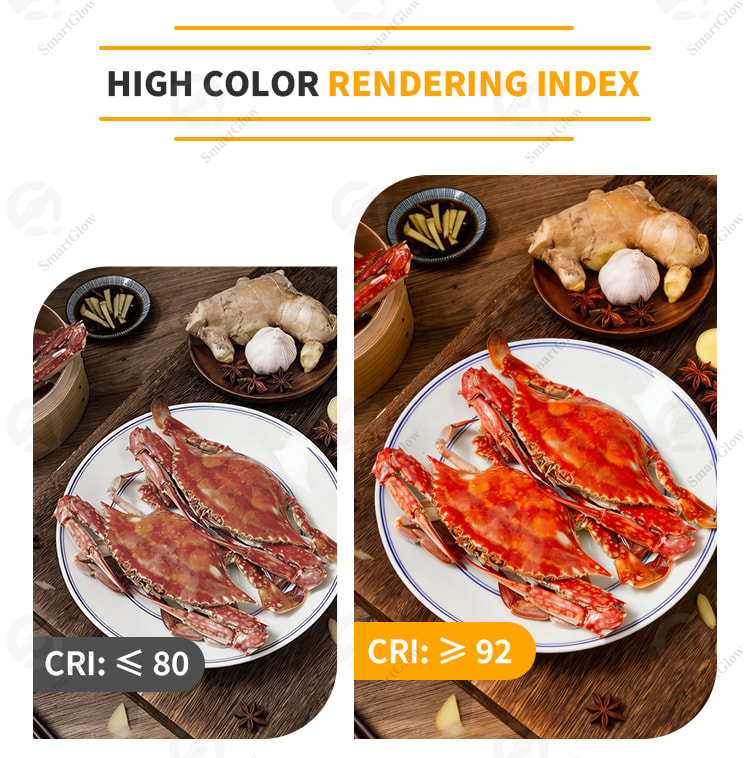
3. Color Rendering Index (CRI)The Color Rendering Index (CRI) is used to measure the ability of a light source to reproduce the true color of an object. For the kitchen, good color rendering performance helps to present the colors of vegetables, meat, and other ingredients more naturally, and can also enhance the overall visual experience of the kitchen.When choosing Kitchen LED Lighting, priority should be given to products with CRI 80 or higher; If there are higher requirements for color reproduction and visual quality of ingredients, products with CRI 90 or above can also be considered.
 4. Protection Rating and Kitchen ConditionsThe kitchen has water vapor, oil fume, and cleaning needs, and the protection requirements for LED products vary in different installation areas. When choosing kitchen LED lighting fixtures, one should check the IP protection level of the product and determine whether it is suitable based on the actual environment.For example, suitable products can be selected based on specific installation conditions for the bottom of ordinary cabinets or the interior of dry display cabinets; If the location is close to the sink and easily affected by water splashes, special attention should be paid to moisture-proof and waterproof requirements, and the protective capabilities of the light strip, connector, power supply, and other components should be confirmed.
5. System dimming and compatibilityThe dimming function can adapt kitchen lighting to different usage scenarios. For example, sufficient lighting is required for cooking, while for dining or leisure, the brightness can be appropriately reduced to create a more comfortable spatial atmosphere.If you plan to use dimmable Kitchen LED Lighting, you should confirm the compatibility between the kitchen LED fixtures, driver power supply, dimmer, and control system before purchasing. Different products may use different dimming methods, and it cannot be assumed that all LED strips support dimming.At the same time, the input voltage, rated power, drive power capacity, and connection method should also be checked. Reasonably matching various components can help reduce the risk of flickering, unstable dimming, or system malfunction.Common Kitchen LED Lighting Mistakes to AvoidReasonable planning of Kitchen LED Lighting not only requires selecting appropriate lighting fixtures and accessories, but also avoiding common problems in installation and selection.
1. Relies only on top lighting, ignoring local lightingUsing only the main light on the ceiling may not fully illuminate the area below the cabinets and kitchen countertops. When preparing meals, the user's body or hanging cabinet may also block the light, creating shadows on the countertop.
2. Neglecting the installation position can cause glare or uneven lightingEven if kitchen LED lighting fixtures with appropriate brightness are selected, if the installation location is not reasonable, problems such as insufficient countertop lighting, uneven light distribution, or direct light sources entering the line of sight may still occur. The light strip being too far back or too close to the edge of the cabinet may affect the final lighting effect.
3. Neglecting the requirements for driver power supply and heat dissipationLED lighting fixtures need to be matched with appropriate driving power sources. If the power specifications are not suitable, the power capacity is insufficient, or the installation space lacks necessary heat dissipation conditions, it may affect the stability and service life of the lighting system.
4. Using inappropriate lighting products in damp areasThere are higher requirements for the protective ability of lighting products near the kitchen sink and other locations that are easily affected by water splashes or moisture. If we only focus on the brightness and appearance of the light strip and ignore the IP protection level and installation conditions of electrical components, it may bring safety and maintenance issues.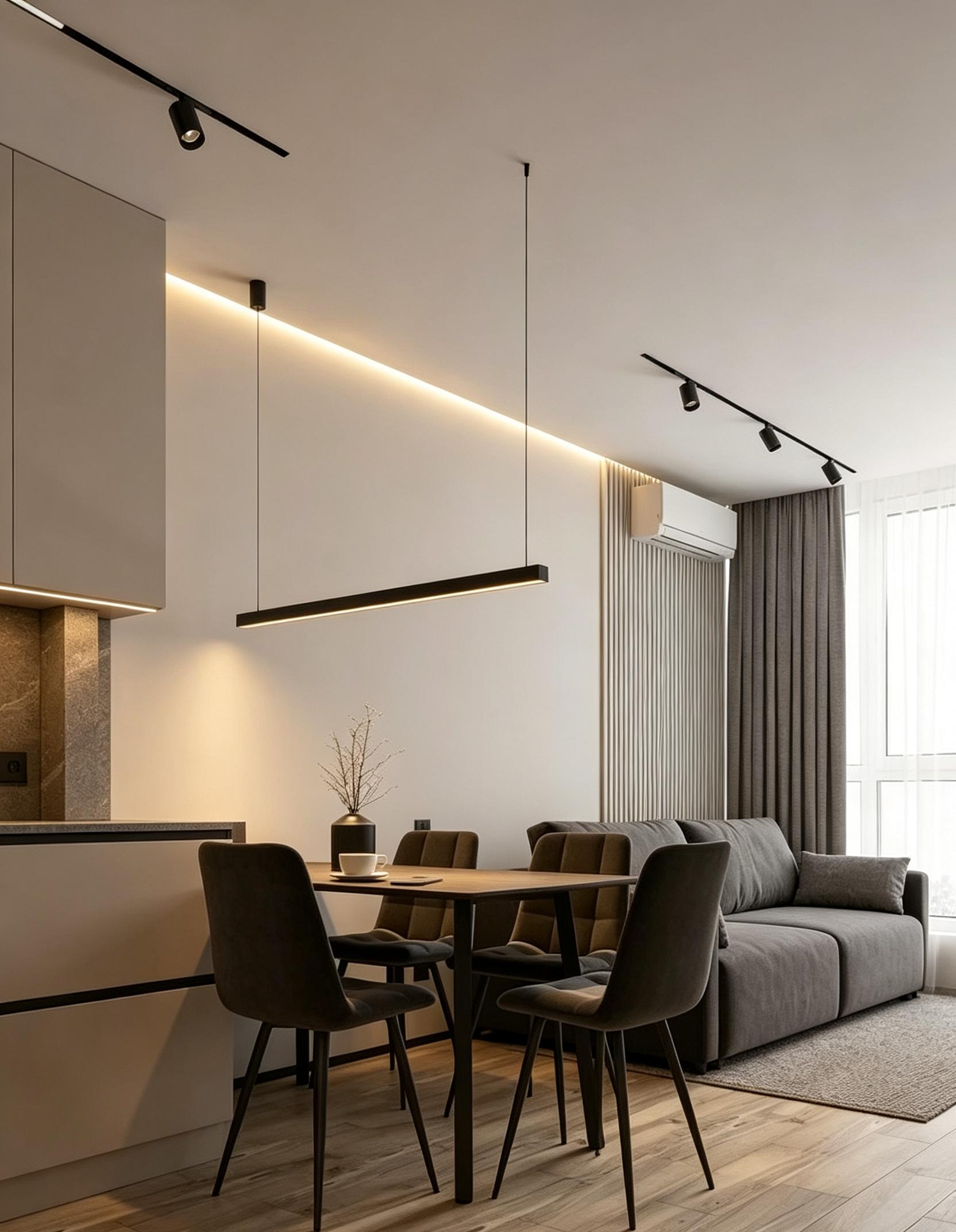 Conclusion: Creating a Practical and Stylish Kitchen with LED LightingReasonable kitchen lighting design needs to balance daily cooking, spatial atmosphere, and overall aesthetics. By combining basic lighting, operational lighting, and decorative lighting, the distribution of light in different areas can be improved, making the kitchen brighter, more comfortable, and practical.When planning Kitchen LED Lighting, it is recommended to select appropriate components based on installation space, brightness, color temperature, protection requirements, and product compatibility, in order to balance lighting effects, installation convenience, and long-term usage needs.If you are looking for LED linear lighting products suitable for cabinet lighting, console lighting, or kitchen decoration lighting, please browse our product catalog to learn about the different specifications and applications of LED light strips, LED aluminum profiles, and LED diffusion covers. If you have customized projects or selection needs, please feel free to contact us for product parameters and adaptation suggestions, and find a suitable solution for your kitchen lighting project.
Previous
Stretch Ceiling Lighting: 4 Modern Lighting Solutions for Stylish Interiors
Read More
Next
Kitchen Magnetic Track Lighting: Perfect Kitchen Lighting Layout Solution
Read More


