WELCOME TO OUR BLOG

We're sharing knowledge in the areas which fascinate us the most
click

Aluminum Skirting Profiles: Skirting Solutions in Modern Interior Design

By SmartGlow September 7th, 2026
How to choose aluminum skirting profile vs. traditional profile? Explore aluminum skirting profiles suitable for modern indoor use, including embedded aluminum skirting, LED skirting, as well as wall and floor applications. Understand the main advantages, types, and selection techniques.
With the increasing popularity of minimalist, modern, and integrated design, baseboards are also taking on more functions - protecting the wall, completing the closure, minimizing visual presence, and even integrating with hidden lighting. This is also why aluminum skirting profiles are increasingly appearing in residential, hotel, office, and commercial spaces. Compared to traditional baseboards, aluminum structures are not only simpler and more durable, but also provide more flexible design options such as recessed and LED integration.
This article will introduce what aluminum skirting profiles are, their advantages, common types, and how to customize a more suitable skirting solution for project needs.


1. What Are Aluminium Skirting Profiles?
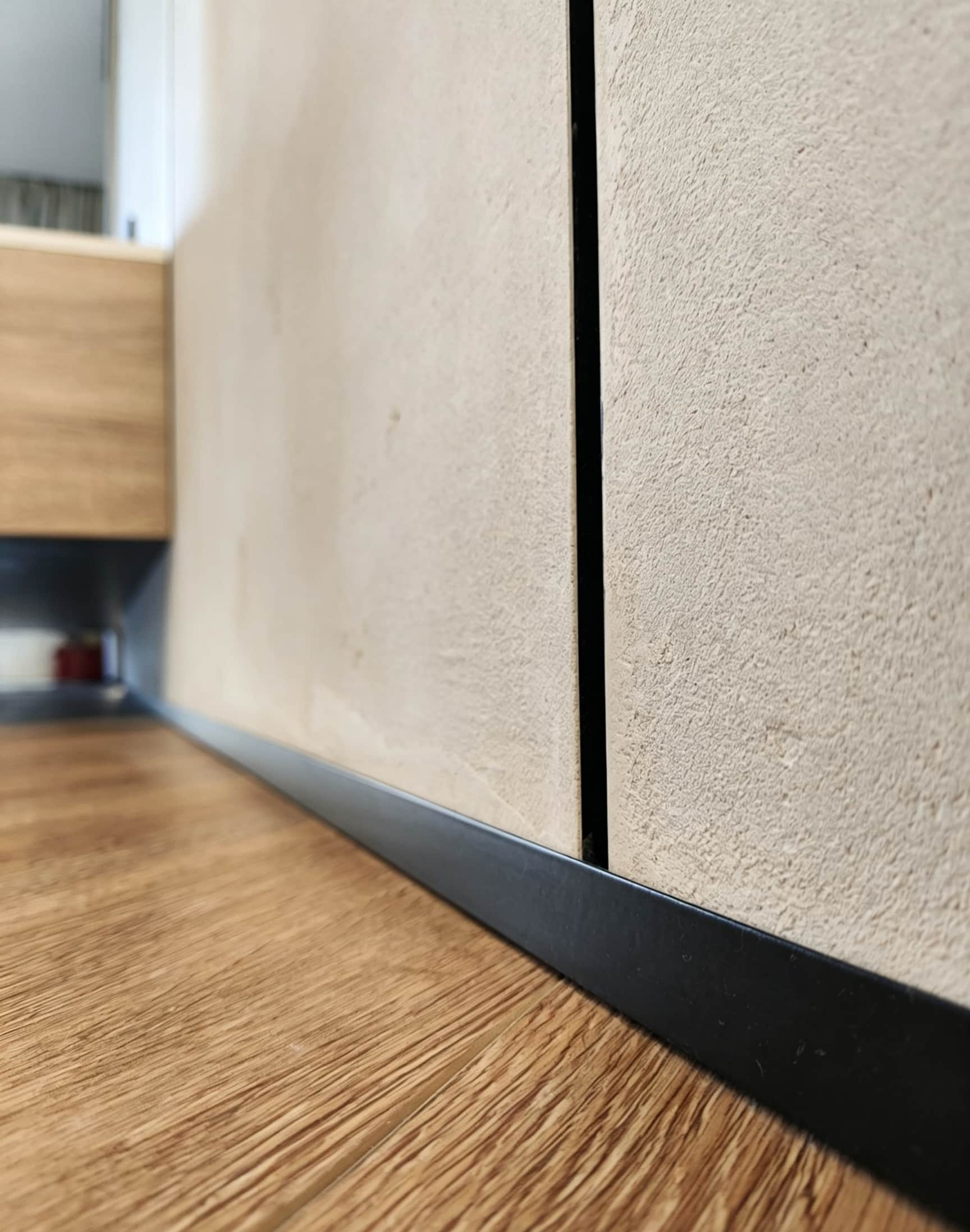
Aluminum skirting profiles are skirting systems manufactured using aluminum extrusion technology, mainly installed at the junction of walls and floors to protect walls, cover openings, and provide a more complete visual effect for indoor spaces. Compared to traditional wooden, PVC, or other material baseboards, aluminum skirting profiles typically have simpler lines and a more modern appearance. Aluminum itself also has good durability and is not easily deformed or damaged due to daily use, making it particularly suitable for modern residential and commercial spaces.
According to different structures, skirting aluminum profiles can be designed for surface mounting, embedded mounting, and even combined with LED lighting. Make the skirting board no longer just a wall closing component, but a part of interior architectural design.

aluminium skirting profile

2. Why Choose Aluminium Skirting Profiles?
  • Better Durability
The skirting board is located at the bottom of the wall and is a location that is more susceptible to collisions, cleaning, and daily use. Therefore, the durability of the material is very important. Aluminum profile structure can provide stable physical support and is suitable for long-term use environments such as residential, hotel, office, and commercial spaces. Aluminum solutions also have certain advantages for areas near kitchens, bathrooms, or other areas that require more attention to moisture prevention and cleaning.

  • A Cleaner and More Modern Appearance
Traditional skirting boards often form a clear visual boundary, while aluminum skirting boards can make the transition between walls and floors more natural through finer structures, hidden installations, and simple surface treatments. Especially in minimalist spaces, aluminum floor skirting and aluminum wall skirting can maintain unity with elements such as walls, floors, and door frames, making the space look neater.

  • Flexible Design Options
One of the biggest advantages of aluminum profiles is the ability to design different cross-sections and installation structures according to different spatial requirements. Regular, embedded, shadow sewn, and even LED lighting can be used according to project design. This means that designers do not need to treat the skirting board as a fixed decorative component, but can choose a more suitable structure based on the spatial function.

  • Easy Integration with Lighting
For modern indoor spaces, hidden lighting has become a common design method. By integrating LED light strips into the baseboard, soft indirect lighting can be created. Compared to adding lighting fixtures separately, skirting LED profiles can combine lighting with baseboard structures while reducing additional installation elements. This design is particularly suitable for spaces that want to create a soft atmosphere, layered walls, or floating effects.

  • Suitable for Both Residential and Commercial Projects
From residential living rooms and bedrooms to hotel corridors, offices, exhibition halls, and commercial spaces, aluminum skirting profiles can be applied according to different structures. For projects that require a unified interior design language, baseboards can also be combined with walls, ceilings, and other linear lighting systems to maintain a consistent design style between different areas.

Comparison Items Traditional Skirting Board Aluminum Alloy Skirting Board
Common materials Wood MDF、 Medium density board, PVC, etc Aluminum / Aluminum Alloy
Durability Different materials have significant differences, and some materials are prone to wear or deformation after long-term use Stable structure, suitable for long-term use
Moisture Resistance Wood and some boards are sensitive to humid environments Aluminum alloy is not easily affected by moisture and is suitable for environments such as kitchens and commercial spaces
Corrosion Resistance Depending on the specific material and surface treatment Aluminum alloy has good corrosion resistance and the surface can also be treated with anodizing or spraying
Anti collision Capability Part of the wood and board are prone to dents or damage after collision The overall metal structure is more sturdy and suitable for spaces with high personnel flow
Appearance style Traditional decorative effects such as wood grain and PVC are more common Simple lines, more suitable for modern, minimalist, and commercial spaces
Installation Method Usually fixed with glue, buckles, or screws Various structures such as surface mount and embedded can be adopted according to the design
Embedded Design Relatively limited choices It is easier to develop hidden structures such as recycled aluminum skinning
LED lighting integration Generally, additional light slots or fixtures are required LED aluminum skirting board/skirting LED profile can be designed to integrate lighting directly into the profile
Cleaning and Maintenance Some materials are prone to absorbing stains or getting damp The surface is relatively easy to clean and convenient for daily maintenance
Customization Capability Mainly focused on color, texture, and size Customizable cross-section, size, length, surface treatment, and LED structure
Applicable Scenarios Ordinary residential buildings, traditional decoration, etc Modern residential, hotel, office, commercial space, kitchen, and architectural projects


3. Types of Aluminium Skirting Profiles
The requirements for baseboards vary among different projects. Some projects place more emphasis on basic finishing and wall protection, while others emphasize hidden effects, and some hope to combine baseboards with lighting. Therefore, aluminum skirting board profiles can be classified into several common types based on their structure and function.
Standard aluminum skirting profile is the most basic and widely used type, mainly used for wall and floor closure and wall protection. It is suitable for conventional indoor environments such as residential, office, hotel, and commercial spaces. Different heights, widths, and surface treatments can be selected based on floor materials, wall structures, and overall design. For projects that do not require hidden lighting or special architectural effects, this type of aluminum profile skinning can provide a simple and neat finishing solution.

aluminium profile skirting

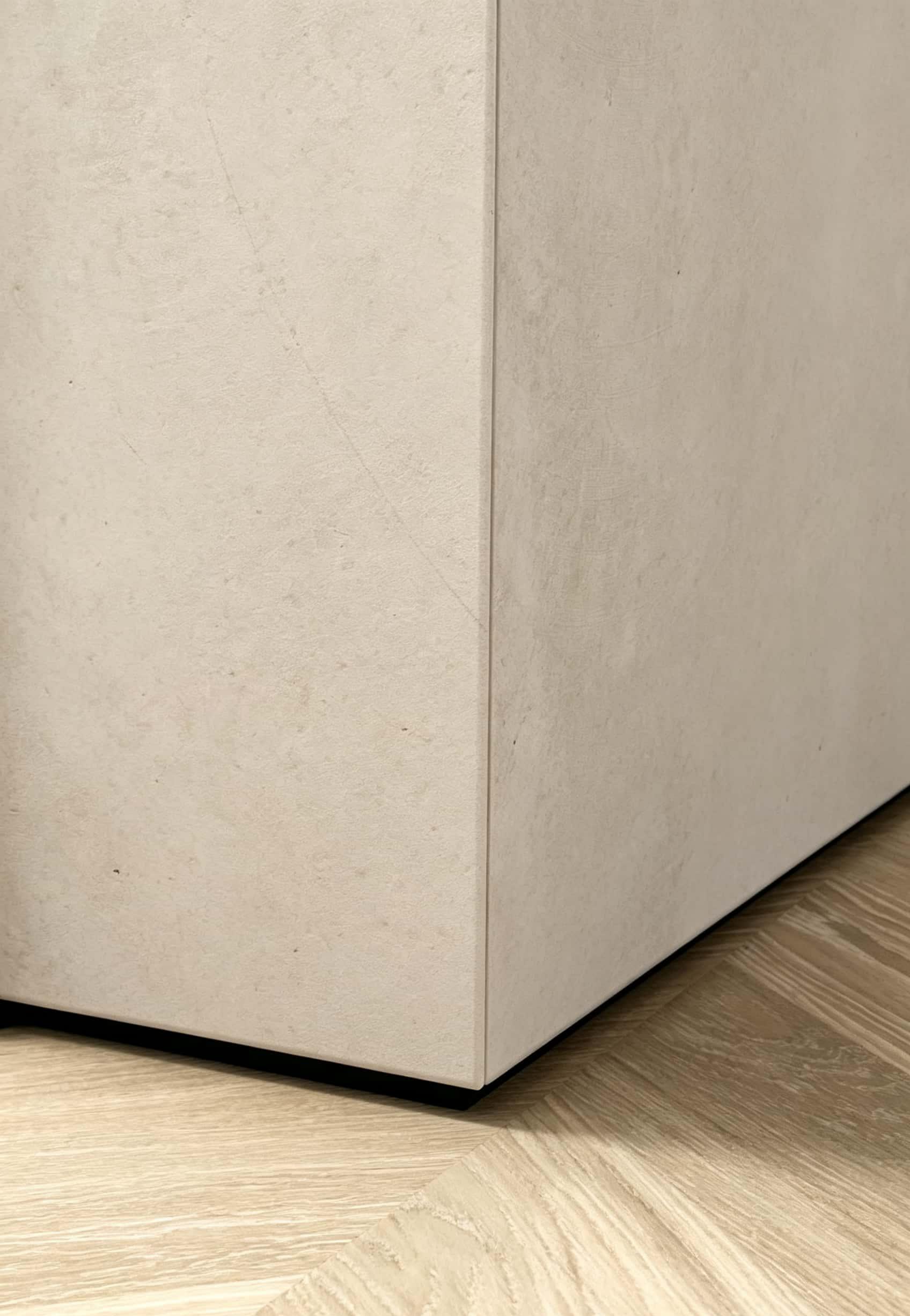
Recessed aluminum skirting emphasizes the overall integration with the wall. Unlike traditional surface installation methods, embedded structures can hide some of the skirting boards inside the wall or wall finish, thereby reducing the protrusion of the skirting boards. The wall can maintain a more complete visual effect while still retaining the protection and closure functions that the skirting board should have. Recessed design is also a way to enhance the overall sense of space for high-end residential, hotel, office, and commercial projects.

led aluminium skirting board
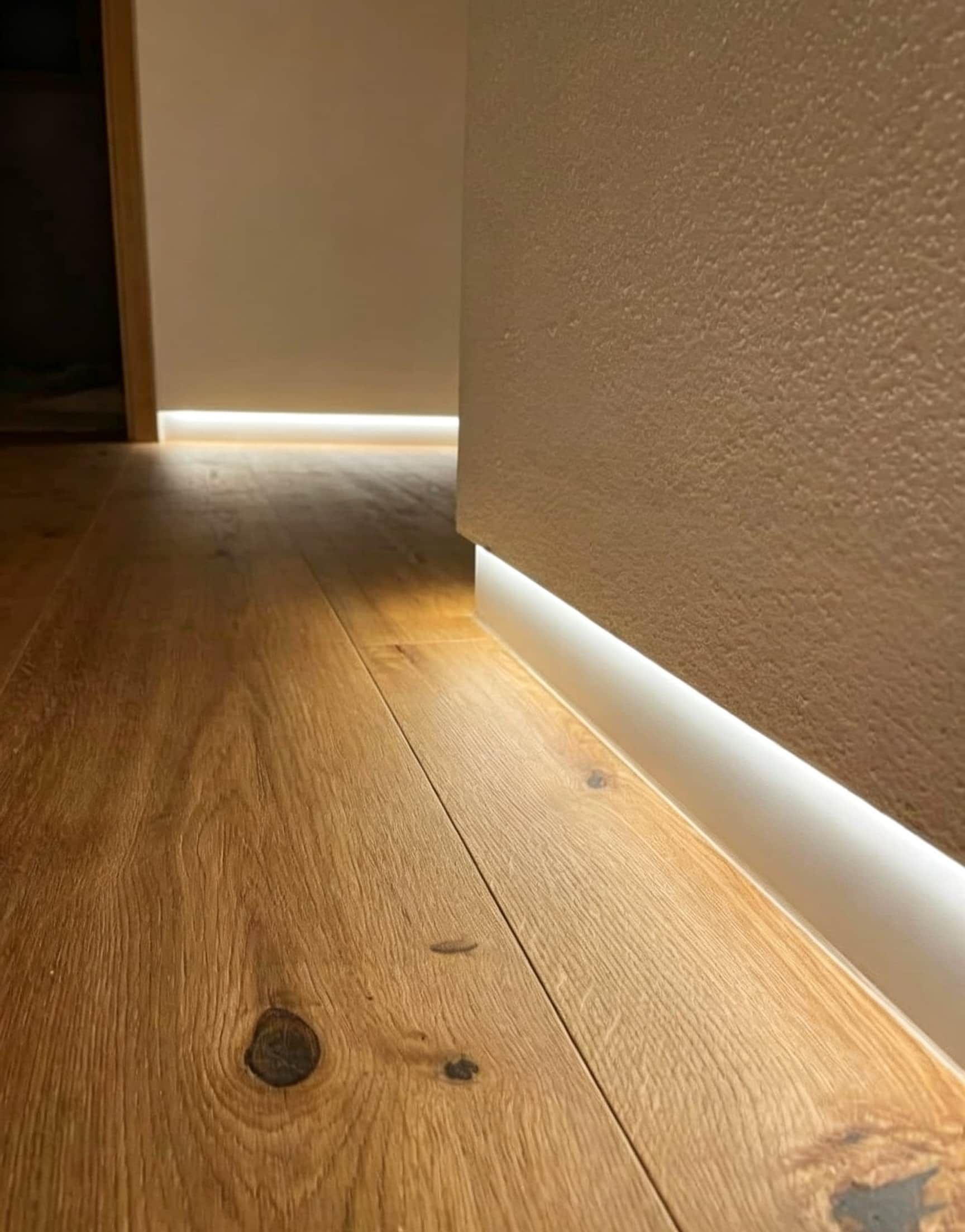
LED aluminum skirting board is a design that combines baseboards with concealed lighting. After reserving LED lighting installation space inside the aluminum profile, the LED strip can be hidden in the skirting structure and form a soft indirect lighting through a suitable diffusion structure.
This design can be applied to: living rooms and bedrooms, hotel rooms and corridors, commercial exhibition halls, corridors, and public areas. Compared to installing LED strips separately, skirting LED profiles can allow the light source to blend more naturally with building details while maintaining the cleanliness of the bottom of the wall.

aluminium skirting profiles

4. Aluminium Skirting Profiles vs. Traditional Skirting
So, why are more and more modern projects considering aluminum skirting instead of traditional skirting?
In terms of visual effects. Traditional skirting boards are usually independent decorative elements, while aluminum skirting profiles are more likely to adopt hidden, narrow edged, or embedded structures, thus weakening the presence of the skirting board itself.
In terms of durability. Aluminum profiles are suitable for indoor environments that require long-term use, and different surface treatments can be selected according to the project.
In terms of design flexibility. In addition to regular wall or floor skirting, there are also styles such as recycled aluminum skirting or LED aluminum skirting boards that allow the same basic material to undertake different building and lighting functions.
Of course, for spaces that have already been renovated, traditional baseboards may still be a simpler and more direct choice. For new projects or projects undergoing overall interior design, aluminum skirting boards usually provide more design possibilities.


Conclusion
Aluminum skirting profiles are gradually evolving from traditional wall and floor closing materials to functional architectural details in modern interior design. From basic aluminum floor skirting and aluminum wall skirting, to recycled aluminum skirting emphasizing hidden effects, and to skirting LED profiles combined with ambient lighting, different structures can achieve different design effects according to spatial requirements.
For modern residential, hotel, office, and commercial projects, choosing the appropriate aluminum skirting system is not only about considering the appearance of the skirting board itself, but also planning based on wall structure, installation methods, lighting design, and overall spatial style.
Welcome to contact us to customize exclusive aluminum skirting profiles for you. If your project requires more than just regular skirting, but a simpler, more architectural solution that can be combined with hidden lighting, aluminum skirting is worth becoming a choice in modern interior design.
Recessed LED Aluminum Profiles vs. LED Strips: Why the Profile Matters
Previous
Recessed LED Aluminum Profiles vs. LED Strips: Why the Profile Matters
Read More
Guide to Ceiling Air Diffuser Ventilation for Modern Interiors
Next
Guide to Ceiling Air Diffuser Ventilation for Modern Interiors
Read More

Contact Us

Contact: Ethan He
Contact: Ethan He
Tel/WeChat : 15976600907
E-mail : admin@ledsmartglow.com
Whatsapp :15976600907
Addess : Danzao Industry Zone, Nanhai District, Foshan, China
Contact Us
Wechat
Contact Us
Whatsapp
Request a Quote Get Started Today!
First Name *
Last Name *
Email *
Message *
Verification Code *
Click to verify
Leave a message
First Name *
Last Name *
Email *
Message *
Verification Code *
Click to verify