LED Linear Lighting Guide: How to Select the Best LED Linear Light Fixtures
By SmartGlow
October 10th, 2026
Find the ideal LED linear lighting for your project. Choosing the right LED linear lighting can be challenging. Discover fixture types, design ideas, and expert tips to find the perfect lighting solution for your space.
LED Linear Lighting is widely used in offices, commercial spaces, hotels, retail stores, and modern residences due to its simple lines, flexible installation methods, and diverse design forms. Compared with traditional point lighting, LED linear lights can form continuous light along walls, ceilings, corridors, or work areas, providing directional and holistic lighting effects for spaces. According to different building structures and design requirements, linear lighting fixtures can be installed in a suspended, embedded, or exposed manner. For example, linear pending lighting is commonly used above desks, conference tables, and restaurants; Recessed linear lighting is suitable for modern indoor spaces that pursue a simple and neat ceiling effect.What is LED Linear Light?A complete LED linear lighting system usually consists of LED light source, aluminum profile shell, diffuser cover, driving power supply, and installation accessories. Among them, aluminum profiles help protect internal components, assist in heat dissipation, and provide stable structural support for lighting fixtures; The diffusion cover can affect the uniformity of light and visual comfort. For projects that require specific dimensions, installation methods, or exterior design, linear LED light fixtures can also be customized according to actual needs.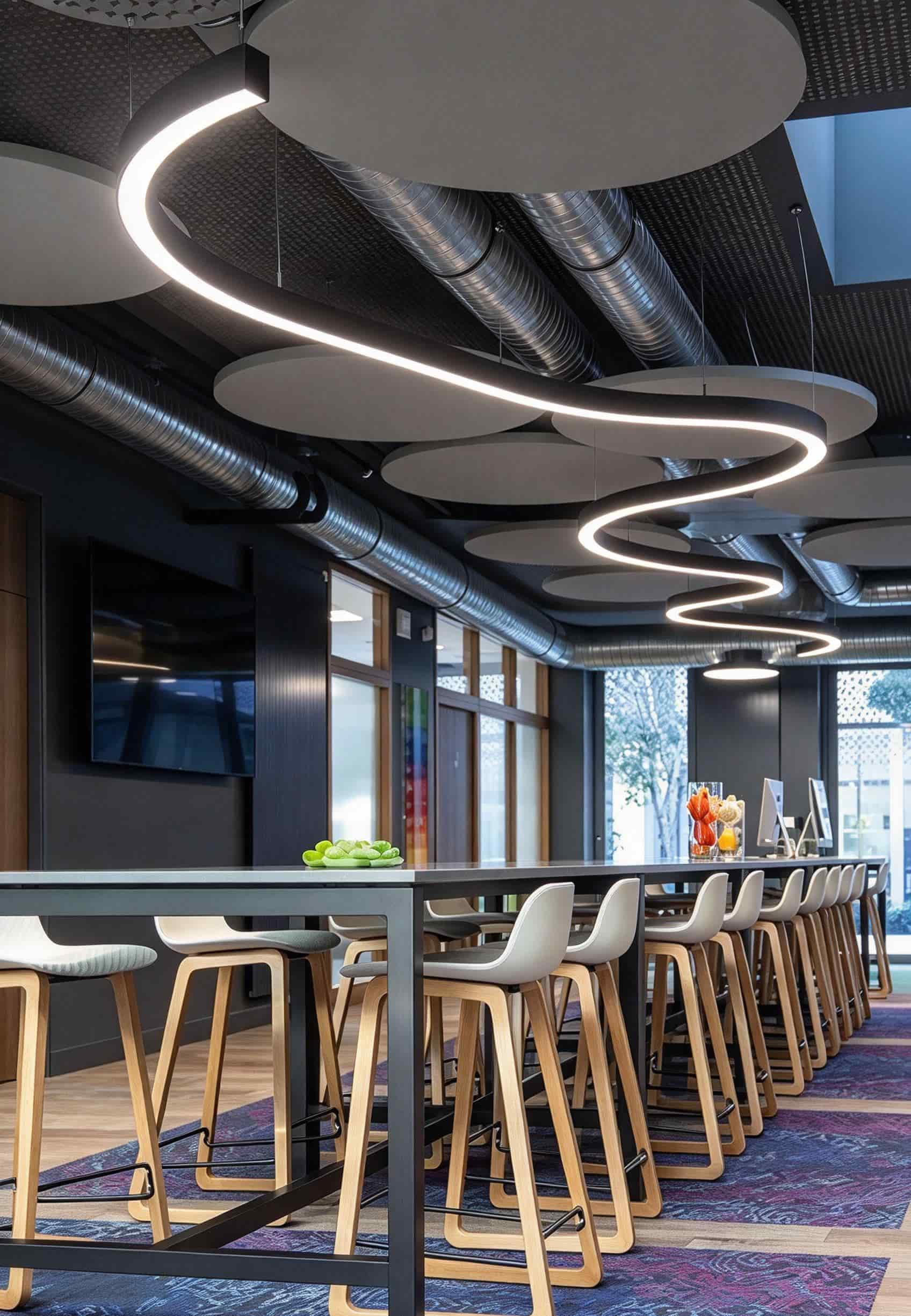 The main components of LED Linear LightingUnderstanding these core components can help select suitable linear LED light fixtures in design, procurement, and customization projects.1. LED light source and LED stripLED light source is the core component that generates light in linear lighting systems. Common solutions include LED strip light and integrated LED modules, depending on the lamp structure, brightness requirements, light uniformity, and application scenario.For projects that require flexible adjustment of length and installation position, LED light strips have strong adaptability; For commercial lighting or professional building lighting, further consideration is needed for power, luminous flux, color temperature, color rendering index (CRI), and dimming compatibility. Reasonable selection of LED light sources can help LED linear lights meet the lighting needs of different spaces.
2. LED Aluminum ProfileThe LED aluminum profile is an important structural component of many linear LED lighting fixtures, typically used to accommodate and protect LED strips or other light sources. Aluminum profiles can assist in heat dissipation and provide corresponding assembly structures for diffusion covers, end caps, and installation accessories. According to different installation requirements, LED aluminum profiles can be designed as embedded, surface mounted, or suspended structures, suitable for ceilings, walls, cabinets, display cabinets, and other building details.For projects with special size or appearance requirements, customized LED aluminum extrusion can also be developed based on installation space and design drawings to help achieve a more cohesive linear lighting solution.
3. Diffusion hood and optical componentsLED diffuser is usually installed on the light emitting surface of aluminum profiles to protect the internal light source and affect the light output of the lamp. Common materials include polycarbonate (PC) and polymethyl methacrylate (PMMA), and different materials have differences in transparency, heat resistance, impact resistance, and appearance effects.According to the specific design, the diffusion cover can be in the form of transparent, frosted, or milky white. Choosing the appropriate diffuser cover for office, commercial spaces, and display lighting can help balance light efficiency, appearance, and visual comfort.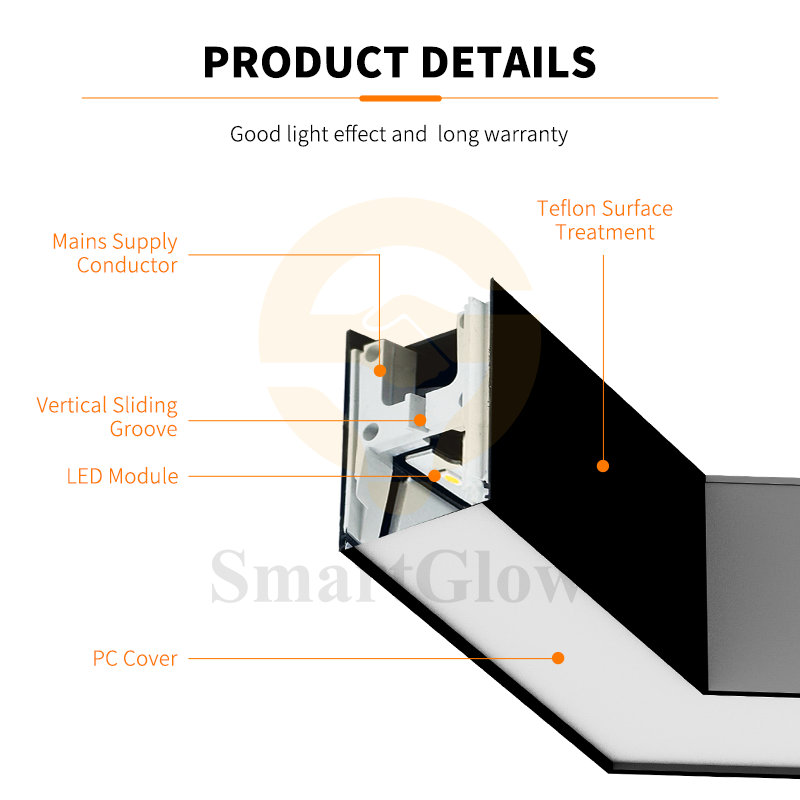 Common types of LED Linear LightingLED Linear Lighting has diverse structural designs and installation methods, which can be flexibly combined according to building space, lighting requirements, and decorative styles. From simple linear lighting fixtures to circular pendant lights, continuous splicing systems, and customized curved lighting, different types of LED linear lights can meet various lighting needs in commercial spaces, office environments, hotels, and modern residences.
1. Suspended Linear LightingSuspended Linear Lighting is a form of linear lighting that is installed below the ceiling using hanging wires or suspension rods. It can introduce light into the visual center of the space while forming clear architectural lines, making it widely used in offices, conference rooms, restaurants, hotel lobbies, and commercial spaces.In addition to common linear lighting fixtures, suspended linear lighting can also adopt circular, elliptical, hollow rectangular, and other geometric shapes. For example, circular chandeliers are suitable for creating a soft and modern spatial atmosphere, while hollow rectangular linear lights can highlight the building's silhouette and spatial hierarchy. Linear pending lighting is a common design form in this type of product. Based on the shape, size, and light source configuration of the lighting fixtures, they can serve as both work lighting and a visual focal point for interior decoration.

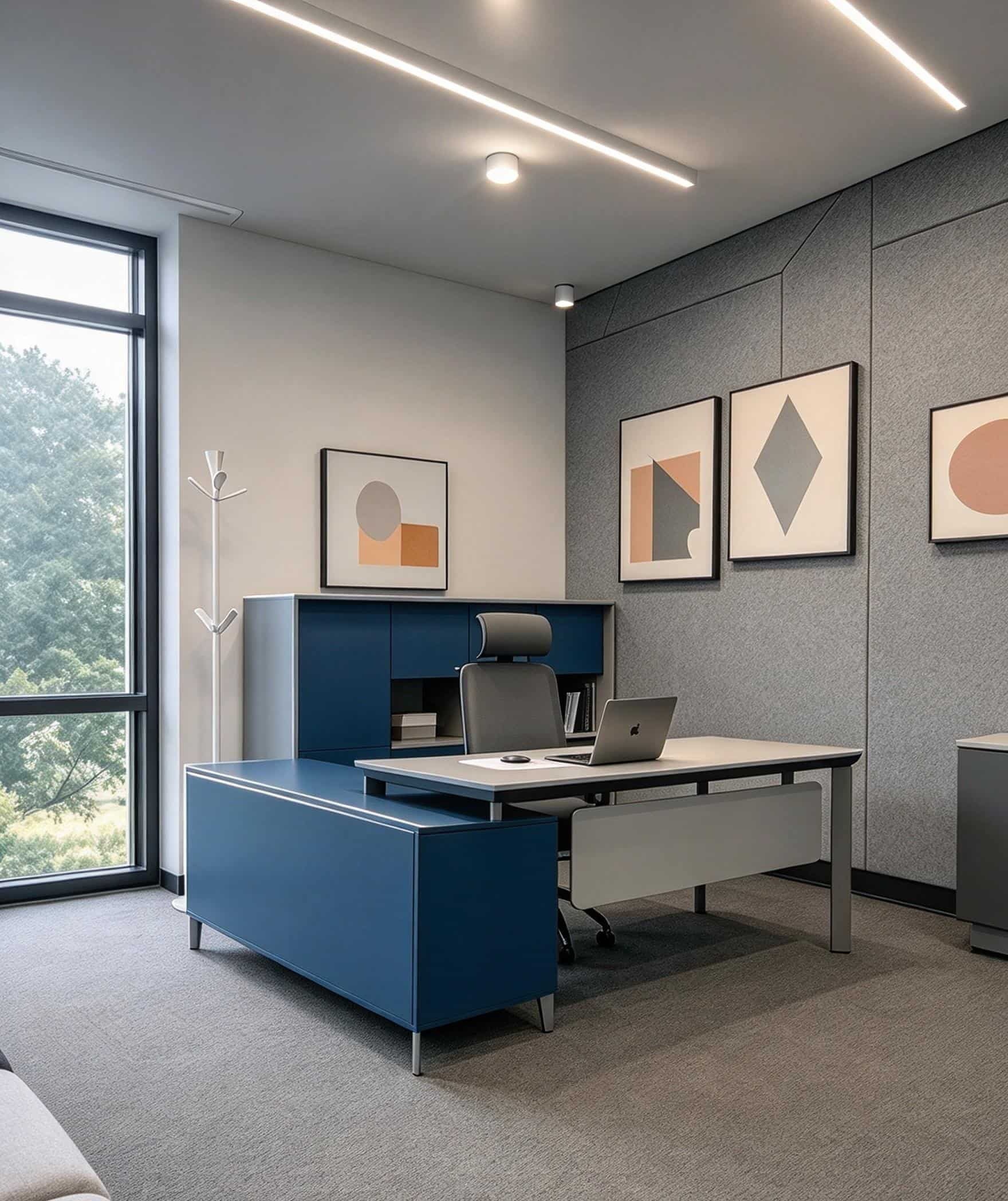
2. Recessed Linear LightingRecessed Linear Lighting is typically embedded in ceilings, walls, or other building structures to keep the surface of the lighting fixtures as level as possible with surrounding finishes, creating a clean and neat visual effect. This installation method is suitable for modern offices, corridors, retail spaces, hotels, and high-end residences, especially for projects that emphasize minimalist design and architectural integration. According to the product structure, embedded linear lamps can adopt continuous lamp slots, narrow borders, or frameless designs, and the specific effect depends on the profile structure and construction conditions.When selecting recycled linear lighting, it is necessary to confirm the aluminum profile size, slot width, installation depth, heat dissipation space, and ceiling structure in advance. For projects that require continuous lighting effects, the connection method and seam control between lighting fixtures should also be considered to enhance overall lighting consistency.

3. Surface Mounted Linear LightingSurface Mounted Linear Lighting is directly fixed to ceilings, walls, or other installation surfaces, making it suitable for spaces where slotting is inconvenient or where simplification of construction is desired. Common applications include office, commercial corridors, retail stores, work areas, and residential lighting. Surface mounted linear lights can adopt a simple linear design, or choose different cross-sections, sizes, and optical configurations according to project requirements.For projects with limited ceiling space or requiring later maintenance, the exposed installation scheme usually has good installation flexibility. Choosing the appropriate linear light fixture can meet lighting requirements while maintaining coordination with spatial design.
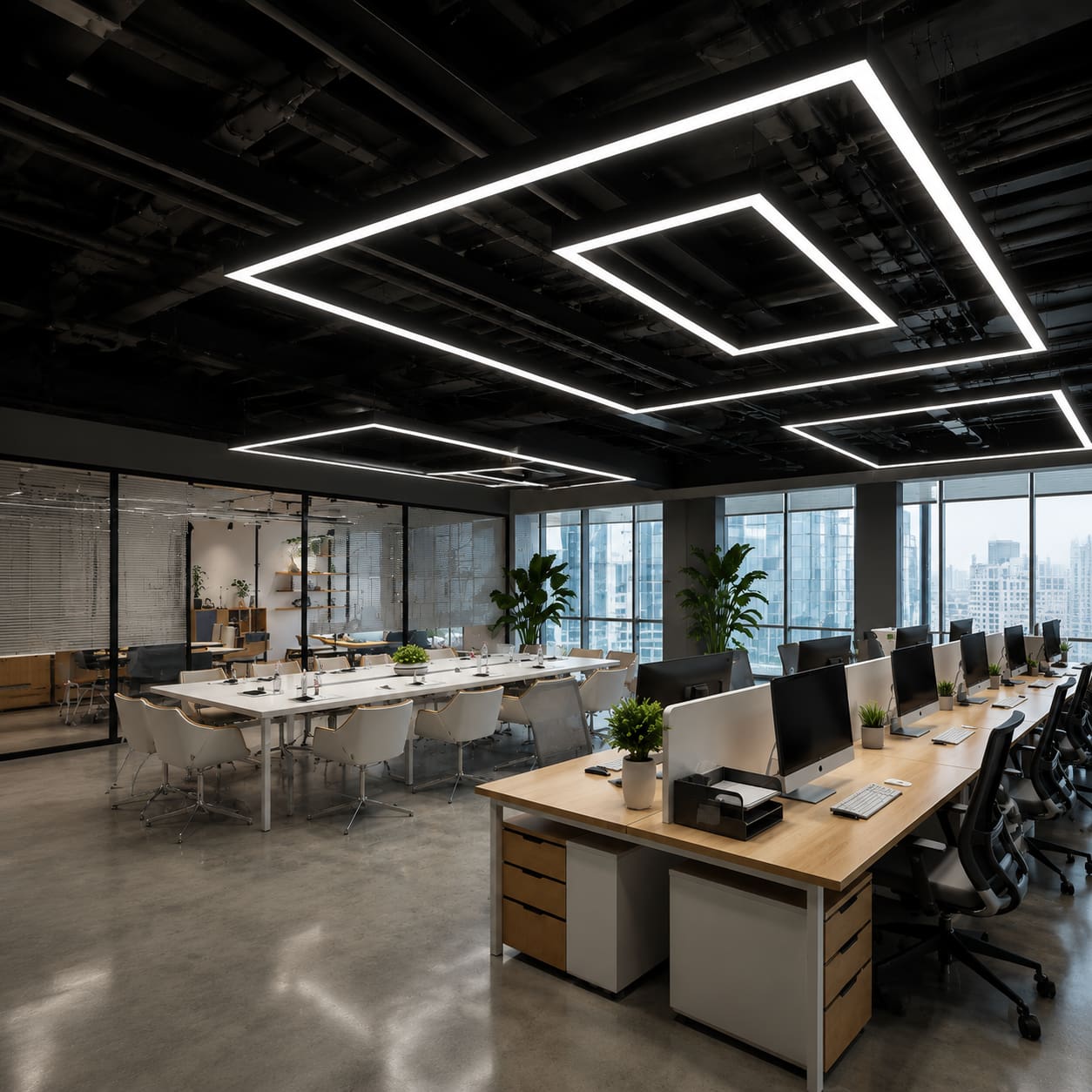
4. Splicing LED linear lightingContinuous Linear Lighting forms continuous lighting lines through the combination of linear lamps, connectors, and matching profiles. Compared to individually installed linear lights, this type of system can adapt more flexibly to complex building layouts and create geometric lighting structures with a sense of design. In addition to straight line splicing, the system also provides V-shaped, X-shaped, and T-shaped adapter components, which can be used to construct polylines, intersecting lines, branching structures, and other combination shapes.This type of LED linear lighting system is suitable for scenarios such as offices, commercial exhibition halls, retail spaces, and public buildings, and can combine basic lighting with building decoration.
5. Custom LED Linear LightingCustom LED Linear Lighting can provide a more flexible solution. Curved magnetic track lighting can form curved, curved or other non-linear lighting layouts through adaptive curved tracks and lamp modules, bringing more design possibilities to commercial exhibition halls, brand retail spaces, hotels and creative office environments. Before project development, the bending radius, track structure, compatibility of lighting fixtures, electrical connections, and installation conditions should be confirmed.For customers with special design requirements, customizing linear LED light fixtures can help achieve lighting solutions that better fit the project space. The main advantages of LED Linear Lighting1. Simple lines enhance the sense of spatial designCompared with traditional lighting fixtures, linear lighting fixtures can use clear lines, geometric contours, or continuous light lines to create a simple and modern visual effect for space.For example, linear pending lighting is suitable for use above conference tables, office areas, and restaurants; Circular or rectangular suspended lighting fixtures can become the visual focal point of indoor decoration; Embedded linear lights are suitable for architectural projects that emphasize minimalist style. For designers and engineering project buyers, choosing the appropriate linear light fixture can not only meet lighting needs, but also help unify the lighting style and architectural language in the space.
2. Provide uniform and continuous lighting effectsA well-designed LED linear lighting system can distribute light along a long spatial area, suitable for office desks, corridors, display cabinets, commercial shelves, and other scenes that require continuous lighting. Compared to multiple dispersed light sources, linear lighting fixtures are more likely to create a coherent visual effect and reduce the visual fragmentation caused by lighting fixture layout.For projects that require continuous lighting lines, a spliced LED linear lighting system can be used, combining multiple lamps through matching connectors and power supply schemes to create a neat and coherent lighting layout.
3. Adapt to different lengths and installation methodsAnother advantage of LED Linear Lighting is its flexible design and installation methods. According to project requirements, linear lighting fixtures can adopt lifting, embedded or exposed structures, and can also be adapted to different spaces through profiles of different lengths, connecting components and customized solutions. For non-standard sizes or special building layouts, customized linear LED light fixtures can adjust the length, appearance dimensions, installation accessories, and connection methods of the lamps according to project drawings.
4. Aluminum profiles help with heat dissipation and structural protectionIn many linear LED fixtures, the LED aluminum profile is not only the outer shell of the fixture, but also provides an installation foundation for the LED strip or module, protects internal components, and assists in heat conduction and dissipation through its own structure.Good heat dissipation design helps to control the operating temperature of LED light sources within a reasonable range, thereby supporting stable operation.Application scenarios of LED Linear Lighting1. Office and Meeting RoomLED linear lights can be arranged along office desks, conference tables, or work areas to create a neat and continuous lighting layout. Linear pending lighting is commonly used in open offices, collaboration areas, and conference rooms to arrange lighting on suitable work surfaces; Embedded linear lights are suitable for office spaces that pursue a simple ceiling effect.
2. Shopping malls, retail stores, and commercial exhibition hallsCommercial LED linear lighting can be applied to shelves, display cabinets, corridors, and open retail areas, providing basic lighting for product display and space access.In modern commercial spaces, continuous linear lighting fixtures can be arranged along the ceiling or building outline to form directional visual lines; Embedded lighting fixtures can be integrated with interior finishes to maintain a clean and tidy space. For exhibition halls that require special layouts, connecting components and customized profiles can also be used to design intersecting, turning, or geometric lighting shapes.
3. Hotels, restaurants, and reception spacesLinear LED pendant can be hung above the dining table, reception desk, or lounge area to add a clear sense of lines to the space; Circular, elliptical, or hollow rectangular linear chandeliers can serve as recognizable decorative elements.For hotel corridors, public areas, and ceiling lighting, embedded or continuous linear lights can create a simple and unified visual effect. In restaurants and rest spaces, dimming systems can also be combined to adjust brightness and spatial atmosphere according to different time periods.
4. Schools, hospitals, and public buildingsLinear lighting fixtures can be arranged in a regular pattern along classrooms, corridors, work areas, and public spaces, helping to create clear lighting layouts. In classrooms and training rooms, LED Linear Lighting should be selected based on desktop illumination, visual comfort, and glare control requirements; In hospitals and medical related spaces, further consideration should be given to applicable hygiene, cleanliness, protection, and electrical safety requirements. Libraries, service halls, and public corridors can choose from suspended, embedded, or exposed ceiling structures.
5. High end residences and modern indoor spacesIn modern residences, linear lighting can be used for living rooms, kitchens, dining rooms, corridors, wardrobes, and other indoor areas, combining basic lighting with decorative design.For example, embedded linear lights can be integrated into ceilings or walls to create simple architectural lines; Linear lights in cabinets and display cabinets can provide illumination for operating areas or item displays. For dining tables, kitchen island tables, and staircase areas, suspended linear lights can also be an important component of interior design.If residential projects have special architectural contours or personalized design requirements, customized aluminum profiles, lighting fixtures of different lengths, and specially designed curved or geometric lighting structures can also be considered.
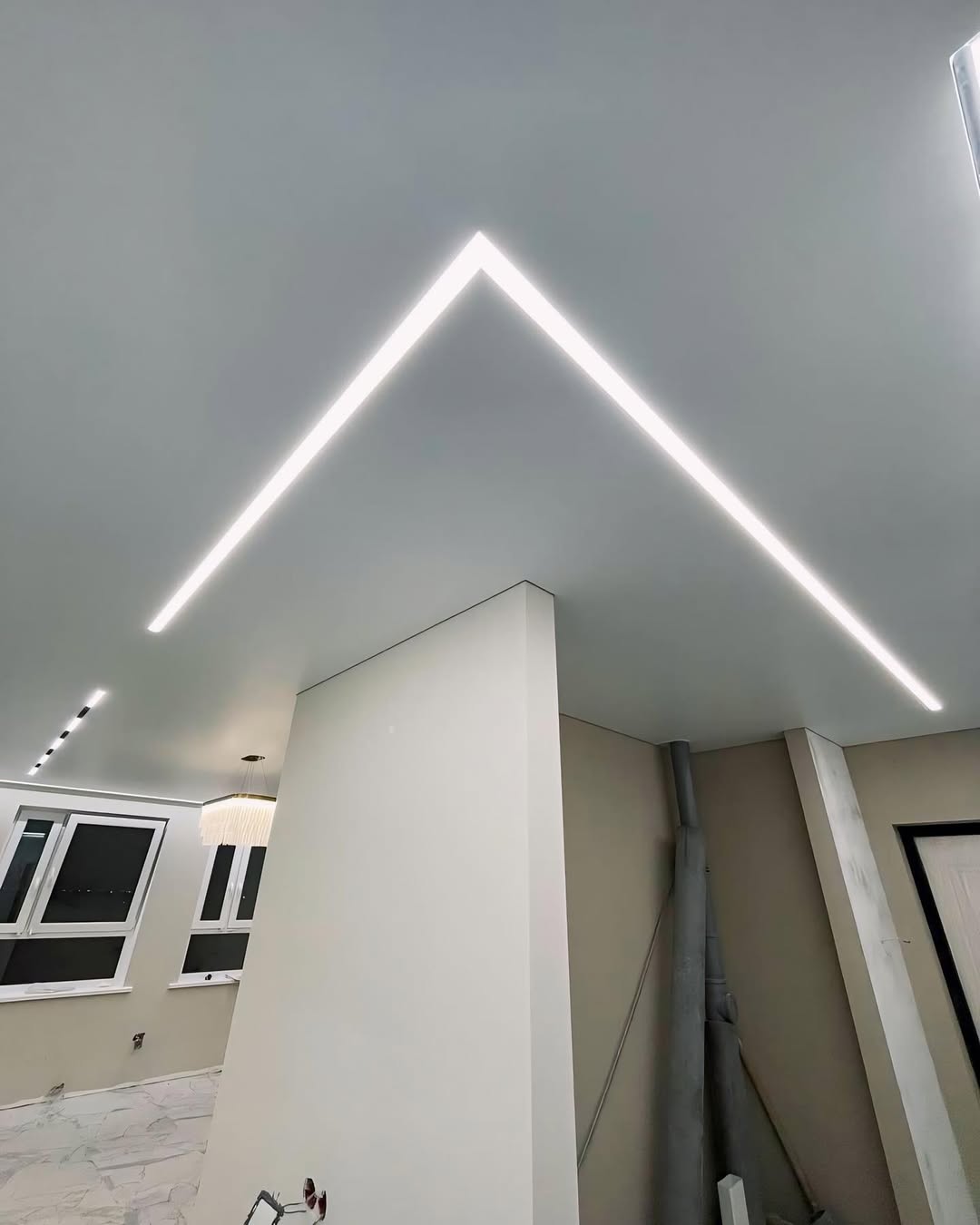
6. Industrial and commercial facility lightingIn warehouses, production areas, logistics facilities, and other commercial operation spaces, LED linear lighting can be used for workbenches, passages, equipment areas, and other places that require continuous lighting. By reasonably planning the number and layout of lighting fixtures, the convenience of system maintenance and management can be improved while meeting actual lighting requirements.How to choose the appropriate LED Linear Lighting?Choosing the appropriate LED Linear Lighting not only requires consideration of the appearance and installation method of the lamp, but also a comprehensive evaluation of lighting performance, product structure, electrical configuration, project specifications, and long-term maintenance costs.
1. Based on space usage and lighting requirementsThe requirements for linear lighting vary in different application scenarios, so before choosing a linear light fixture, it is important to first clarify the main purpose of the lighting fixture, whether it provides basic lighting, key lighting, or is used for architectural decoration and spatial visual design.
2. Choose the appropriate color temperature, color rendering index (CRI), and brightnessColor temperature, color rendering index, and light output are key parameters that affect the lighting effect of LED linear lamps.
- Color temperature (CCT): usually measured in Kelvin (K). The specific choice should be determined based on spatial design, usage tasks, and project requirements, rather than simply assuming that a certain color temperature is suitable for all scenes.
- Color rendering index (CRI): used to describe the ability of a light source to reproduce the color of an object. For retail displays, hotels, exhibition halls, and places with high requirements for color expression, appropriate color rendering levels should be selected according to application needs.
- Brightness and Light Output: A comprehensive evaluation should be conducted based on spatial area, installation height, target illuminance, lamp spacing, and lighting distribution method. When purchasing, the luminous flux (lm) and power (W) of the lamps should be distinguished: higher power does not necessarily mean better lighting effects. For large commercial projects, it is recommended to confirm the number of lamps, installation locations, and single lamp luminous flux based on the lighting calculation results.
3. Consider beam angle, glare control, and light uniformityIn addition to color temperature and brightness, lighting design also affects the actual performance of LED linear lights. Different lenses, reflective structures, and diffusion covers can change the distribution of light, so it is necessary to choose the appropriate optical configuration according to the application scenario.
4. Confirm the compatibility of the drive power supply, dimming mode, and controlThe driving power supply is an important component of LED linear lighting systems, and its output parameters, electrical performance, and control compatibility directly affect the stable operation of the lamps. If the project requires dimming or intelligent control, the control method should be clearly defined in advance, such as dimmable drivers, DALI, 0-10V, or other specified control systems.
5. Comprehensive comparison of cost, lifespan, and maintenance requirementsWhen purchasing linear LED light fixtures, one should not only compare the initial purchase price, but also evaluate the expected service life, energy consumption, maintenance methods, spare parts supply, and overall operating costs of the fixtures. Maintaining convenience is equally important.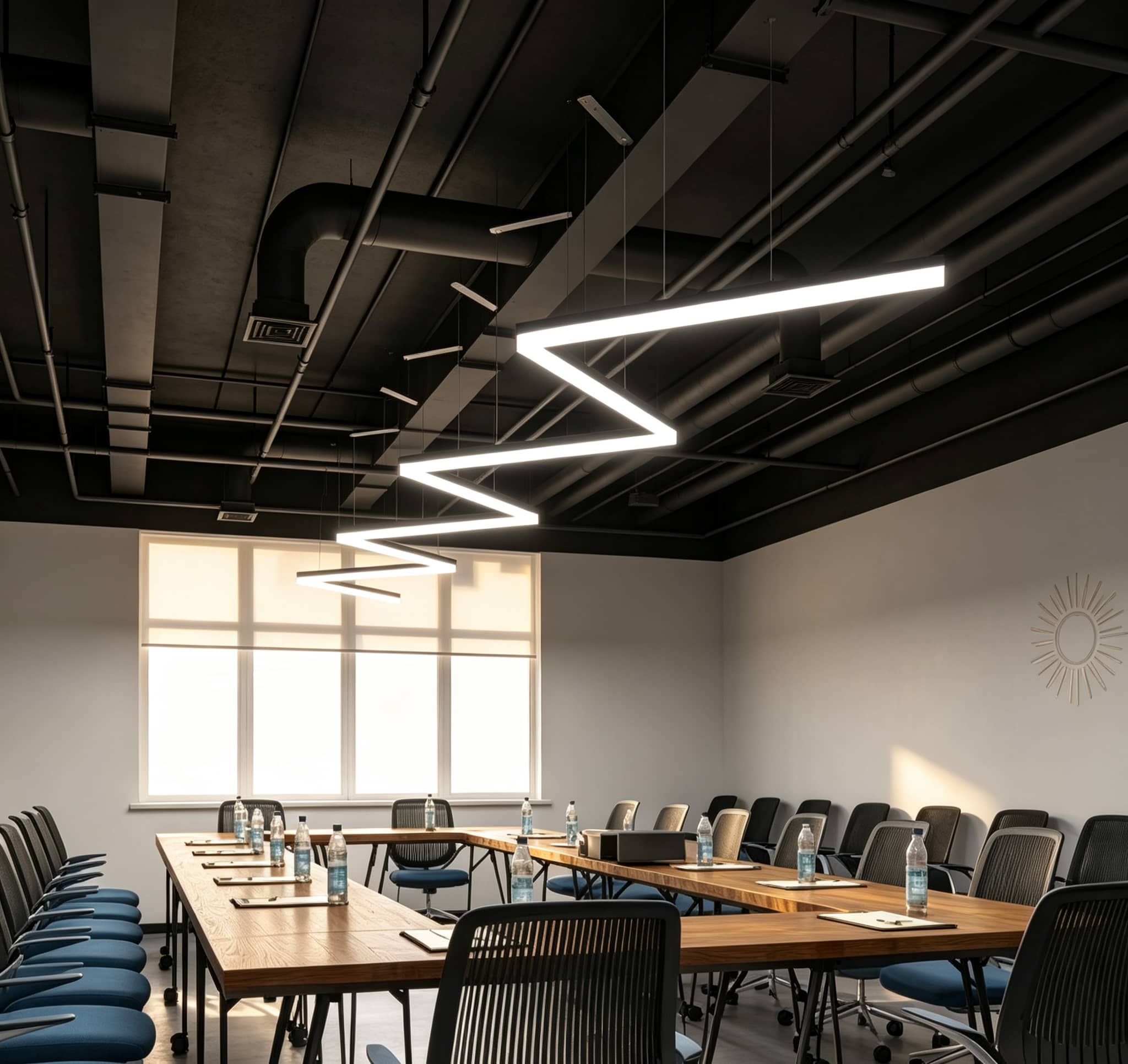 Creating efficient and flexible LED linear lighting solutionsLED Linear Lighting, with its simple and modern appearance, flexible installation methods, and diverse optical configurations, has been widely used in different scenarios such as offices, commercial exhibition halls, hotels, residential and industrial facilities. Whether it is decorative lighting that emphasizes architectural aesthetics or commercial projects that emphasize lighting performance and operational efficiency, a reasonable linear lighting design can help enhance the visual effect and practical user experience of the space.If you are looking for suitable LED linear lighting products for commercial buildings, office spaces, hotels, or other engineering projects, please feel free to contact us for detailed product specifications, technical parameters, customized solutions, and project quotations. Our team can assist in evaluating suitable linear lighting configurations based on your drawings, installation requirements, and lighting objectives, providing more targeted lighting solutions for your project.
Previous
Stretch Fabric Acoustic Wall: Stretch Fabric Wall Systems and Aluminum Profile Solution
Read More
Next
Stretch Ceiling Lighting: 4 Modern Lighting Solutions for Stylish Interiors
Read More


