Design and Installation Guide for Recessed Lighting Fixtures
By SmartGlow
April 14th, 2026
Recessed lighting is a commonly used hidden lighting solution in modern home and commercial spaces. This article comprehensively introduces the characteristics, application scenarios, installation points, and safety regulations of recessed lighting fixtures, providing you with a one-stop selection and installation guide, helping you easily create a comfortable and layered lighting environment, a simple and modern space without main lights.
Recessed lighting fixtures, also known as recessed downlights or spotlights, are a type of concealed lighting product that are integrated into the interior space of ceilings or walls, with downward light as the main source, providing concentrated and directional lighting effects.These types of recessed lights are mostly designed in round or square shapes, and require openings on the top or wall during installation to hide the lamp body and make the space appear more tidy. It is very common in home living rooms, kitchens, corridors, as well as commercial places such as shopping malls and conference rooms. It can provide uniform basic lighting and can also be used for key lighting in workbenches and display areas.Recessed lighting fixtures come in a variety of sizes and styles, making it easy to match different decoration styles. They also support various light sources such as incandescent lamps, halogen lamps, fluorescent lamps, and LEDs, and can be flexibly selected according to brightness requirements, energy-saving requirements, and color temperature preferences. Its most prominent advantages are that it does not occupy space, is simple and beautiful, and is particularly suitable for spaces with limited floor height or those that pursue a minimalist effect. Nowadays, LED recessed lighting fixtures have become mainstream and widely used in residential, commercial, and industrial scenarios due to their advantages of high efficiency, energy saving, long lifespan, and low maintenance costs.LED recessed lighting fixtures come in various shapes such as circular and square, and are available in black, white, silver, rose gold, and other colors. They are compatible with various ceiling structures such as gypsum boards and ceilings, and also support multi-color mild dimming functions. The brightness and atmosphere can be freely adjusted according to the scene.Recessed LED lighting not only creates a modern and minimalist spatial texture, but also effectively reduces energy consumption. At the same time, it can also be combined with linear lights, track lights, perimeter lighting, etc. to form a layered lighting system, further enhancing the spatial atmosphere, highlighting architectural lines, artworks, and decorative details.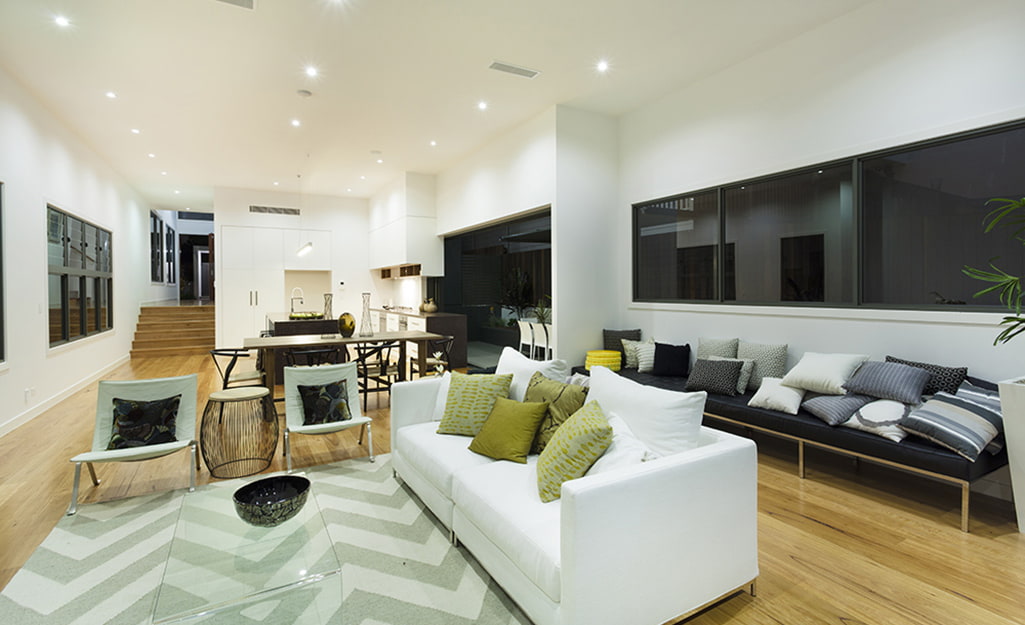 What is the difference between recessed lights and ceiling lights?Recessed lights and ceiling lights are the two most commonly used indoor lighting fixtures, with significant differences in installation methods, lighting effects, and applicable scenarios.Recessed lights, also known as recessed lights or spotlights, require openings in the ceiling or wall to hide the lamp body in the internal cavity. They are mainly used for downward orientation and focused light, and are often used for environmental lighting, work lighting, or key lighting, making the overall design simpler and more concealed.Ceiling lights are directly fixed on the ceiling surface without the need for openings. The styles include conventional flat top lights, semi ceiling lights, small pendant lights, etc. The light tends to spread over a large area, providing uniform overall environmental lighting for the space.The core difference between the two is clear at a glance: during installation, the recessed light needs to be hidden with holes, while the ceiling light is directly exposed for installation; In terms of lighting, the recessed light focuses and directs, while the ceiling light spreads evenly; In terms of spatial effect, the recessed design is simpler and more streamlined, while the ceiling light highlights its decorative appeal.Can recessed lighting fixtures be modified?Recessed lighting fixtures can be modified and upgraded, whether it is changing styles, improving lighting effects, or changing to more energy-efficient solutions, all of which are common.There are several common ways of renovation, including:
- Installation and modification kit: Using a dedicated adapter bracket and decorative panel, the original recessed tube light can be replaced with a pendant light, a small ceiling light, and even adapted to a ceiling fan, without the need to re open holes to change the type of light fixture.
- Replacing lampshades/accessories: By replacing accessories such as lampshades and lenses, the light output mode can be changed to achieve different lighting effects such as anti glare, spotlight, and flood.
- LED energy-saving upgrade: Old style recessed lighting fixtures can be directly replaced with LED retrofit kits, adapting to the original hole size, greatly improving energy efficiency, reducing energy consumption and heat generation.
- Simple bulb replacement: Simply replace traditional incandescent or halogen bulbs with LED bulbs to quickly upgrade brightness and color temperature.
- It should be noted that any modifications involving circuits are recommended to be carried out by professional electricians to ensure electrical safety and comply with local electrical installation regulations.
Click here to view more information on installing recessed lighting fixtures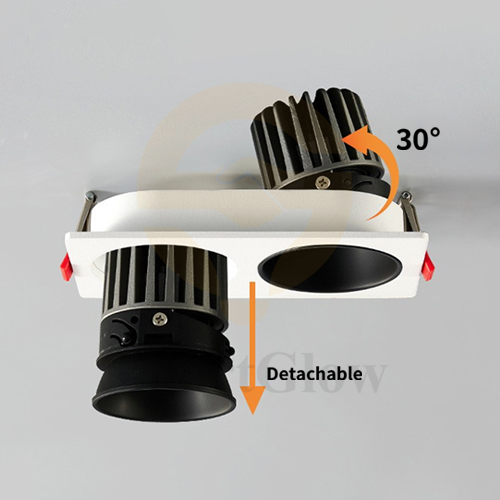 Where can recessed lighting be used?Recessed lighting has a wide range of applications and can be flexibly used in home, commercial, and public spaces. It can be used as both basic lighting and key ambient lighting, making it a highly versatile solution in modern decoration.
Corridors and aislesRecessed lighting is very suitable for corridors, making narrow spaces appear neat and spacious, with even and non oppressive lighting. Paired with recessed downlights or recessed wall lights, it ensures the brightness of traffic without taking up space, and has a simple and neat appearance.Living room and living roomIt can be used for overall environmental lighting, and can also highlight wall decorations, paintings, or architectural lines through adjustable angle lamps. Combined with linear lights and perimeter lighting, it can create a multi-layered design without a main light, enhancing the modernity of the space.kitchenSuitable for providing basic lighting and auxiliary lighting for the control panel, the recessed bottom light has concentrated light and can effectively reduce operational shadows. At the same time, the waterproof and oil proof style can adapt to damp and oily environments, which is both beautiful and practical.Bathroom and ToiletIt is a commonly used lighting scheme in bathrooms, which can be used for overall environmental lighting and can also focus on illuminating the mirror, washbasin, and shower area. Choose waterproof and moisture-proof recessed lighting fixtures, which are both safe and durable, and can make the space appear cleaner and more tidy.Commercial and office spacesWidely used in offices, conference rooms, shopping malls, exhibition halls, hotels, and other places, it can provide uniform basic lighting and can also be used for key lighting of goods, artworks, and exhibits, balancing practicality and spatial texture.Can recessed lighting fixtures be installed on existing ceilings?Recessed lighting fixtures can be installed on existing ceilings that have already been completed, but multiple factors need to be considered before construction to ensure safe, standardized, and aesthetically pleasing installation.
- Firstly, it is necessary to confirm the ceiling structure and determine whether there are any components such as keels, beams, pipelines, etc. inside. Avoid making holes in the load-bearing structure and ensure that the top surface can support the weight of the lighting fixtures. If necessary, reinforcement treatment should be carried out.
- Next is the top installation space. Recessed lights require a certain cavity height to accommodate the lamp body and wiring. If the space above is narrow or obstructed by pipes, ventilation equipment, etc., it will increase the difficulty of installation, and even prevent normal installation.
- In terms of circuits, it is also necessary to plan in advance to ensure that there is an available power source nearby. Wiring and wiring must comply with electrical safety regulations. For those who are not familiar with circuit operations, it is recommended to have a professional electrician carry out the construction.
- In addition, the material of the ceiling can also affect the installation method. Gypsum board and conventional ceilings are relatively easy to construct, while thinner or structurally special ceilings require the use of suitable installation brackets to prevent cracking or loosening.
- If it is an area with high fire safety requirements, recessed lighting fixtures that meet fire safety standards should also be selected and equipped with fire-resistant accessories to ensure fire safety.
- Overall, it is feasible to install recessed lighting fixtures on existing ceilings. As long as the structure, space, circuit, and material conditions are checked in advance, the installation can be completed smoothly.
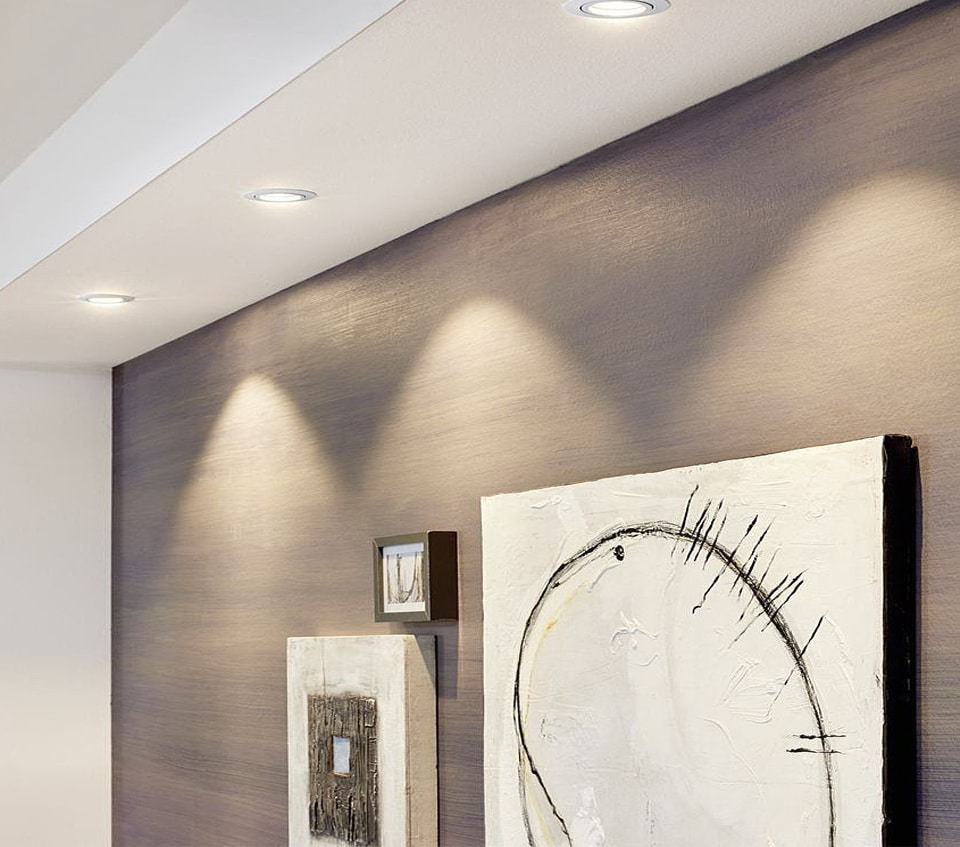 Safety precautions for installing recessed lighting fixtures on existing ceilingsBefore installing the circuit safety, it is necessary to cut off the power supply to avoid electric shock; When the original circuit is aging or the wire diameter is insufficient, do not directly install it to prevent overload, heating, and fire; All wiring must be properly insulated and must not be exposed.Although fire-resistant and heat-insulating LED lamps have low heat generation, they still need to maintain a safe distance from flammable materials, and no debris, insulation cotton, etc. should be piled up in the ceiling; Fireproof areas require the use of fire-resistant tube lights and fire-resistant sheaths that comply with fire safety standards.The load-bearing capacity and structural safety of the ceiling cannot be arbitrarily drilled on the load-bearing beams and main keels; Gypsum board and lightweight ceiling should be confirmed to have sufficient strength to avoid cracking and collapse; It is strictly prohibited to damage the main structure of the house.Do not use inferior lighting fixtures with no heat dissipation design for overheating prevention and heat dissipation. It is even more important to ensure ventilation space in enclosed ceilings to prevent long-term heat accumulation from damaging the lamp body or causing safety hazards.Waterproof and moisture-proof (especially important in wet areas): In damp areas such as bathrooms, kitchens, balconies, etc., recessed lighting fixtures with corresponding waterproof levels must be used to prevent short circuits and electrical leakage.The opening size and fixation should not be too large, which may cause looseness and detachment. The spring buckle should be tightened; Check for stability after installation to avoid long-term use and injury from falling.Comply with electrical regulations and do not randomly pull or connect wires without authorization. It is recommended to control multiple lighting fixtures in separate circuits; When uncertain about construction safety, it is necessary to have a certified electrician operate it.
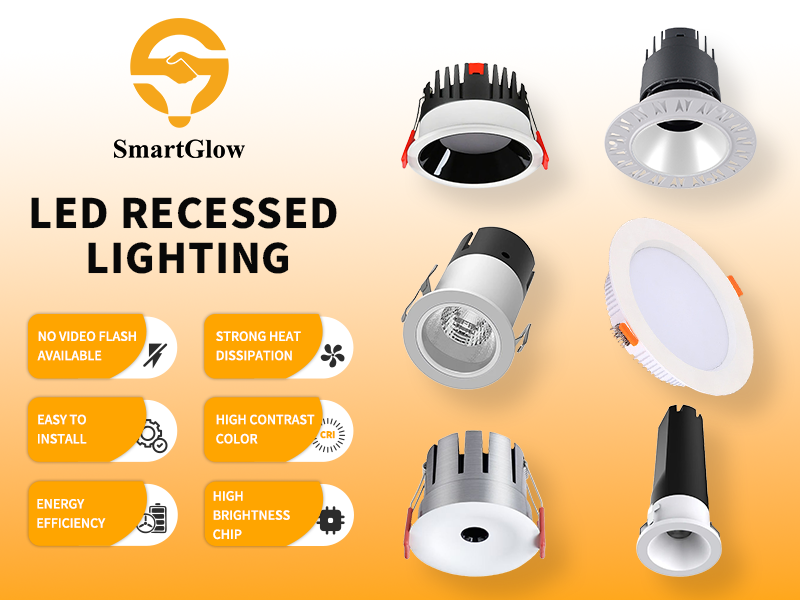 Ultimately, whether to adopt recessed lighting depends on your specific needs and preferences, as well as the characteristics of your space. Consulting a professional lighting designer or electrician can help you determine whether recessed lighting is suitable for your residential or commercial space. SmartGlow Lighting offers a variety of recessed lighting styles. If you also want to install recessed lighting for your project, please contact us and we will provide you with a one-stop lighting solution for free.
Previous
How To Choose, Install, And Maintain Perimeter Lighting?
Read More
Next
How To Install A Stretch Ceiling On An Old Ceiling? Attached A Detailed Breakdown Of Installation Costs
Read More


