However, choosing the right office linear lighting solution requires more than selecting a fixture based only on appearance or wattage. Factors such as illuminance level, lumen output, installation height, spacing, color temperature, and glare control all influence the final lighting performance. This guide explains how to use LED linear light in commercial office environments, including how to select suitable products, calculate lighting requirements, and design comfortable workplace lighting.

1. Why LED Linear Light Is Ideal for Commercial Office Lighting
1.1 Modern Offices Require More Than Basic Illumination
Traditional office lighting was mainly designed to provide enough brightness for employees to complete daily tasks. However, modern workplaces have changed significantly.
Today’s offices often include:
- Open-plan workstations
- Collaboration areas
- Meeting rooms
- Flexible working zones
- Reception and lounge spaces
For example, open workspaces require uniform illumination for long periods of computer use, while meeting rooms need balanced lighting that supports communication and presentations. Reception areas focus more on creating a professional first impression.
This is where LED linear lighting provides advantages. Its continuous structure allows designers to create consistent lighting lines that follow office layouts and architectural elements.
Unlike traditional point-source fixtures, linear LED light reduces visible bright spots and dark areas, creating a smoother visual experience across the workplace.
This is where LED linear lighting provides advantages. Its continuous structure allows designers to create consistent lighting lines that follow office layouts and architectural elements. Unlike traditional point-source fixtures, linear LED light reduces visible bright spots and dark areas, creating a smoother visual experience across the workplace.
1.2 Linear Design Matches Modern Office Architecture
One of the biggest reasons designers choose LED linear fixtures is their ability to integrate with modern office interiors. Instead of appearing as separate lighting objects, linear lighting fixtures can become part of the overall office design. For example:
Suspended linear lights can create a visual rhythm above open workstations.
Recessed linear lights can maintain a clean and minimalist ceiling appearance.
Linear wall lights can highlight architectural details and improve spatial depth.
This combination of lighting performance and architectural integration makes LED linear lighting a preferred choice for contemporary commercial office projects.
1.3 Better Control of Workplace Lighting Quality
Office lighting quality is not determined only by brightness. A comfortable lighting environment requires control of several factors:
- Illuminance (Lux)
Illuminance describes how much light reaches a working surface.
Typical office lighting recommendations:
| Office Area |
Recommended Illuminance |
| Open workstation |
300–500 lux |
| Meeting room |
300–500 lux |
| Reception area |
200–300 lux |
| Corridor |
100–200 lux |
Color temperature influences the atmosphere of an office.
Common choices:
3000K: warmer and more relaxed atmosphere
3500K–4000K: balanced and commonly used for offices
5000K+: cooler light for high-visibility environments
For most modern offices, 4000K LED linear lighting is a popular choice because it provides a neutral appearance suitable for daily work.
Glare is one of the most important considerations in office lighting.
Poorly designed lighting can cause:
Eye discomfort
Screen reflections
Reduced concentration
For office environments, many projects select low-glare LED linear fixtures with UGR<19 to improve visual comfort.
2. Benefits of Using LED Linear Lighting in Office Spaces
2.1 Uniform Illumination Improves Visual Comfort
One of the biggest challenges in office lighting is maintaining consistent brightness across the workspace. Traditional lighting solutions often create uneven illumination because each fixture produces light from a specific point. LED linear lighting solves this problem through continuous light distribution. Because LEDs are arranged along a longer housing, LED linear light creates smoother illumination across desks and surrounding areas. A well-designed linear lighting system can reduce visual fatigue by providing more balanced brightness throughout the workspace.
2.2 Higher Energy Efficiency and Lower Operating Costs
Commercial offices typically operate lighting systems for many hours every day, making energy efficiency an important consideration. When selecting an office LED lighting system, users should focus on lumens and luminous efficiency (lm/W) rather than wattage alone. Compared with traditional fluorescent systems, LED linear lighting provides:
- Higher luminous efficiency
- Lower power consumption
- Longer service life
- Reduced maintenance requirements
For example:
A 50㎡ office requiring approximately 400 lux:
Basic calculation:
50㎡ × 400 lux = 20,000 lumens
After considering light loss, ceiling conditions, and maintenance factors, the actual system may require approximately:
24,000–26,000 lumens
This calculation helps determine the correct number of fixtures instead of simply adding more lights.
2.3 Flexible Installation for Different Office Layouts
Modern offices frequently change layouts, so lighting systems need flexibility.
LED linear lighting supports multiple installation methods:
- Suspended Installation is suitable for open offices、meeting areas、high ceilings.
- Recessed Installation is suitable for minimalist offices、executive offices、premium commercial spaces.
Magnetic Track Installation is suitable for flexible workspaces、creative offices、multi-purpose areas.
2.4 Enhances Modern Office Design
Lighting has become an important part of workplace branding and interior design. LED linear lighting allows businesses to combine practical illumination with modern aesthetics. Unlike traditional functional lighting, modern linear lighting helps create:
- Clean architectural lines
- A premium office atmosphere
- Strong visual identity
For example:
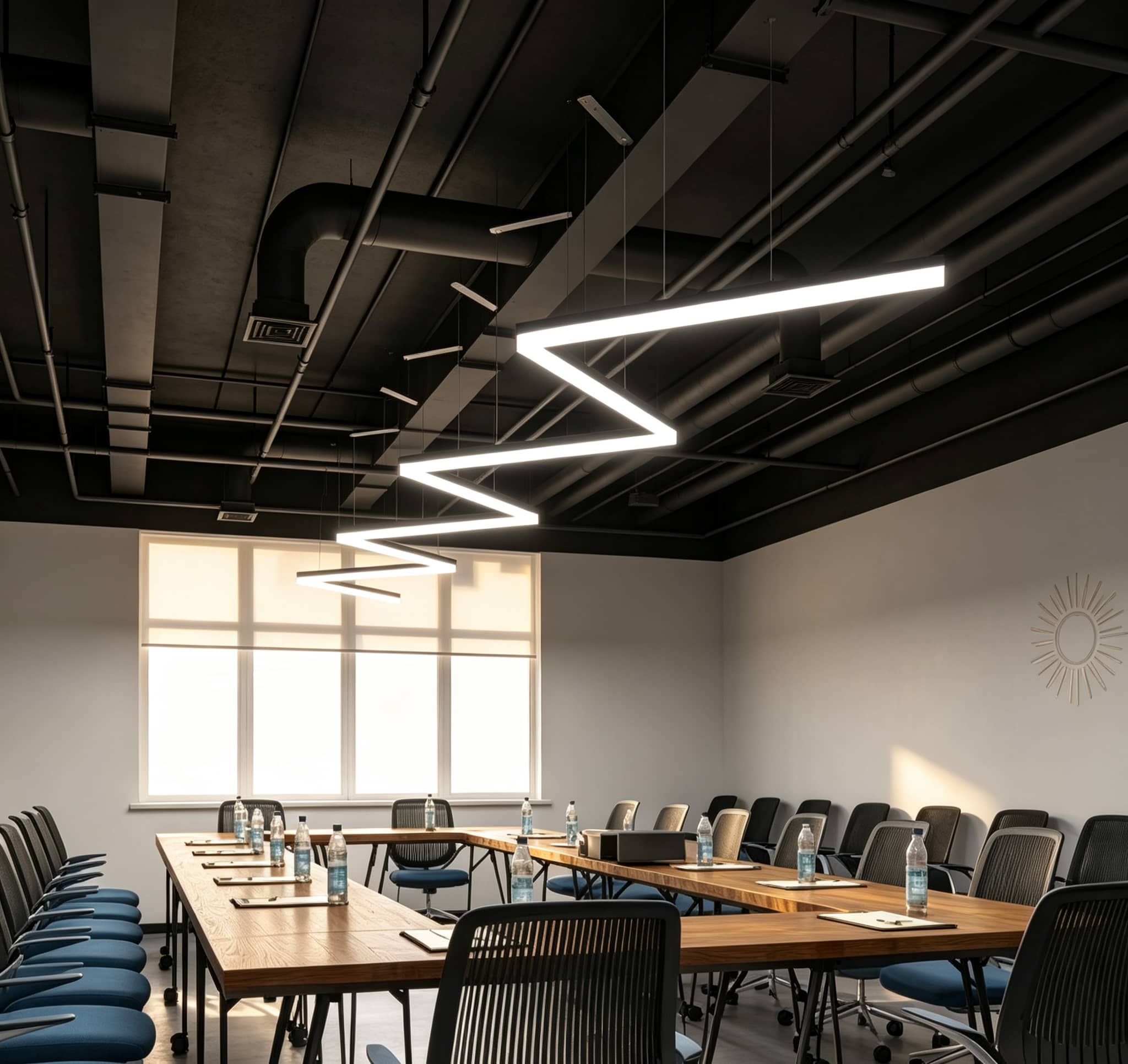
A black linear pendant light can create a contemporary design statement in meeting rooms, while recessed linear lighting can maintain a minimalist appearance in executive offices.

3. Best LED Linear Lighting Types for Commercial Offices
The most common LED linear light types used in modern offices include suspended linear LED lighting, recessed linear lighting, magnetic track lighting, and linear pendant lighting. Each solution creates a different lighting effect and supports different office design goals.
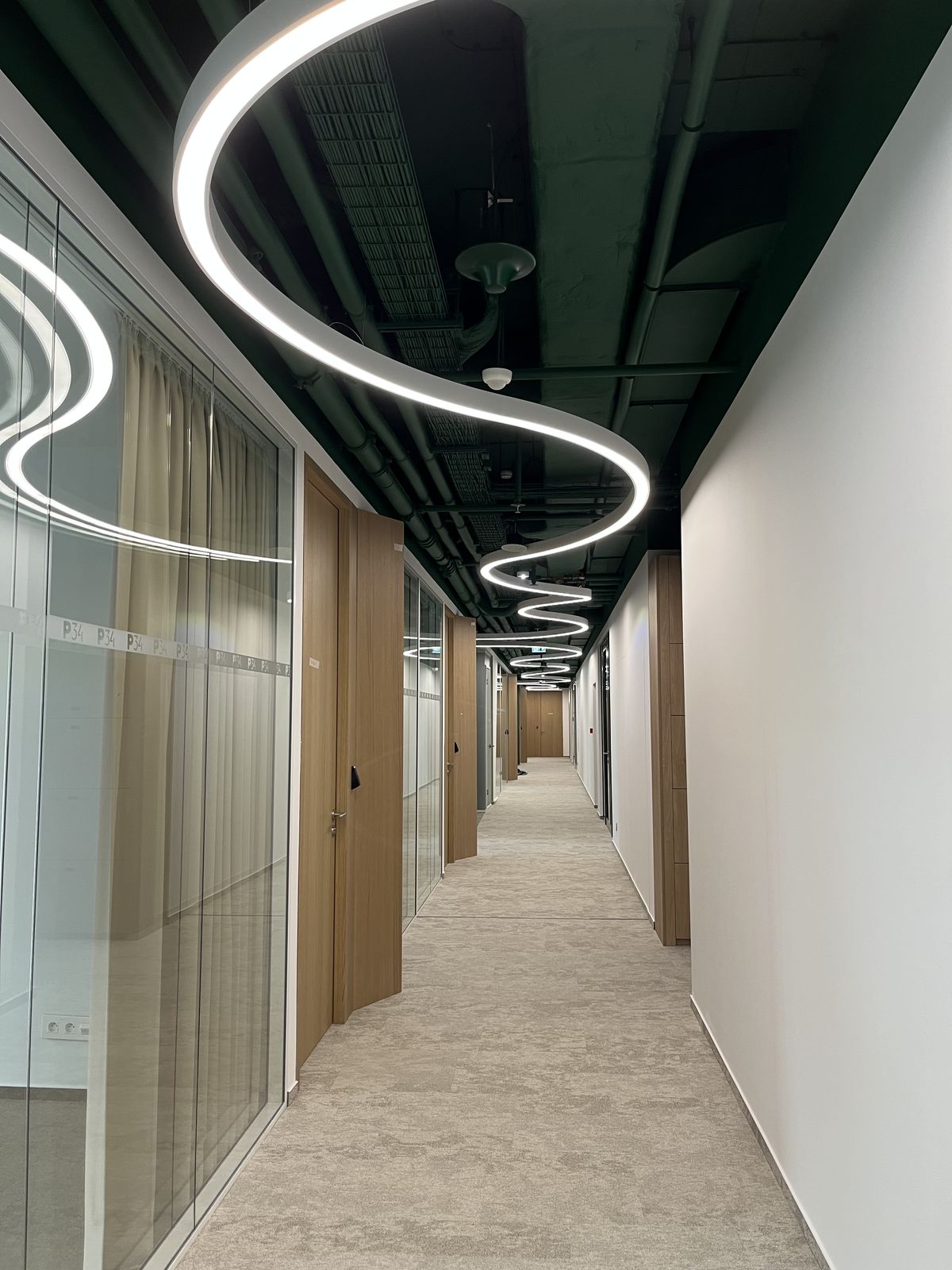
Suspended linear LED lighting is a linear lighting fixture installed below the ceiling using suspension cables or rods. Unlike traditional ceiling-mounted lights, suspended linear lights create a floating lighting effect while bringing the light source closer to the working area. This type of linear lighting fixture is widely used in modern office environments because it combines functional illumination with architectural design.
For example, in an open-plan office, a continuous row of suspended linear LED lights above desks can create consistent brightness across the entire workspace while maintaining a clean architectural appearance.
Recessed LED linear profile is a lighting system installed directly into the ceiling, creating a seamless connection between the fixture and the architectural structure. Unlike surface-mounted fixtures that remain visible below the ceiling, recessed linear lights create a minimal and integrated appearance. This makes them popular in high-end commercial offices where design simplicity and visual consistency are important.
LED linear magnetic track lighting is a modular lighting system that uses magnetic connections to attach lighting modules onto a track. Unlike fixed lighting systems, magnetic track solutions allow users to move, replace, or add lighting modules without changing the entire electrical structure. This makes it an ideal solution for flexible office environments where layouts may change over time.
Linear pendant lighting is a suspended linear fixture designed to provide focused illumination while also acting as a decorative element. Unlike general office lighting, linear pendant lights are often used as a visual centerpiece above important areas such as conference tables, reception counters, and collaboration zones.
4. How to Choose the Right LED Linear Light for Commercial Office Projects
Selecting the right LED linear light requires evaluating both technical performance and design requirements.
4.1 Consider the Office Function First
Different areas require different lighting approaches.
| Space |
Recommended Lighting Type |
| Open workspace |
Suspended linear LED lighting |
| Meeting room |
Linear pendant lighting |
| Executive office |
Recessed linear lighting |
| Flexible workspace |
Magnetic track lighting |
| Reception area |
Decorative linear lighting |
4.2 Check Lumens Instead of Wattage
A common mistake is choosing LED lighting based only on power consumption. Wattage shows energy usage, but lumen output shows actual brightness. A more efficient fixture can provide higher brightness with lower energy consumption.
When selecting LED linear fixtures, check:
- Total lumens
- Lumens per watt (lm/W)
- Light distribution
- Beam angle
4.3 Consider Glare Control
For office environments, glare control is critical.
Recommended features include:
- Micro-prismatic diffuser
- Recessed light source
- Low UGR optical design
Especially in computer-based workplaces, controlling glare helps reduce discomfort and screen reflections.
5. LED Linear Light vs Traditional Office Lighting
LED linear lighting provides not only energy savings but also greater flexibility for modern office design.
| Feature |
LED Linear Lighting |
Traditional Fluorescent Lighting |
| Light Distribution |
Continuous and uniform |
Separate light points |
| Energy Efficiency |
Higher efficiency |
Higher energy consumption |
| Lifespan |
Longer service life |
More frequent replacement |
| Maintenance |
Lower maintenance cost |
Higher maintenance requirements |
| Design Flexibility |
Pendant, recessed, magnetic options |
Limited designs |
| Appearance |
Modern architectural style |
Mainly functional |
Creating Better Workspaces with LED Linear Lighting
Commercial office lighting has evolved from simply providing brightness to creating comfortable, efficient, and inspiring workplaces. With its continuous light output, flexible installation options, and modern appearance, LED linear light has become an important solution for contemporary office environments.
Whether used for open workstations, meeting rooms, reception areas, or corridors, the right linear lighting solution can improve both workplace functionality and architectural design. By combining performance with aesthetics, LED linear lighting helps businesses create office spaces that are more comfortable, energy-efficient, and future-ready.
If you are planning lighting for your commercial office space, feel free to contact us and our professional team will recommend suitable LED liear lights for you. 


